
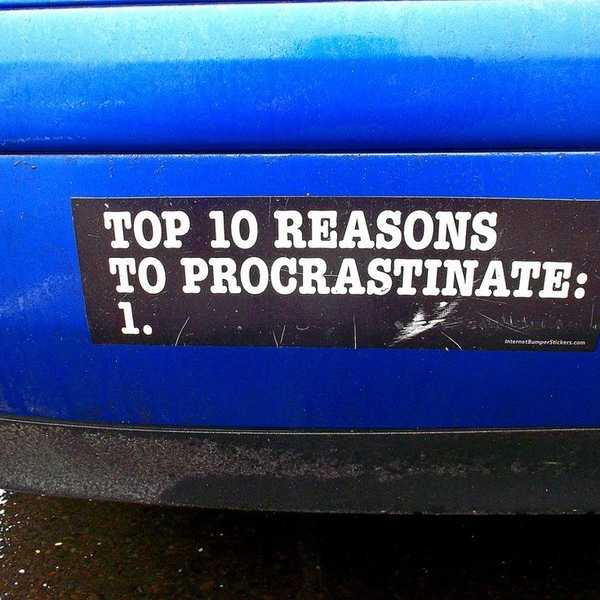

When I was in the seventh grade, I took the SAT for the first time. While I went into that standardized test knowing little about what I was about to be tested on, I felt prepared to write the essay. I remember the prompt was something along the lines of, “Does the establishment of a deadline increase productivity?” Twelve-year-old me found this to be the perfect opportunity to discuss how I procrastinated studying for this test, with the exception of this essay. I discussed how I was given assignments to complete at home to help prepare for this test, and how I had only looked at these assignments the night before. I mentioned how I was given a box of 200 vocabulary flash cards to study from, and had never even opened it. I concluded by asserting that these study habits, while seemingly inadequate on the surface, helped me to prepare for a test in the way that I know best—by procrastinating. Not only was my writing score the highest out of the three subjects, but my total SAT score was also the highest in my school district. I guess I must have done something right. Here are seven reasons why I procrastinate:
1. Procrastination increases creativity!
Don’t believe me? Read this article. Or this one. Or this one. (Since you are probably going to procrastinate, I will summarize them for you.) The first discusses a condition call “pre-crastination,” in which you live and breathe productivity, to the point where you can lose track of time and place. Sound like a healthy habit to you? A study in which people were asked to come up with business ideas showed that those who yielded much more creative and original ideas were the ones who played Minesweeper or Solitaire for five minutes before submitting their ideas, as opposed to those who were asked to submit their ideas right away. As for the other two articles, I will summarize those for you some other time.
2. Procrastination is less stressful!
Maybe you might disagree with me on this, but I personally feel that being given an assignment that is due in a week is like being given six days to rest and one day to cram and stress. Only one day out of seven! Meanwhile, pre-crastinators stress out at any moment that they are not working on their assignment. They cannot even do simple things like sleep, eat, or shower without freaking out about their unfinished assignment! That does not sound healthy to me…
3. Procrastination allows you to submit your best work.
Again, feel free to disagree with me, but I feel that if I do not write this article in one sitting, I will not convey my best ideas to my writers. I am basically telling them, “I do not take this article seriously enough to write down all the ideas that I have in my head in one sitting.” If I wrote this article in multiple sittings, it simply would not be as coherent or flow as smoothly as it is now. Hopefully you agree with that point!
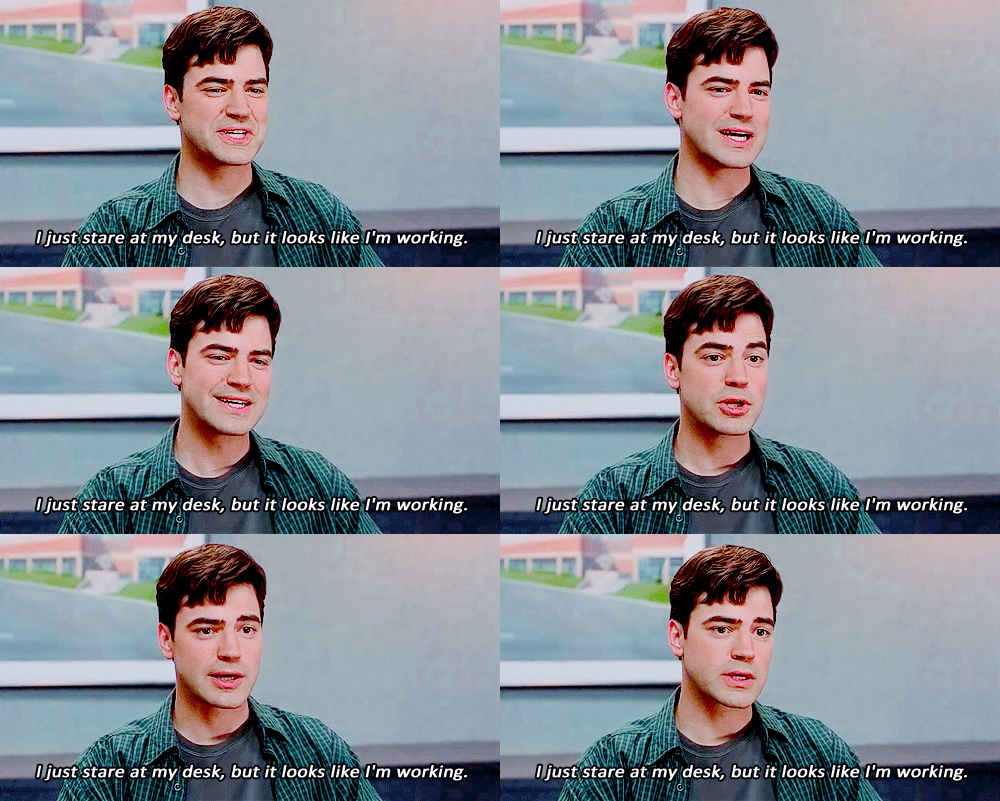
4. You use the minimum amount of effort to get the maximum amount of work done.
Bill Gates once said, “I will always choose a lazy person to do a difficult job because he will find an easy way to do it.” The same Bill Gates who hacked into his high school’s computer to enroll him in classes with mostly girls! The same Bill Gates who quit college to become a multi-billionaire! You can learn a thing or two from this guy.

5. What you do while you “procrastinate” might actually be productive.
One of the things you might do while avoiding an assignment is sleep, which is beneficial for obvious reasons. You might also socialize, eat, exercise, shower, and most importantly, r-e-l-a-x! All of these things promote physical, mental, and emotional health.

6. Everyone else does it!
This might not be a great reason to do something, but…if the majority of people do something, then it must be natural, right? This is more a reason why you should not feel bad for procrastinating.