
There's a lot of bad stuff that's happening in the world. War, famine, climate change. Take your pick. And just about all of these issues comes back to mankind somehow. Naturally, we tend to feel pretty bad about all of the crud we've caused as a civilization. We should feel bad, but only for a little while. More importantly, we should feel motivated to fix what we've damaged.
Unfortunately, that's not always what happens.
I think that oftentimes when we think about how much work it will take to right what all that is wrong, we clam up. Action is replaced by cynical critiques and a whole lot of arguing without anything actually getting done. We look at the world's problems like Mount Everest, and we convince those around us to talk about how we're going to scale the mountain, without actually doing anything in the end.
Luckily, there are those who are willing to make the climb. There are many who have made the efforts to confront many important issues in the best ways that they can. Whether it's through creative innovations, personal skills, or other means, these people have proven that action is the only route to "fixing" the world. And while they may not seem that important in the grand scheme of things, they are still motivated by the fact that they may make a difference in some person's life.
1. Lee Jong-rak's "Baby Box"
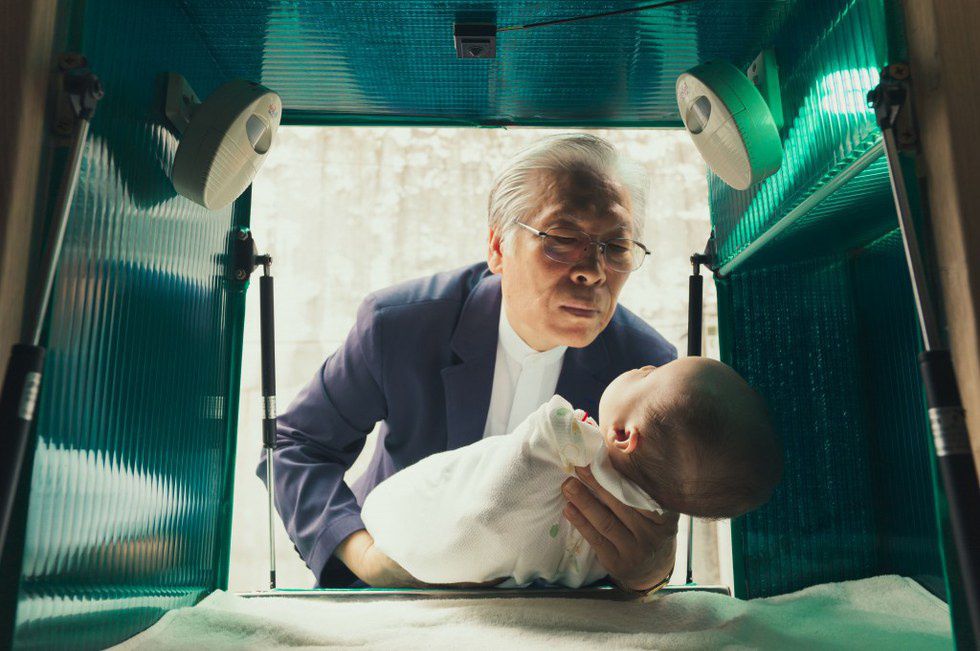
You may have heard of this South Korean pastor after the release of the award-winning documentary "The Drop Box." In December of 2009, Jong-rak installed what he calls a "baby box" in an effort to combat child abandonment in Seoul. How does it work? The parents (usually the mothers) drop off the infant in a padded, heated box that sounds off alarms in the attached building. Immediately, Pastor Lee and a team of volunteers collect the child and take care of it (for up to a couple of months), before putting it up for adoption. The system was put in place for mothers who wish to remain anonymous, and has resulted in over 600 children being rescued. It's definitely not a perfect system, and has caused controversy due to the fact that the children usually don't have records. I think the most important aspect, though, is the love and compassion that Pastor Lee has for humanity. It's awe-inspiring, and is a great reminder of the value of human life. (Source.)
2. The Shoe That Grows
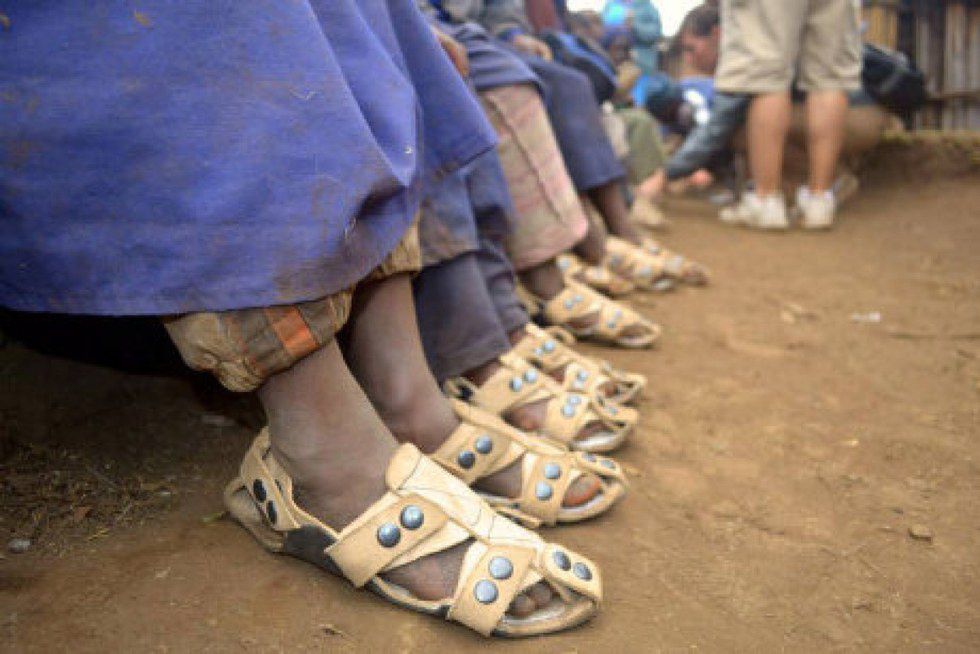
There are approximately 300 million children in the world that do not have shoes. With the dangers of soil-related illness and infections of foot-injuries, the lack of shoes is not as minor of a problem as one might think. It prevents children from going to school, and can cause a great deal of pain to those with ill-fitting shoes. Companies such as TOMS has worked to provide pairs of shoes for children for years. Unfortunately, one pair of shoes isn't going to cut it. A child needs an average of two pairs of shoes a year.
A 2007 college-graduate by the name of Kenton Lee saw this problem when visiting Nairobi, Kenya. He had no idea that he would encounter this issue when he went to Kenya, but he knew it had to be addressed. Thus, after years of trial and error, the "Shoe That Grows" was born. The design of the shoe allows straps and snaps to be adjusted so as to change the size of the shoe to fit a child's growing foot. The durability of the shoes' materials allow for the shoes to last for years. The simplicity of the idea is ingenious, and at only $12 a pair. We can hope that they will be a viable solution to a very real problem. As the shoes come in two different sizes (one for early childhood, and one for later years), just two pairs of these shoes will last a child up through their teenage years and then some. (Source.)
3. End7's Fight Against NTD's
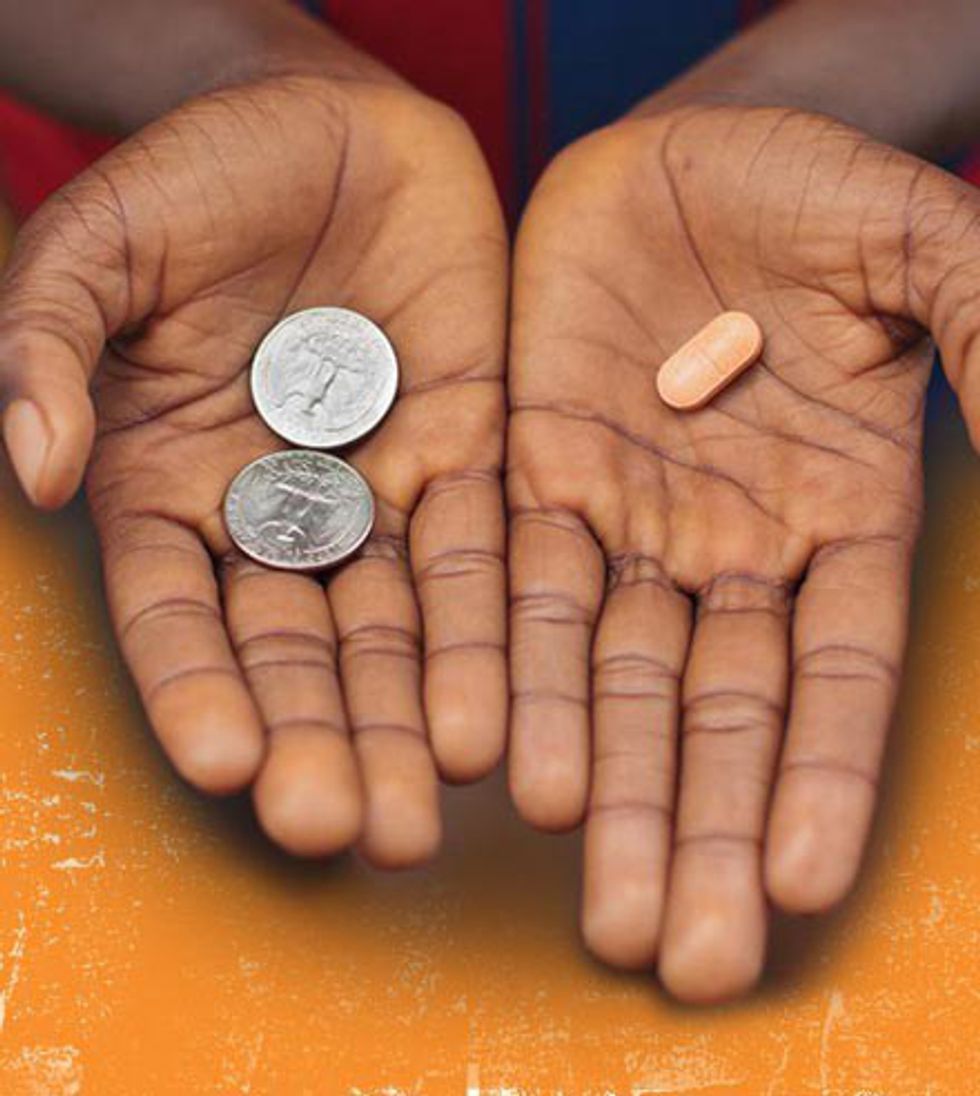
Neglected Tropical Diseases (NTD's) are one of the defining characteristics of extreme poverty. They're so common that we feature infected children with bloated tummies in our numerous charity commercials. Whether they come in the form of parasites or bacteria, NTD's are absolutely devastating, and incredibly hard to control.
Even though there are over a billion people affected by NTD's, few people really even know what they are. End7, an awareness and funding campaign, aims to eradicate seven of these NTD's by the year 2020. They realize that medication is available and very inexpensive, but the process of administering it is incredibly difficult. It requires both significant funding and a large willingness to put forth the effort to fight these diseases. End7 refuses to let the problem be cast aside, and is continuously working to involve the masses in their efforts. And, with the near-eradication of lymphatic filariasis in Sierra Leone, it's clear that End7's campaign has had a very positive effect and will continue to do so with proper support. The NTD problem may be one of the most daunting problems we face, but End7 has demonstrated that it's not impossible to overcome. (http://www.end7.org/)
4. Better Shelter's Refugee Shelters

Perhaps one of the most pressing issues in the world is that of the refugee crisis. The stories we've heard are horrific, and the solution does not seem to be in the near future. In the meantime, millions of refugees are forced to stay in packed camps and live out of tents not meant to last more than a few months.
Better Shelter, a social enterprise that has partnered with UNHCR and the IKEA Foundation, to provide these refugees with a stronger sense of home. Their shelters have been designed to be safer, longer-lasting and spacious. They're decently affordable, and much more sustainable than traditional tents. They even use solar panels to generate enough electricity to charge an LED light! The shelters have so much going for them in terms of providing the safety and dignity of a real home, and should not be cast aside in trying to aid refugees. No, they won't solve the refugee problem, but these shelters may be able to do much in terms of providing a bit of comfort and peace during such chaotic times. (Source.)
5. Joshua Coombes' Haircuts
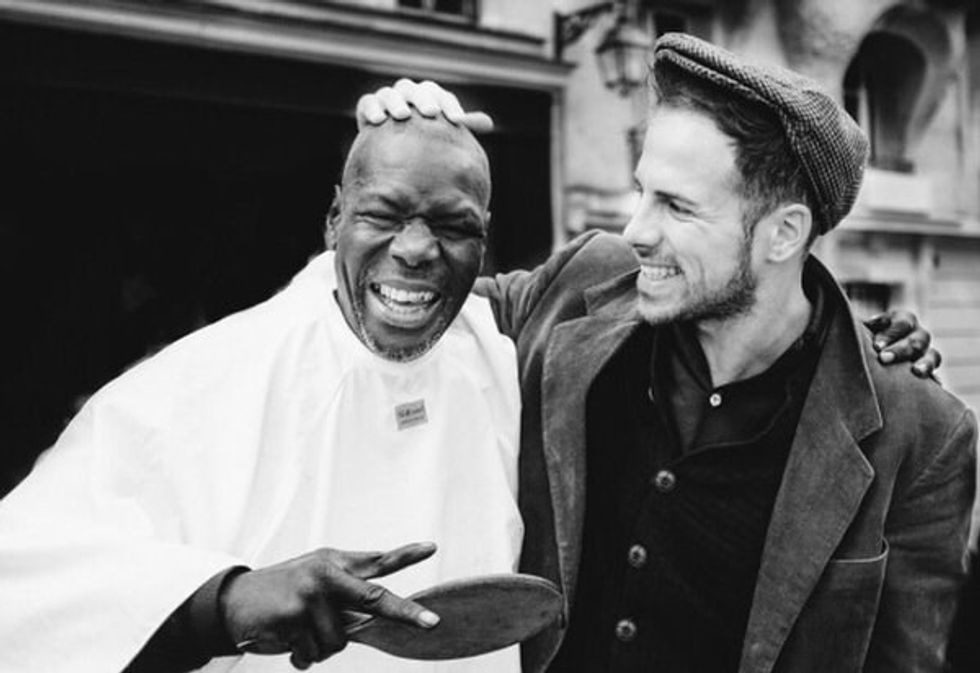
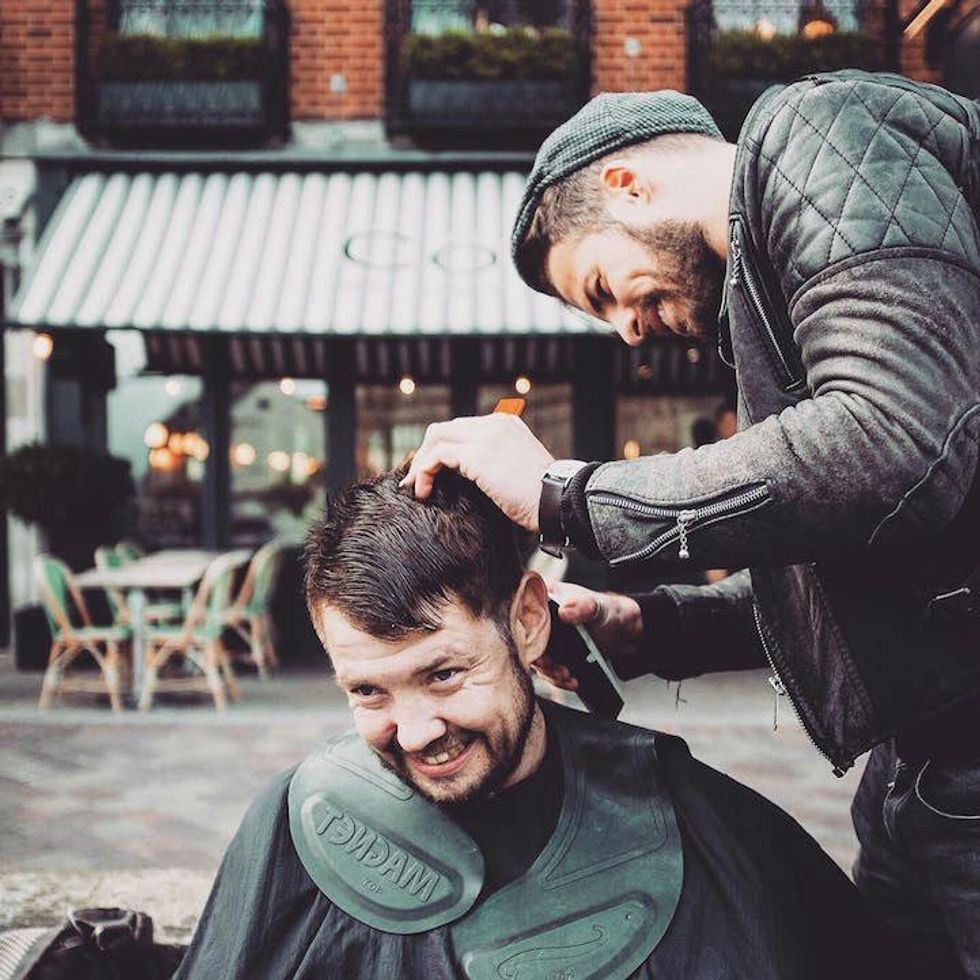
If you've been on social media within recent weeks, this guy may sound familiar. Based in London, hairdresser Joshua Coombes regularly provides free haircuts for the homeless. He documents these encounters on his Instagram account, and features before-and-after photos. More importantly, he shares these people's stories with his 182,000-plus followers. With the very negative stigma surrounding homelessness, Coombes' stories are incredibly important in reminding people of the fact that those living on the streets are still...well...people. They all have their own unique stories, and just like it's a bad idea to assume certain groups of people are all the same, assuming that every homeless person is the same is also very harmful. Even Coombes' method of approaching homeless people (which is literally just asking them if they want a haircut) reminds us that they are not exempt from respect and courtesy, whatever our instincts may tell us. This account is one of most inspiring on Instagram, and Coombes' haircuts and encounters are some of the highlights of my social media. (Source.)
6. College Students' 'Flo'
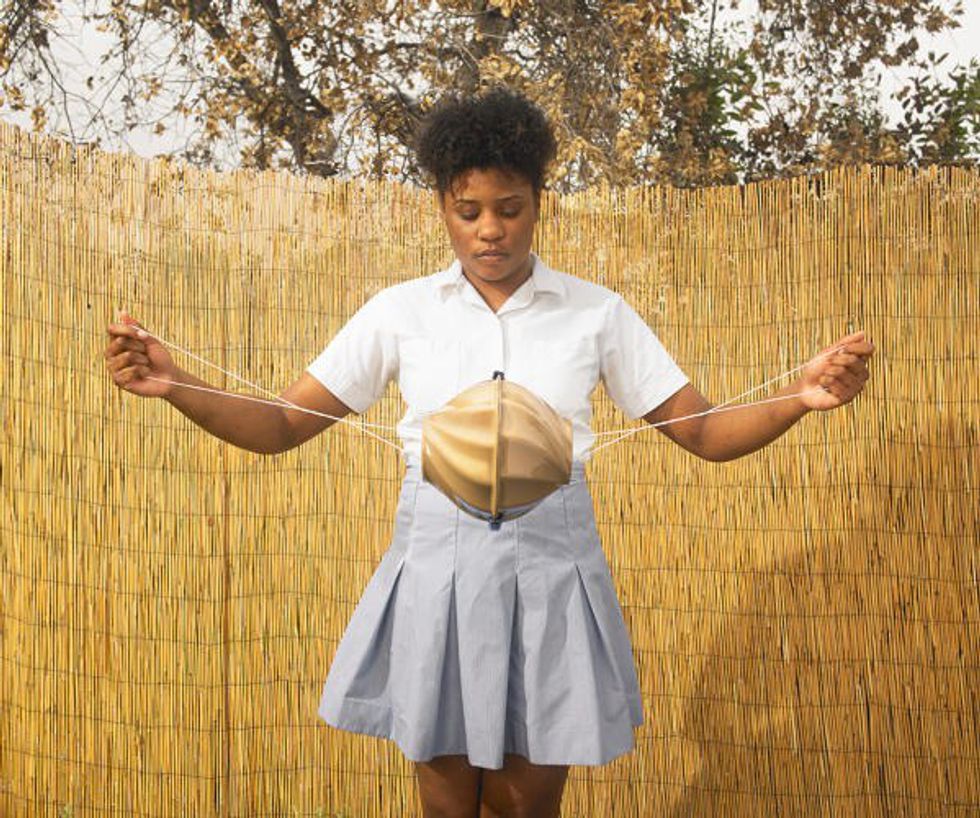
One of the worst things about being a female is having a period. Even with the conveniences we have in developed countries, it's still not a pleasant experience for most women. Imaginably, it's even harder for girls in impoverished areas of the world. As tampons and disposable pads are seldom available, women in these parts are often forced to use washable pads. However, as a woman's period is highly stigmatized in these parts of the world, it is a challenge for them to keep them clean. Students from the Art Center College of Design in California and Yale Business School teamed up to create Flo - a kit for washing, drying, and transporting their pads. The kit allows girls to thoroughly clean their pads and dry them in a quick and more-private manner. While Flo has yet to be manufactured and made available to those who need it, the idea itself has sparked much-needed conversation around the issue of menstruation in impoverished countries. Hopefully, we'll see contraptions such as this in these parts of the world in the near-future. (Source.)
That marks the end of this roundup. No, these people and organizations have not rid the world of all bad things. None of the ideas mentioned above have solved their respective issues (at least, not yet). But they have offered their own solutions. And we need people that take action about the things they care about because those are the people that inspire others to take action in their own lives. With over seven billion people in world, we've bound to fix something when we put our heads together. And that makes it a bit less sucky to be a human on planet Earth.