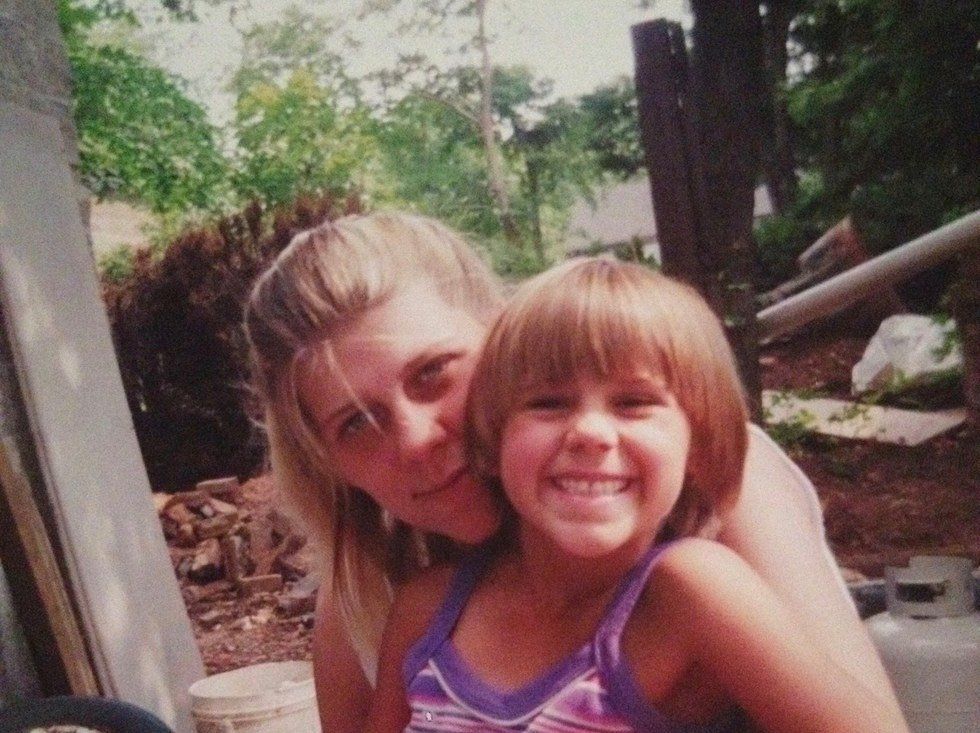
My mother was beautiful inside and out, but she was an addict. As much as she loved me, she hurt me. Addiction is messy and confusing and, worst of all, there is no guide to tell you how to deal with it. I was hurting too much to take a step back and look at what my mother was going through. After her overdose, I finally learned a few things about addiction that I wish I would have known sooner.
1.There is no manual on how to help your loved one battle the addiction.
Loving someone who battles an addiction is one of the most heartbreaking and confusing relationships in existence. When you love someone, you want to help them. Giving them money, bailing them out of jail, a dose of tough love here and there. Regardless of the attempt, however, you cannot instill the desire to get clean. Since all addicts are different, there is no one way to pull them out of this downward spiral, no matter how hard it is to watch. There is no manual or guidebook on the best way to intervene, and you can only do what feels right in your heart. If you are really stuck and need advice, remember that professional assistance is always available.
2.The addict hurts just as much as you do.
I did not learn this until my mother passed. When she passed, I found letters she had written to God. What I read broke my heart. She knew all of the pain she caused in everyone’s lives and wished that she could take it back. She never purposefully became an addict, and most importantly, never meant to hurt everyone around her. At the time, I was convinced that she did not care how much pain she had caused in my life. The addiction had consumed her. Once I realized that my mother's addiction was not voluntary, it was easier to understand. Though there is pain, know that there is both pain and guilt on the addict's side, and this is not a life that they would chose for themselves again.
3.Anger can overpower all the love you feel for them.
It is so hard to love someone who hurts you over and over again. Eventually, with constant pain comes resentment. After years of broken promises and “should haves,” my resentment developed into anger. I cut my mother out of my life and wrote her a hateful letter, telling her that she was no longer my mother. The last thing she ever said to me was “I hate you too.” Eight months later, my mother passed away of an overdose. Up until then, all I had for her was hate. Strangely enough, when I got the phone call that she was dead, I was filled with love. I had forgotten that I loved her, because loving her was more painful than hating her. Though this was my coping mechanism, it did nothing to solve the addiction. When you are overwhelmed with anger, try to remember where it comes from.
4. Addiction never stops, even when the person gets clean.
Growing up, it was normal to explain to people that “my grandmother has custody of me because my mom was an addict, but she is clean now and is okay.” Was? When you are an addict, you are an addict for life. Even if an addict is sober, they still deal with cravings and the fear of relapse. Though my mother was clean for 13 years, who was I to claim she was okay? Looking back now, it is easy to see how sobriety can be just as much of a battle as the addiction, and the lifestyle is hard to shake.
5. Encouragement is important.
I never thought to tell my mother how proud of her I was until it was too late. It never occurred to me that while she was clean, she was still fighting. Most people need encouragement to get through tough situations, and this is twice as true for recovering addicts. Learning to manage, deal and cope with their addiction is an accomplishment. The will to endure is only amplified by the strength that we can offer. We are all afraid of failure, so be the support system you wish to have and cheer them towards the path they want to be on.
6. If your loved one lost their battle to addiction, just know they are at peace.
Addiction does not just control your loved one’s thoughts and needs; it also can decide whether or not they get to live. This is the hardest thing to accept when loving someone with an addiction; there is always a possibility that they could lose their battle. After 20 years of addiction and 13 years of sobriety, my mother lost her battle. I guess she just got tired. She was not weak, and she did not give up, but she no longer has to fight.