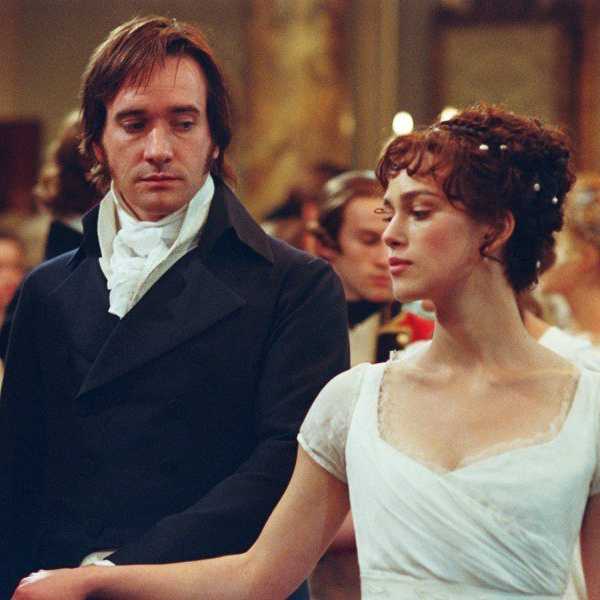

It is a universally acknowledged truth that few books hold more wit, romance and satire than Jane Austen’s "Pride and Prejudice." Whether you identify more with Jane or Elizabeth, are looking for a Darcy or a Bingley, or are only just feeling the inclination to read this marvelous book, let me be very clear: "Pride and Prejudice" is everything a book should be. Do you need more reason to pick up this novel than my word? Well, in that case, let me give you a rundown of very real life lessons I learned from "Pride and Prejudice."
First Impressions Are Shallow Impressions
I’ll be perfectly honest, I hated Mr. Darcy for the first 3/4 of this novel. He appeared arrogant, greedy, obnoxious, and with no better term to describe him, kind of an ass. Even when Elizabeth began to soften towards him, I wanted to shake her and tell her she could do better than this jerk who couldn’t even sit in a dance hall without wallowing in his own pride. However, up until 3/4 of the way through this book, all I knew about Mr. Darcy was he had a lot of money, a big ego and no social skills. It was not until I began to learn more about his personal life, his family, and his history that I began to ship his blooming relationship with Elizabeth. First impressions often leave something to be desired, even if they are good impressions. In this case, this awful first impression left me wondering what could make this man such a deplorable human, and the more I learned, the more I realized I was far too quick to judge.
Attraction Grows With Acquaintance
During their first encounter, I seem to remember Mr. Darcy referring to Elizabeth as “barely tolerable.” Ouch. To be fair, it was in this scene that I truly began to love our dear Elizabeth Bennet, as she not only laughed off the insult, but truly did not let it affect her or her enjoyment of the night. However, Mr. Darcy’s opinion began to change after only one actual conversation with this heroine, whom he later recognized as having a rather "fair pair of fine eyes.” You’re damn right she has fine eyes. The more he is around her, the more beauty he sees in her. Not because she changes her looks in order to better suit or impress him, but because personality is attractive. And this goes both ways! The less he acts like a spoiled prince, the softer his features become, the more approachable he is, and the more attractive he seems.
Relationships Are Not One Size Fits All
Can you imagine if Jane Austen decided to put Elizabeth and Mr. Bingley together? Elizabeth would make a snarky remark which would go right over Bingley’s head and leave him confused and her exasperated. Temperaments matter in relationships. Just look at the differences in these sisters! Jane and Elizabeth get along wonderfully, but the notion of them being attracted to the same sort of man is hilarious. Jane would never be able to handle Darcy’s sense of humor, because for her, kindness trumps all. Elizabeth was never out searching for a man like Bingley, and, to be fair, she was never out searching for a man. She was perfectly content with her books and her traveling. The only kind of man that would distract Elizabeth from these joys is one that would challenge her, and the only character witty enough, bold enough, and intelligent enough to do so is Mr. Darcy.
Second Chances Matter
Sometimes people change. Sometimes people don’t. Once is a mistake; twice is a habit. There is no conflict that makes this more clear than that of Darcy and Wickham. What would this novel have been if after the first botched proposal Elizabeth hardened her heart to Mr. Darcy despite his best efforts to be a man worthy of her? Thankfully, we’ll never know that sort of heartbreak because history has been shipping that future before Tumblr made “shipping” a term. However, it is fair to say that Mr. Wickham has had enough chances, and continues to prove he is unworthy of more. The foil of these characters is a wonderful way to show those situations that warrant second chances, and those that don’t.
Love Should Be Challenging
Not the “struggle to put up with the other person” kind of challenging, but the “I want to be a better person” kind of challenging. The Elizabeth and Darcy of the beginning of this novel would not be happily married. The only reason this marriage is at all possible is because they bothered to grow. Darcy recognized his own hubris and learned how to actually show affection rather than just feel it, and Elizabeth learned to respect our slightly rough-around-the-edges hero. Love should not be stagnant. Love should not be boring. Love challenged Darcy to be kinder, more open, more humorous, more loving. Love challenged Elizabeth to be more forgiving, to be less cynical, to be more accepting. Thankfully, because those are marriage goals right there.
Thanks, Jane Austen, for writing a wonderfully hilarious, subtly witty, beautifully romantic novel full of real-life mishaps and human error.