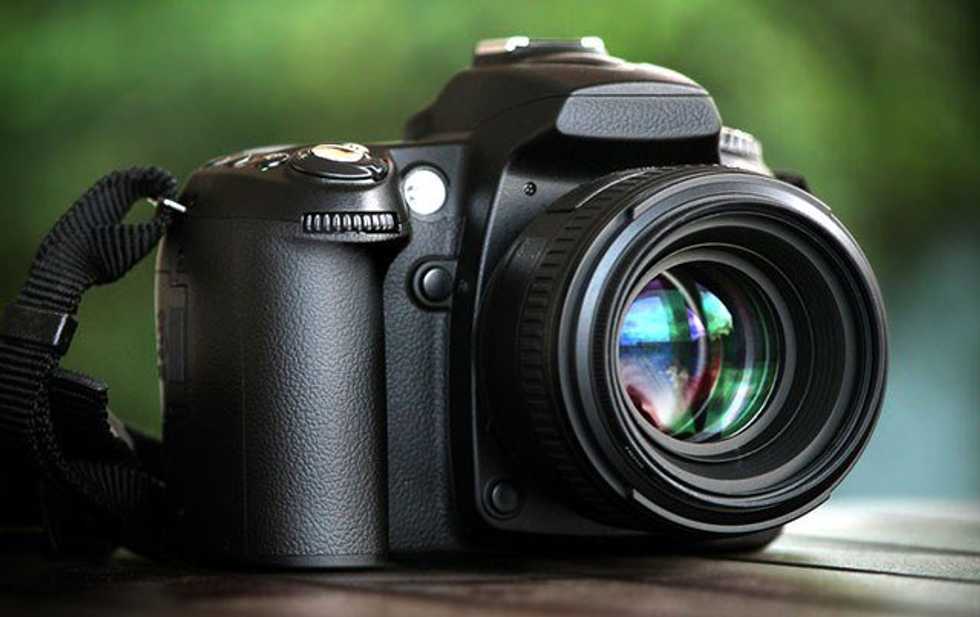
Growing up, I always loved playing around with cameras and looking at family photos. I was always the “creative one” in my family, although I knew the fine arts weren’t necessarily for me. When I received my first DSLR for Christmas a few years ago (those are the big, expensive looking cameras with lenses you attach yourself, for the non-photographer), something clicked and I knew that photography would be more than just a fun little hobby. Since then, my camera has barely left my side, and as cheesy as it is, it’s helped me learn some life lessons along the way.
You Learn to Observe
For me and for a lot of other photographers, taking pictures is all about capturing a moment so raw that words cannot fully explain it. Look through the Pulitzer Prize winning photographs through the years, and whether they’re sports pictures, photos from war, or just a moment frozen in time, these pictures convey the moment that cannot be fulfilled in anything but that picture. Every time I take photos, especially with people, I strive for those moments. The winning team’s exclamations, the hug between long lost friends, the pure joy, sorrow, and every other emotion that humans are capable of feeling. But to get those moments, you must always be watching, always quietly on the sidelines with your lens and camera settings ready.
Photographers are Always in Demand, and Always get Special Access
For a while, I worked as a photographer for my college, and this allowed me the ability to go into events simply because I had a camera. Every Parents’ Weekend, I’d get a free T-shirt and full access to events I hadn’t paid for. I’ve seen plays during dress rehearsal, capturing the best moments before the audience gets to see it. People love photos of themselves, their families, and their friends, and the majority of events want photographers running around so that people can have something to look at once the event is over. Whether they’re candids or posed, being the photographer at events gives you a special insight on the inner workings of the school, the game, the play, or whatever else you’re photographing, and the free food is a great bonus, too.
People Love Your Work
As
I mentioned in the last section, many people love having pictures taken
of them and then seeing them in high definition later on their laptops.
It’s so flattering to me when I’m on social media and see people using
or complimenting my pictures. Photography is a business so entrenched in
memorializing and pleasing people that when you see people enjoying
your work, it makes you happy too. In a time when photos are an easy
commodity, being the one who knows how to use a camera that blurs the
background and makes colors not need a filter is a special skill that
people appreciate. Even when at an event and someone hands me their
camera phone, I still see the appreciation on their face, and it warms
my heart. I know that in my own small way, I’m helping people keep
memories and pass them down in the future.
Photography is More Difficult than it Seems
At first, I just
used the automatic settings and hoped for the best. Having years of
experience behind me and having met other photographers, I quickly
learned that that type of outlook doesn’t fly. While iPhones make
photography as simple as “point and shoot”, for the photographer,
there’s a lot more involved. There’s composition, of course- never
forget the rule of thirds, and the Golden Hour is your best friend when
outdoors. But then there’s camera settings- getting the aperture,
exposure, white balance, and all the other little bits just right makes
for a picture that will need much less editing and a lot less
frustration on the photographer’s part. And don’t even get me started on
editing- once you learn how to photograph, you have to learn how to
Photoshop, too.
There’s Nothing Like Being a Photographer
I’ve
never found any other outlet quite like photography. Whether it’s
creative writing or reporting, sports or music, there’s just something
about photography for me that makes it truly special in the realm of
arts and hobbies. Photography is an art, but it’s also a form of
journalism, a memory-maker, and so much more. It’s one of those things
that people who are great at it make it seem easy, but when you try it
yourself you start out totally overwhelmed by the dials and buttons, let
alone the fact that you need to stockpile a collection of lenses.
There’s few things on a college campus that people run to faster than a
fancy camera (food, their bed after lab… yes, there are a few!) and for
the photographer, it’s an incredibly satisfying feeling. Photography is
something you can never outgrow, although it evolves with you- you get
better at it, you change cameras, you try to take photos of scenery
instead of people or people instead of scenery. To sum it all up, being a
photographer is a lifestyle, and a truly wonderful one at that.