

You never fully expect the end of something, even if you know it's coming. It can be so subtle that you don't get the closure you need to move on. In such a difficult time, your emotions seem jumbled and confused. You may think you're alone, but you're not. We've all be there.
1. Denial
The first stage of grief is denial. Denial occurs when you are unable to deal with the grief that surrounds you. You tell yourself that there's no way the show you spent three months of your life on can already be over. It just can't be. There's no way the show would end like that. There's no way it's just over.

2. Anger
After denial comes anger. How could the show deliberately allow you to become so emotionally attached, and then just end it like your feelings meant nothing? I mean, don't the writers care about their fans at all? You convince yourself that it was their fault. They were the ones that were too lazy to write more seasons.

3. Bargaining
During the bargaining stage, you begin to wonder how you could persuade the writers to continue the show. You think maybe if you could get enough people to come together in support, they would have to continue it. If that's not enough, you could always sell your left kidney on the black market to raise the money. You only need one to lead a normal life anyway.
4. Depression
In your darkest days of mourning, you enter the depression stage. You tell yourself that you'll never be okay again. You spend your days in your bed binge eating french fries and wallowing in your sorrows. You're convinced that your life is basically over.

5. Acceptance
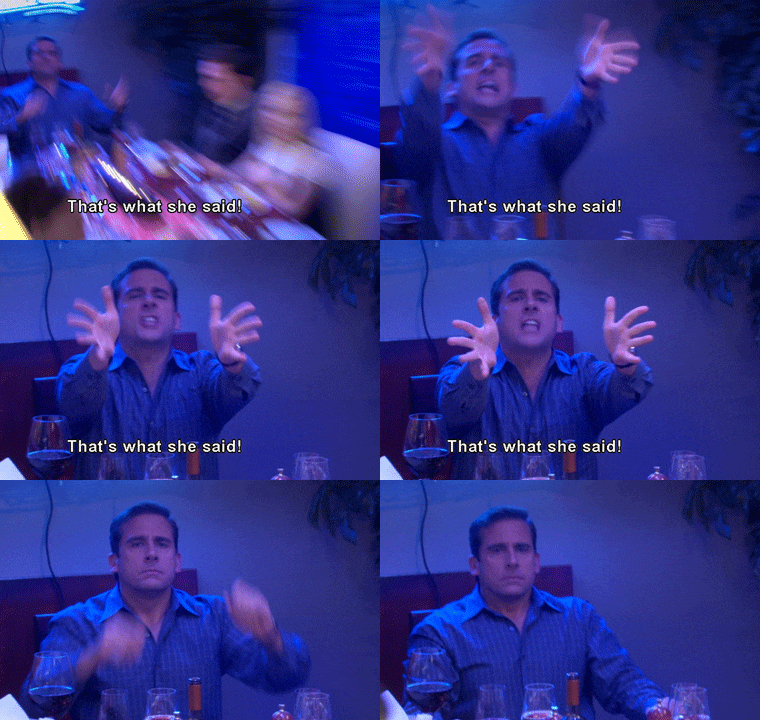
Eventually, you can find it in your heart to accept the tragedy that affected you so immensely. It's always darkest before dawn. You know that your favorite characters would want you to be happy. You may never be able to love a show as much as you loved that one, but it's okay to get back out there. It's time to move on to bigger and better things. As Michael Scott would say, "That's what she said!"