


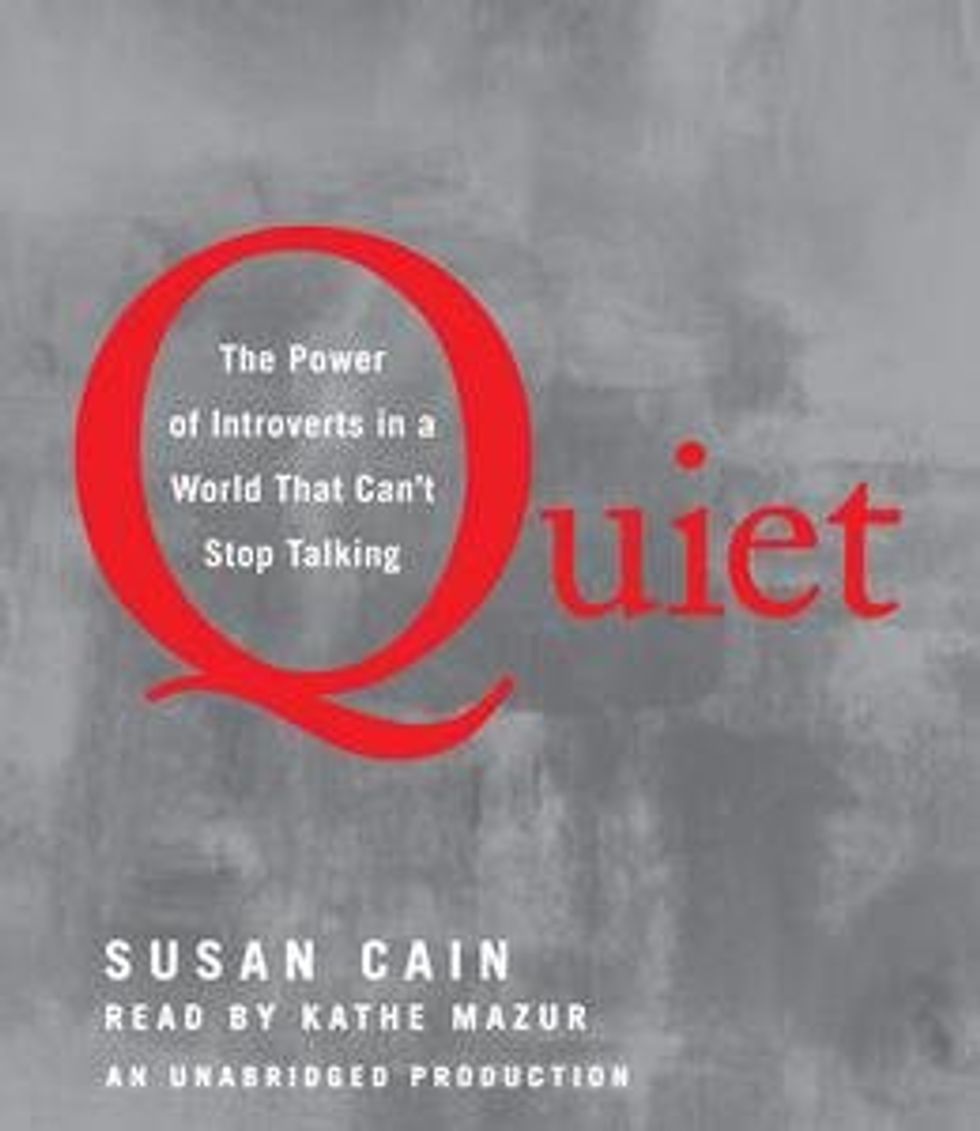
At least one-third of the people we know are introverts. They are the ones who prefer listening to speaking; who innovate and create but dislike self-promotion; who favor working on their own over working in teams. It is to introverts — Rosa Parks, Chopin, Dr. Seuss, Steve Wozniak — that we owe many of the great contributions to society.
In Quiet, Susan Cain argues that we dramatically undervalue introverts and shows how much we lose in doing so. She charts the rise of the Extrovert Ideal throughout the twentieth century and explores how deeply it has come to permeate our culture. She also introduces us to successful introverts — from a witty, high-octane public speaker who recharges in solitude after his talks, to a record-breaking salesman who quietly taps into the power of questions. Passionately argued, superbly researched, and filled with indelible stories of real people, Quiet has the power to permanently change how we see introverts and, equally important, how they see themselves:
1. We may not be able to engage in small talk, but we kill it when it comes to deeper discussions.
"Introverts, in contrast, may have strong social skills and enjoy parties and business meetings, but after a while, wish they were home in their pajamas. They prefer to devote their social energies to close friends, colleagues, and family. They listen more than they talk, think before they speak, and often feel as if they express themselves better in writing than in conversation. They tend to dislike conflict. Many have a horror of small talk, but enjoy deep discussions."
2. Being quiet does not mean that we don't have something to say.
"There's zero correlation between being the best talker and having the best ideas."
3. We're excellent readers of others.
"The highly sensitive [introverted] tend to be philosophical or spiritual in their orientation, rather than materialistic of hedonistic. They dislike small talk. They often describe themselves as creative or intuitive. They dream vividly, and can often recall their dreams the next day. They love music, nature, art, physical beauty. They feel exceptionally strong emotions -- sometimes acute bouts of joy, but also sorrow, melancholy, and fear. Highly sensitive people also process information about their environments -- both physical and emotion -- unusually deeply. They tend to notice subtleties that others miss -- another person's shift in mood, say, or a lightbulb burning a touch too brightly."
4. We are comfortable being ourselves.
"So stay true to your own nature. If you like to do things in a slow and steady way, don't let others make you feel as if you have to race. If you enjoy depth, don't force yourself to seek breadth. If you prefer single-tasking to multi-tasking, stick to your guns. Being relatively unmoved by rewards gives you the incalculable power to go your own way."
5. Introverted does not mean inferior.
"Introverts need to trust their gut and share their ideas as powerfully as they can. This does not mean aping extroverts; ideas can be shared quietly, they can be communicated in writing, they can be packaged into highly produced lectures, they can be advanced by allies. The trick for introverts is to honor their own styles instead of allowing themselves to be swept up by prevailing norms."
As an introvert often called upon to behave like an extrovert, I found this book to be compelling, thought-provoking, and empowering. In Quiet, Cain legitimizes and celebrates the real personality traits of those who, like me, may have felt pressured to conform.

















