

In today’s day and age, questioning someone’s identity is seen as a bit of a faux pas. When I tell people that I’m gay, no one ever responds, “Are you sure?” The responsibility of determining who is gay and who isn’t is usually, after much speculation from the community at large, ceded to the individual in question.
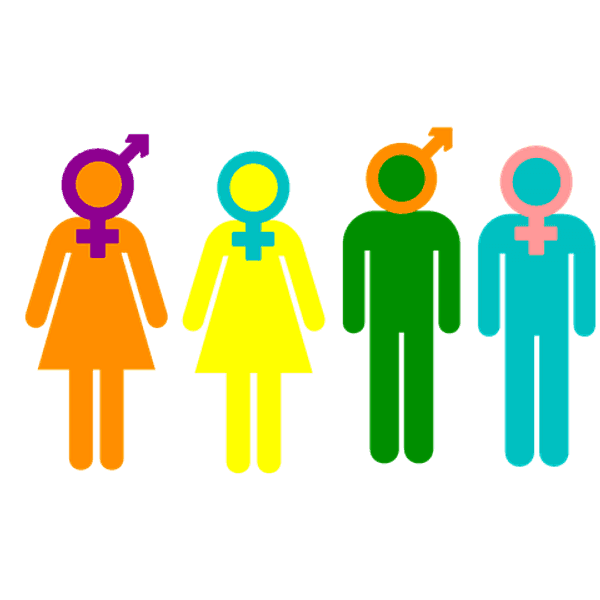
Sometimes, however, questioning someone’s identity can be a huge compliment. It shows that an individual wants to learn more, and perhaps, even further his or her tolerance and understanding for a community. I have a few friends who identify as non-cisgender, meaning that their gender doesn't necessarily agree or must conform to the roles that are expected of individuals with the sexual organs they've been born with. They range from transgender to gender fluid, and beyond! I love so many individuals who identify this way that it would only be right for me to get to know more about your experiences. Here are five questions I have for the non-cisgender community. They emerge from my willingness to get to know more about your experiences and feelings, and to fight my own confusion about the topic. I hope I present these questions in the most respectful way possible to a community that deserves nothing but respect.
1. Does Transgenderism undermine the theory that no gender binary exists? Or vice versa?
Let’s not pretend like this question hasn’t gone through all of our minds, and let’s not pretend like there isn’t a huge contradiction we need to figure out. Most people who are transgender will explain that a lack of tolerance for their community is based in a centuries-old gender binary, where men are the workers and the earners, and women are the balabustas, the homemakers. But there is something a little shaky about this: many transgender individuals, after they make their transitions, tend to fall into very stereotypical roles for their target gender. Transwomen tend to start wearing makeup, and transmen enter into masculine contests, frequenting gyms and muscle building contests. Does anyone think that this might be reinforcing the gender binary? Why do you need to be a woman to wear makeup? What is it that “womanhood” allows you to do, that being a gender-binary-breaking male wouldn’t?
2. If you never heard of the theory of gender fluidity, how would you know that you were gender fluid?
I may be oversimplifying the issue at hand when I say this, but I knew that I was gay because I was attracted to men. Even if there was no word for “gay” or “homosexual,” I’m pretty sure I would still know that I like men. There were also transgender individuals as far back as the ancient polytheistic cultures in the Indus region. But the notion of existing “between” gender (or on a gender scale) is rather new, and so is the notion that gender is a social construct. I don’t understand how an individual comes to the conclusion that neither the terms “he” nor “she” adequately “describes” them.
3. Plenty of people say, “Even if I were to have the funds, I’m not sure I’d be ready for bottom surgery.” How do you know when you are “ready?” How do you know if bottom surgery is for you?
For those readers who don't know, "bottom surgery" is the reshaping of genitalia to conform to the gender identity of that individual. It has been proven to be a final step towards alleviating gender dysphoria, and it is a rather touchy subject for many people, both transgender and their allies.
I understand that genitalia isn’t necessarily something that comes up in normal conversation, but if we’re going to talk about something, let’s talk! What is the big taboo around bottom surgery? I’m completely behind the notion that you don’t need a penis to be a man, nor a vagina to be a female. So what makes someone want this part of the transition, and what makes someone shy away?
4. Why do so many members of the non-cisgender community get angry when other people can’t remember their preferred pronouns?
Whenever I make a new friend, there is one memorization requirement: a name. Eventually I’ll have to memorize a birthday, but that’s about it. Knowing likes and dislikes (especially food), dreams, goals, and how to have fun with this person will eventually just come from spending time with each othe –no memorization involved. But with non-cisgender friends, I’m usually required to memorize a few pronouns. And these pronouns are rarely ever chosen from a pool of already-existing English words.
It’s unfortunate that the intelligentsia of the English-Speaking world hasn’t come up with standard pronouns for the non-cis community to chose from, but that doesn’t mean that I am forced to memorize your six-syllable long pronoun that isn’t found in a dictionary. Out of respect, however, I will probably wind up using your name instead of any pronoun. But this, still, gets on the nerves of plenty non-cisgender individuals. (I guess I understand why. Imagine one of my friends saying: “Mikey’s paying with Mikey’s credit card, and then we’re taking Mikey’s car home." How exhausting!) I am completely sympathetic to anyone who doesn’t feel that the words “he” or “she” adequately describe their identity, but please realize that choosing a random word you’ve invented doesn’t help the situation.
5. Why are given-name questions considered so rude?
There are cisgendered people whose parents named them Apple, Blue Ivy, and even Blanket (thank you, celebrities!). I’ve met a cis-woman named Steve, and I’ve met a cis-man named Hillary. Why, then, is it rude for me to ask you what your given name was? I’ve also always wondered what aspects go into “picking” a new name, mostly because it’s a phenomenon that is more or less specific to the Trans community. But if I ask, “Oh, how did you pick that name?” I’m usually told that this is a rude question. You realize that most people don’t get the opportunity to pick their names in life, right?
Perhaps my original goal to present all these questions in the most respectful way possible may not have exactly been realized. And I apologize for my blunt way of speaking. But these questions usually swirl in my mind when thinking about non-cisgendered people. As a gay man who wants to be an upstanding member of the LGBTQIA community, I want to know more about the T and the I!
















