
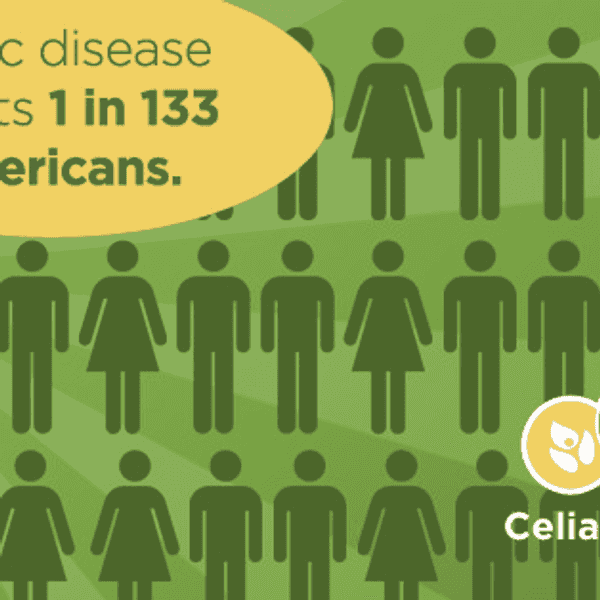

When celiac disease is mentioned, people often either have no idea what it is or become alarmed at the thought of catching a disease. No, it's not contagious, but here are some other popular myths.
1. It is not the same as being intolerant or having an allergy.
While many people have the misconception that being gluten-free is all the same, it is not. Celiac disease is an autoimmune disease where if the person ingests gluten, it will break down the villi in the small intestine over time, causing malnourishment and other serious, long-term health effects. However, there are many reasons why people are gluten-free, ranging from celiac disease, wheat allergies, non-celiac gluten sensitivity, gluten ataxia and dermatitis herpetiformis. If your doctor has not diagnosed you with any of these conditions, you should not need to be on a gluten-free diet.
2. It is not safe to only have it sometimes, or to eat it in small amounts.
Many people believe that if celiacs ingest it sometimes, or only have a little bit in their meal, it is fine. However, this is far from the truth, as while it may be OK for intolerant people to occasionally have gluten, celiacs are supposed to never ingest it, or this can lead to long-term health risks. This misconception is why celiac people often have trouble eating out at restaurants.
3. We are not part of a hipster fad.
Yes, we have all heard about how the gluten-free diet is trending, especially among the hipster community. While this has been great to raise awareness of people who truly need gluten-free diets, it gets very irritating when a server at a restaurant rolls her eyes at you when you request something gluten-free or brings out croutons on your salad because she thinks you are just doing a fad diet.
4. Gluten is not found only in foods, such as bread, but in a variety of things.
Sometimes, people only associate gluten with foods, such as bread or pasta, but the truth is that it is found in many things, ranging from soy sauce to salad dressing to face lotion and makeup to alcoholic drinks. This is why we have to check the ingredients of everything at the restaurant or the grocery store and be careful when we go out for drinks with friends.
5. The only true cure for celiac disease is by following a 100% gluten-free diet.
While there are some pills that claim to digest gluten in the body when it is ingested, these have not been proven to work or be medically safe, especially for people with celiac disease. While it is tough being gluten-free, we are lucky that there is a cure for the disease, which is to follow this diet.
So, next time you hear that someone is gluten-free, do not immediately jump to conclusions. They may be celiac or have a sensitivity or an allergy, all of which are different from one another and certainly different from those who simply choose a gluten-free diet for fun.