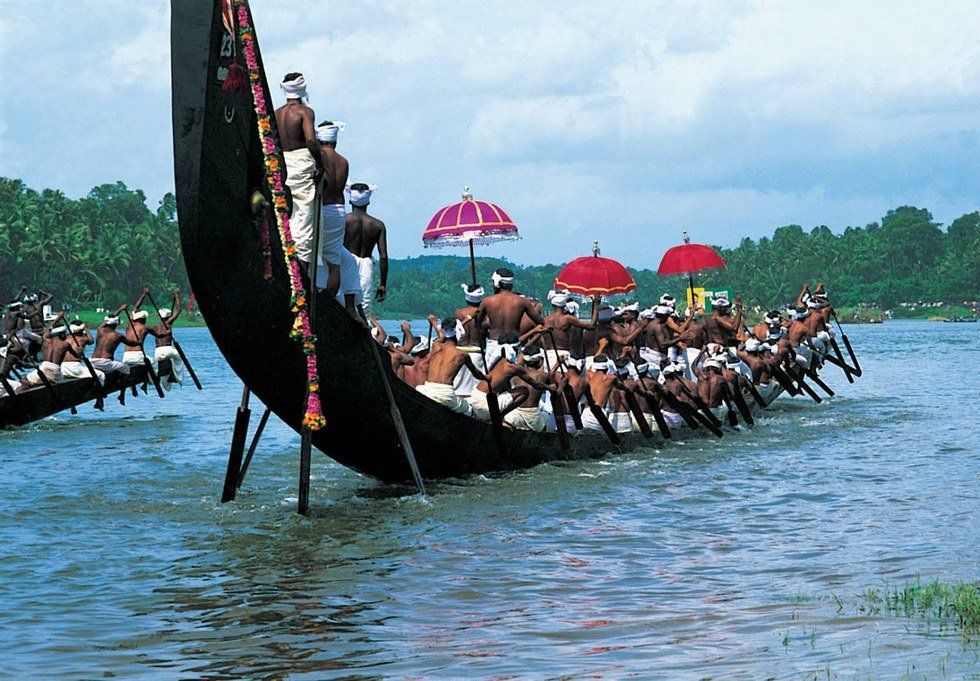
It sounds bad when I say it like that, but my first week in Kerala, India really has been interesting! After 12 years, we finally bit the bullet, bought the tickets, stuffed the suitcases and trudged along to the airport for the 18-hour plane flight back home. It’s been a wild ride since then, filled with tons of good food, family and—in the next week—a wedding. I’ve enjoyed getting a little more in touch with my roots, which was obviously more difficult in America. Our culture is not typically depicted in common or popular media but, wow, am I proud to be from this rich and unique state. Ours is a culture full of traditions, yet groundbreaking modernism. In my short time here, I’ve kind of figured out a few features that make it this way.
Everybody knows everybody.
_0609_-_Kerala_donne_contro_povert%C3%A0.jpg)
The funny thing is, I’m not exaggerating at all. Literally everyone knows or is related to someone else in some capacity by marriage or blood. You know Gita? She’s married to your best friend’s brother whose niece is my neighbor’s second cousin’s granddaughter. The extent of the network in India is both incredible and terrifying, partially because if you share some news with just one person, by tomorrow everyone will know. And I mean everyone.
Again, it sounds like I’m exaggerating but here’s an example of a real connection in my family which I learned this week: Apparently my aunt’s father’s sister’s daughter is actually married to my mother’s second cousin’s husband. I’ll leave you to figure that one out on your own.
No traffic rules.

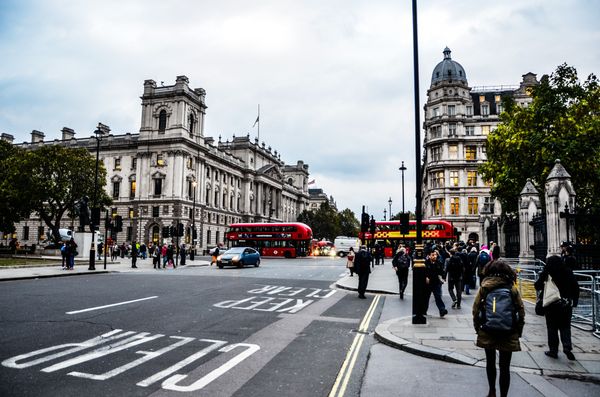
Imagine this scene for me: You have two lanes in a street. Instead of two lines of cars, there are four with about half an inch of space between each car. Add to that, tons of motorcycles weaving between the cars and the cars themselves weaving between lanes and driving on the wrong side of the road. Add to that, lots of honking and -- a cow? Yes, a cow or two. Hindus consider cows sacred so if they want to cross the street or give birth in the middle of one, you damn well better let them. There, you have Indian traffic. Enough said.
The best food on the planet—and lots of it.
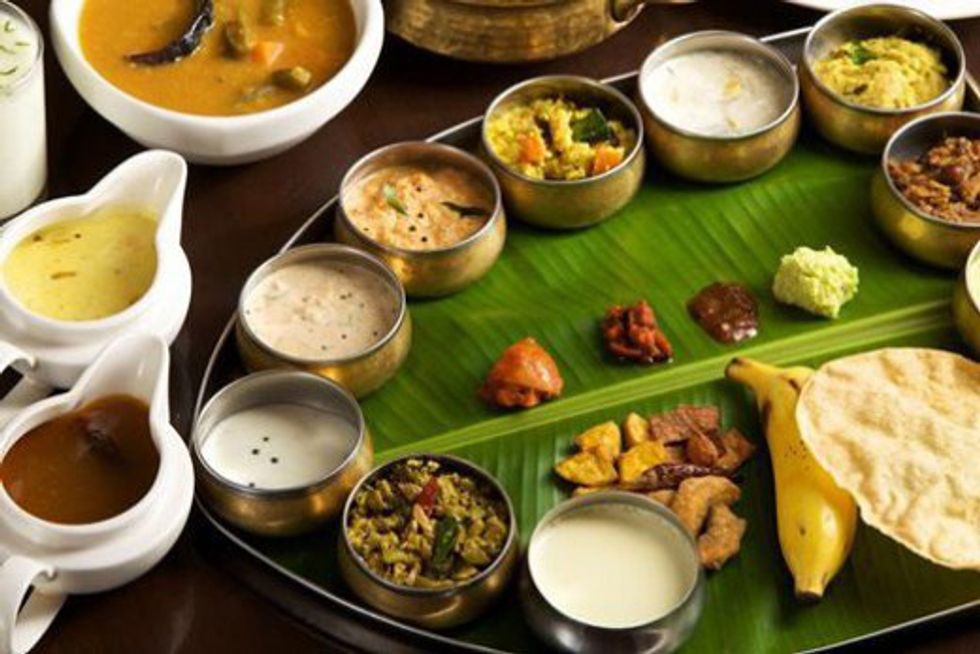
A lot of my friends tell me they love Indian food with a passion. “Oh, mango lassi and naan bread and butter chicken are literally my favorite foods,” they gush and I just smile and nod. I do this because calling these dishes Indian food is a complete misrepresentation of our entire country. Things like mango lassis and naan are actually North Indian festival dishes (so even North Indians don’t eat like that on a regular basis).
I’ll tell you a little secret: in the south, where I’m from, the food gets even better.
There is an amazingly diverse usage of vegetables, and the best bananas and coconuts you’ll ever have because Kerala has the ideal tropical climate. Pretty much everything is cooked in coconut oil (Kerala is the land of coconuts) and combined with fresh seafood and lots of love, this food is not only the best, but it is also very healthy.
If you visit an Indian family anywhere and refuse to eat their food, I promise you’ll insult them beyond repair. Food is an essential part of our culture and represents an extension of a family’s generosity and willingness to give.
I never say no to any food offered to me here, and it’s worked out pretty well for me. My waistline is another story.
Everyone stares.
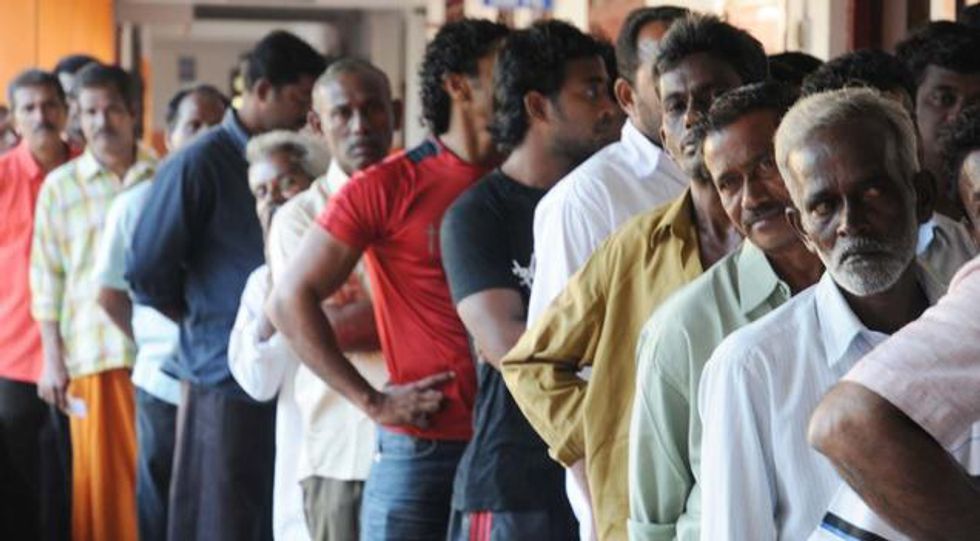
Seriously, everyone stares. People will stop what they’re doing and just watch you walk by and I’ve been told, "It’s a Kerala thing." At first, I thought they must know we’re from abroad and that fascinates them in someway because people here believe America is still the shining beacon of hope and land of opportunity. But no, that wasn’t it.
Then, of course, I thought everyone was checking me out and that made for a great ego boost and really enjoyable couple of days.
For future reference, don’t flatter yourselves because they aren’t checking you out either. It’s just a thing here which was affirmed by my aunt who used to live in Kerala. Don’t ask me why, I just visit here.
Classism.

Obviously, this was something I learned on a more serious level. Servants here are much more common even in a low income household. Hired help will take care of everything, from walking the dog to washing your car and dishes.
On our first day here, our driver took us to a local restaurant for lunch. We, being the concerned-for-equality Americans that we are, asked if he had lunch which he said he did. After eating, my brother and I headed to the restrooms and saw him eating by himself on the other side of the restaurant. My mother later told me that this is typical as he ‘worked’ for us and was in someway inferior.
If you go to any large facility like the airport, you’ll see this implicit classism even more obviously displayed. The air hostesses, pilots, and general white collar jobs will typically be done by people of a fairer skin tone and the blue-collar jobs will be typically done by people of a darker skin color -- the remnants of the caste system.
People always ask me why that is if the caste system was done away with years ago. Do Jim Crow laws still exist? No. But do racism and discrimination still exist? Definitely. So let’s work that one out before we go criticizing other countries for their supposedly backwards lifestyle and culture.