
For centuries, philosophers and peasants alike have deliberated theories and paradoxes brought to us from conceptual science and reasoning. Although some may bore us to tears when we learn about them in class, there are a few that are incredibly thought-provoking. Here are four of the more famous theories, drawn from scientific, psychological, mathematical and existential realms:
1. Zeno’s Paradox
Zeno’s Dichotomy Paradox is relatively simple. Suppose you were in an open field, looking at a tree, and then from your starting point you walked halfway toward it. From there, you walked halfway towards it again, and then again from there. Our experience can tell us that you’ll eventually reach the tree, but Zeno postulates that theoretically, you will never be able to do so because there’s always a halfway point between yourself and the tree. If you think about it in terms of fractions, you could say that you started at 1, went to ½, then went to ¼, then went to ⅛, then 1/16, then 1/32, and so on.
2. Mandela Effect
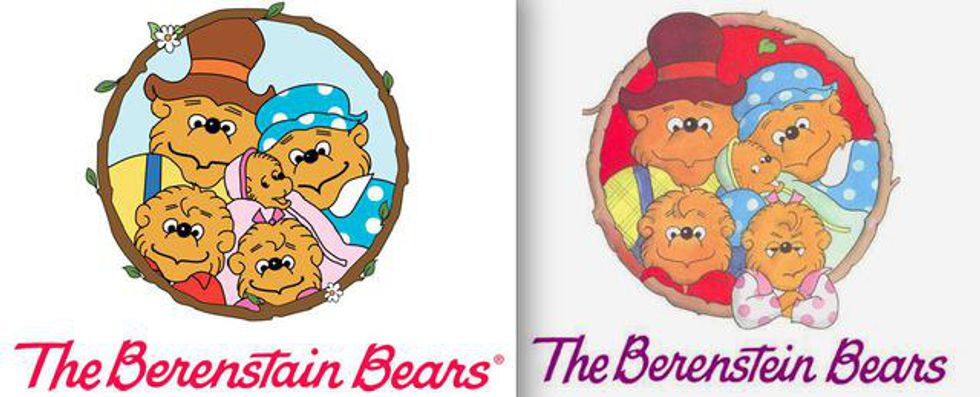
The Mandela Effect gained some popularity last summer when people brought up the controversy between remembering the children’s book as “The Berenstein Bears” and “The Berenstain Bears”. The theory suggests that humans create their own realities, and suffer from “collective misremembering”, a phenomenon that is addressed by the term “confabulation” by many psychologists. The Mandela Effect has been used as an explanation for many people who share vividly recalled misconceptions, such as those who swear they remember Nelson Mandela’s death in the 1980’s, or those who remember JIF Peanut Butter as Jiffy Peanut Butter. There are a few explanations for this phenomenon that are offered, including parallel universes, a glitch in the matrix, and simply fallible memory.
3. Möbius strip

This can be classified as an optical illusion, but can be taken out of its physical concept and translated into a more theoretical form. It is recognized as being mathematically “non orientable,” or to put it simply, lacking in consistency. Physically, you can take a strip of paper, twist it, and then tape the ends together, which means that if you had an ant start walking on one side of the paper, it could walk around the length of the entire looped paper and end up on the other side. Although this is physically possible, the conceptual nature of this loop is very hard to grasp considering the lack of our ability to adjust our natural perception of a strip of paper whose front and back sides are connected fluidly.
4. “The Egg”- Andy Weir

This concept is presented by Andy Weir in a story in which the man has died in a car accident, and he is now speaking to “God” who has taken form as a “vague authority figure.” The God proceeds to tell the man that he is about to be reincarnated as a Chinese girl from many centuries ago. He postulates that time is a human concept, and that in reality, everyone is simply a reincarnated version of only one man; every individual is interacting with a different reincarnated version of themselves, but are only aware of their own current lifespan.