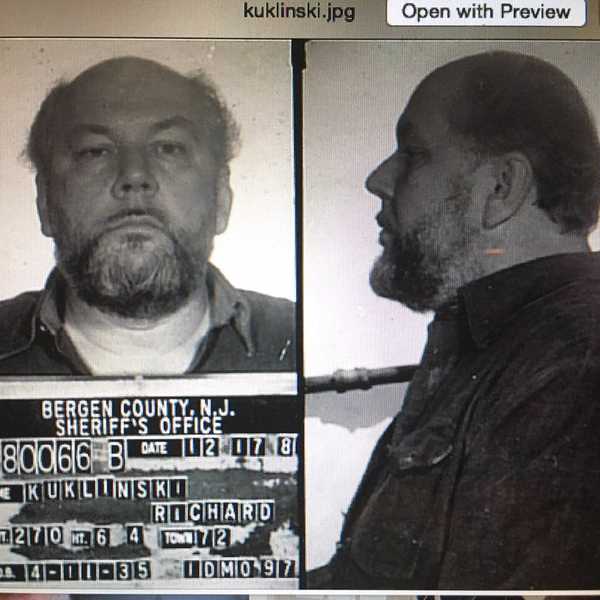

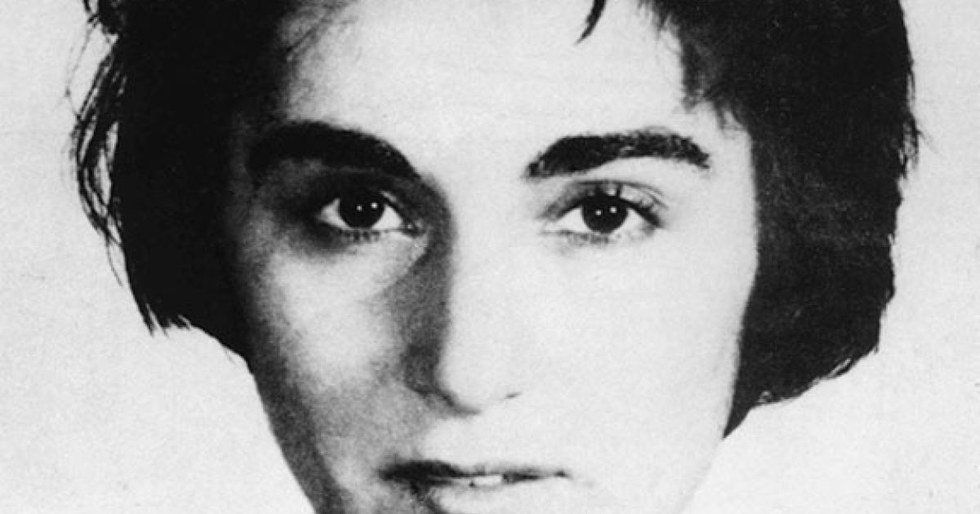
It’s the the desperate face of Kitty Genovese’s youngest brother that pops into my mind when I see something or someone acting suspicious. It’s not necessarily the person or action that is happening that triggers his image, but the questions that I ask myself in that moment.
Should I be concerned?
Should I tell someone about this?
Should I call the police?
I won’t hold it against you if aren’t familiar with the murder of Catherine “Kitty” Genovese since it happened about 52 years ago. The brutal attack against a young working woman in a New York City borough is, unfortunately, an all too familiar narrative. The harrowing, heartbreaking detail that makes this case so disturbingly interesting was the report that her murder was apparently witnessed by approximately 38 bystanders. Two weeks after the slaying of Genovese, a writer from the New York Times published an article that stated “37 to 38 saw or heard the attack and did not call the police.”
The attack lasted for about 30 minutes.
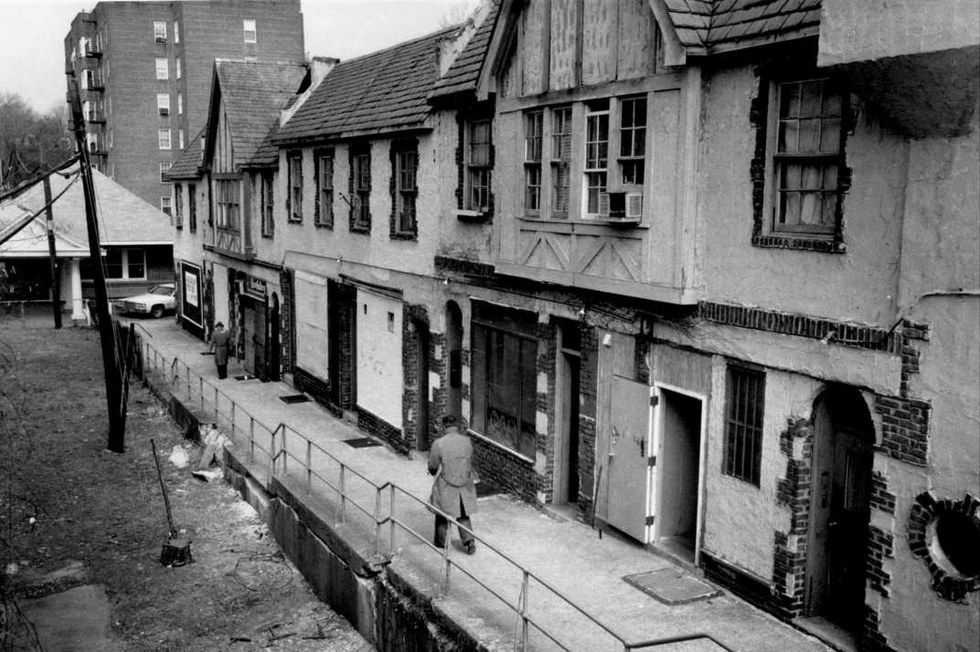
She was only 100 feet away from her apartment’s doorway when Winston Mosley began his assault. Her screams echoed throughout the dimly lit alleyway. Several neighbors whose back windows faced the scene of the crime claimed that due to the cold air on that night, their windows were closed shut. Some say they heard Kitty’s cries but claimed they where drowned out and what they heard sounded like an injured cat or dog. One neighbor claimed he shouted for the man to leave her alone and watched as Genovese’s attacker retreated, yet he still did not telephone the police about the ongoing assault.
The reports from neighbors just get more unbelievable from there.
The earliest phone call to police wasn't made until after Mosley had come back to finish his attack on Genovese, unfortunately, by then it was too late.
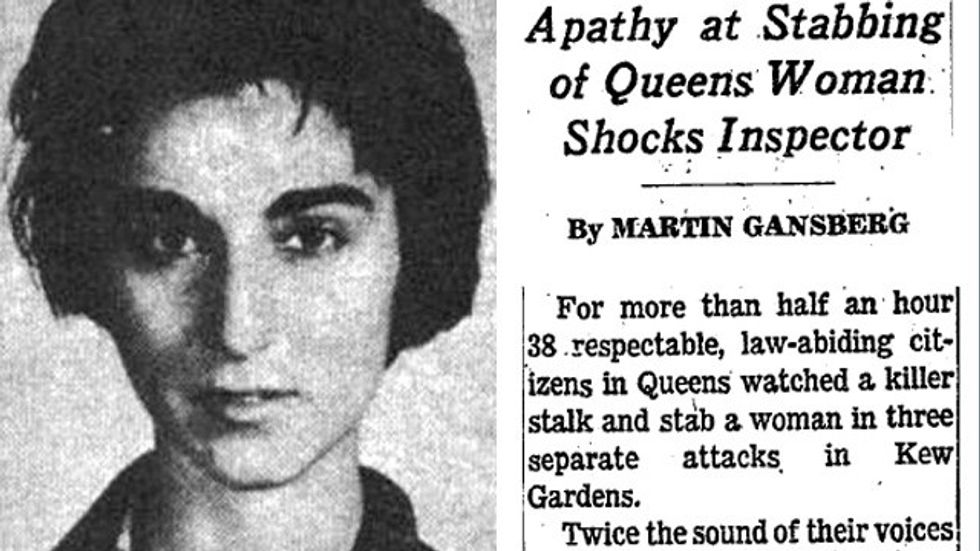
A lover’s quarrel, a drunken brawl, even a group of rowdy friends is what Genovese’s surrounding neighbors told the police when questioned about why they weren’t called out sooner. Even if all of these scenarios where true, why wouldn’t you have called the police about it? Hearing a couple fighting in the street or the screams of a woman rattling your walls. Aren’t these the situations where you would call the police?
Kitty Genovese’s murder is enough of a tragedy within itself, but the sheer indifference shown by her neighbors is the narrative that sparked the now popular social psychology phenomenon commonly known as the Bystander Effect.
The Bystander Effect was first tested by researchers John Darley and Bibb Lantané.The 1969 experiment that was conducted by Bibb Lantané and philanthropist Judith Rodin became one of the strongest and most replicated effects in social psychology history. In this experiment 70 percent of the people who were alone went to help the victim after they believed that the victim was hurt, but when there were other people around only 40 percent of the bystanders offered to help the victim.
The most obvious thing that you can take from these research findings is the alarming difference in the number of people who stepped up to help the victim. I believe one of the more unsettling things about this is that even though 70 percent of the bystanders offer help, they only do so after they believe the victim has been harmed or after the crime had been committed.
“Once a situation has been noticed, in order for a bystander to intervene they must interpret the incident as an emergency," according to John Darley.
The man who claimed to have shouted out of his window that cold March night said that he saw Mosley disappear into the shadows and watched as Kitty slowly staggered to her apartment door. He assumed no harm had been done, that she was maybe just a little beaten up, but OK enough to get home. He closed his window, not knowing that Mosley would come back for Genovese who was now hidden from almost every window in the alley.
Nearly half a decade later, Bill Genovese, just only 16 at the time of his sister’s murder, is still trying to get answers to the one question we all ask:
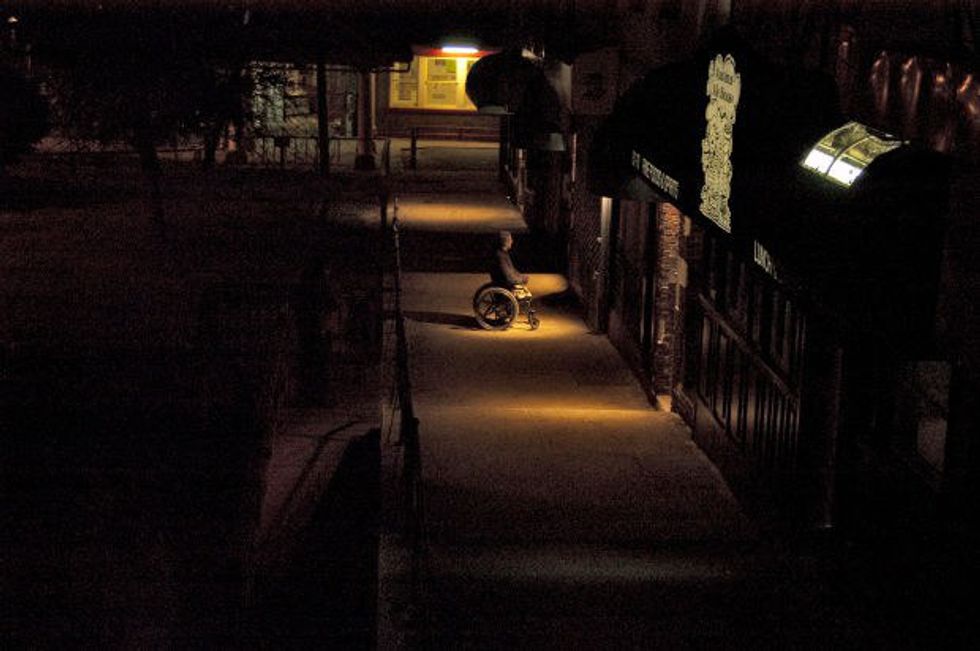
Why didn’t anyone come to the aid of Kitty Genovese sooner?
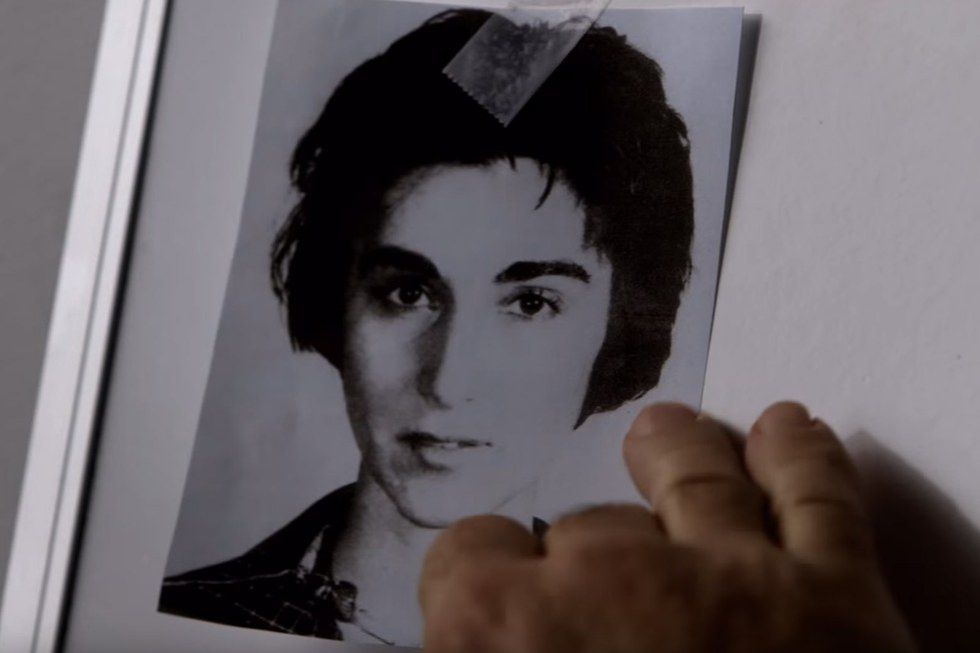
Mr. Genovese’s search for these answers was documented in the critically acclaimed, 2015 documentary, "The Witness." You see him rolling from door to door, having lost both of his legs in Vietnam, seemingly obsessed with finding some truth within the claim that 38 witness had stood by on that cold March night.
When dealing with the internal battle of being an inept bystander, I realize I don’t want to become Bill Genovese.
I don’t want anyone else to become Bill Genovese. The haunted loved one who is still searching for answers he will probably never find.
I see his grief stricken face in my mind, and I am vehemently reminded that being a bystander is not a option when someone’s life is being threatened.
Kitty’s attack and murder lasted 30 minutes, and that still wasn’t enough time to save her life.
A life can be taken in less than a second, so you don’t have time to stand back and watch.