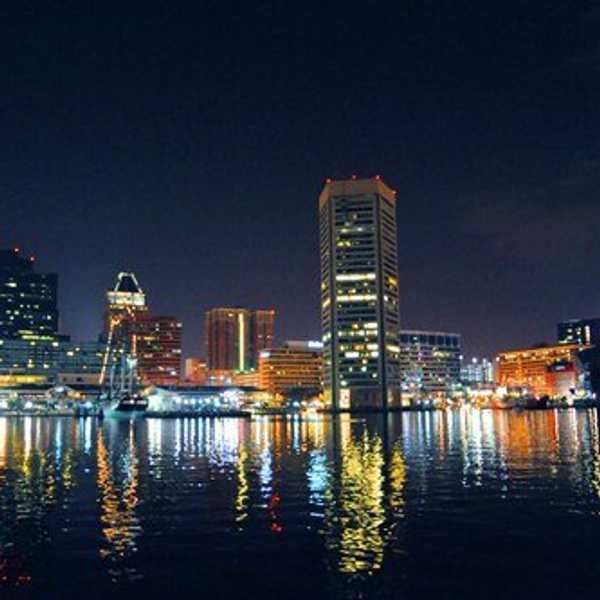
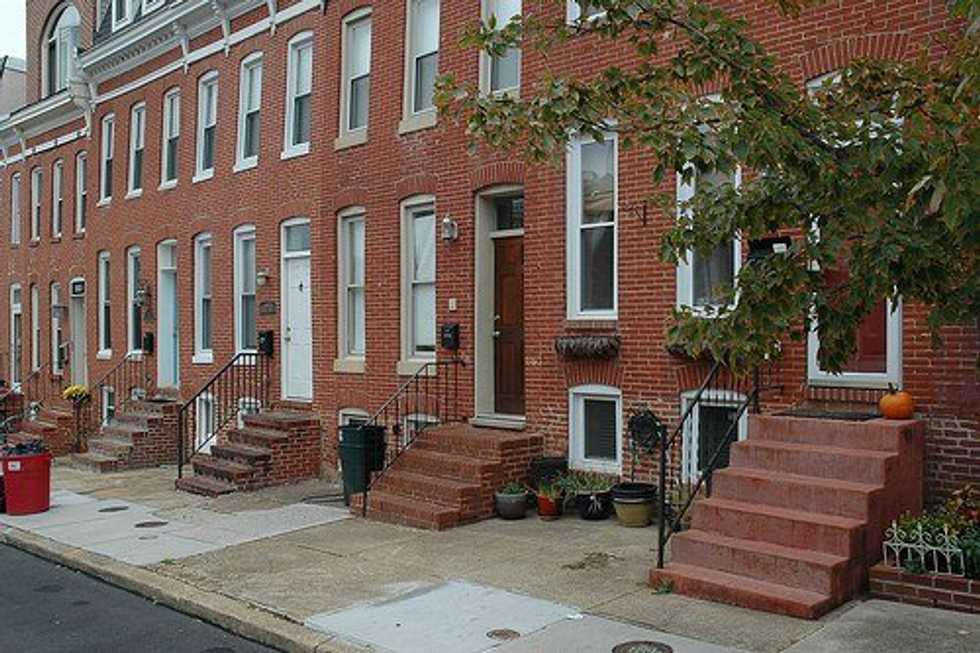
"Hi, I'm Andy, and I'm from Baltimore."
"Oh, Baltimore-- you mean, like, 'The Wire'?"
"Yes, that same Baltimore..."
I've had this exchange, word for cringe-worthy word, with too many people to count. Wherever I am, conversations about Baltimore almost inevitably revert to one of three topics: the Baltimore Ravens (not right now, guys), "Hairspray," and, most frequently, "The Wire." Recently, I've developed a standard response to roll out anytime someone attempts to describe all of Baltimore with a police drama from 15 years ago--yes, "The Wire" was made in Baltimore; yes, it is incredibly accurate to the stories it attempts to tell; no, all of Baltimore is not like that; in fact, Baltimore's crime has steadily declined over the past few years; wouldn't you think that Baltimore's story is a bit more complex than the way it's depicted in an hour on HBO? However, 2015's statistics paint a different story.
Over the weekend of November 13, Baltimore's homicide total passed 300 for the first time since 1999 (at time of writing, the count had risen to 309). When I first saw the news, the cynic in me said, "of course this is what finally gets Baltimore coverage in The Guardian." I then rocked back in my chair and thought about that number a little bit--a number that packs a punch. 300 murders by mid-November is nearly one dead body a day at the hands of other human beings. The 300 dead run the gamut of Baltimore's demographics: old and young, wealthy and poor, people of all genders. However, let's not lose the plot here--any list of victims, or homicide map, tells us that Baltimore's homicides are heartbreakingly frequent in poor, black neighborhoods and communities and mostly nonexistent in areas that are not. This gross understatement surprises exactly no one.
I wish I could say that I have a decent understanding of how Baltimore is reacting, or if it's even moving the needle. Because I haven't spent more than a couple weeks at a time in Baltimore since 2013, I have no right to claim to understand how Baltimore feels right now.
I am, and always have been, a proud son of Baltimore. However, by virtue of my white skin and middle-class upbringing, the Baltimore I grew up in is not the one covered in red dots on the homicide map. The Baltimore I grew up in is comfortably nestled between swathes of red; my zip code only recorded two murders in the entirety of 2015. I get to sit at my computer on a study abroad program from my private liberal arts college and write about the statistics instead of living them. This story isn't about me; as established, I have no right to claim to know anything. However, I still find myself affected in a deeply personal way. This is difficult for me to process intelligently, but here I am.
The surprising thing about the coverage I've read is that it hasn't treated 300 murders like an anomaly, but rather a reversion to the mean. Baltimore's murder totals are answered with a collective sigh, as if there is nothing that can be done, and Baltimore will have a homicide a day for the rest of time. There's an overwhelming sense of "Well, what am I supposed to do?"
The story of Baltimore's 300 homicides is so often boiled down to black bodies shooting other black bodies and putting red dots on a map; it is either remedied by aggressive policing, or by ignorance and apathy. This cannot be the story. The story needs to be one of the systemic shackles of oppression that facilitate this violence, and the good work being done by brave young black souls who fight back against the inevitability of murder and the systems that create it. Why does none of the coverage of Baltimore's murders mention the rampant unemployment and food deserts and awful infrastructure and corrupt policing and lack of homeownership in Baltimore's black areas? It is criminal to write these homicides as mere examples of black-on-black crime, when the undercurrents are extremely tangible and troubling. Baltimore is a complicated city; Baltimore is a troubled city. But Baltimore is also a friendly town and a tight community and the greatest city on God's green earth. Before 2015, Baltimore murders declined steadily for years; Baltimore communities are strong.
If the world thinks Baltimore is nothing more than a homicide factory, they don't know Baltimore.