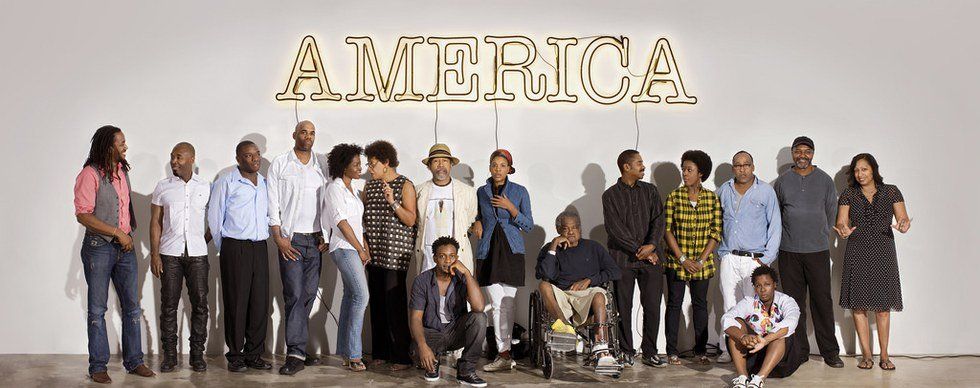
Unfortunately, I was unable to attend a class trip to the Cincinnati Art Museum. However, I really enjoyed looking around the Cincinnati Art Museum and Rubell websites. For my paper, I focused on the 30 Americans exhibit and focused on 4 artists: Glen Ligon, Lorna Simpson, Hank Willis Thomas, and Carrie Mae Weems.
Reviews of the exhibit seem to generally reflect positive on the fact that black artists and their art is now on display because most of the museums that the exhibit has traveled to don’t display very much art by African Americans. A few of the reviews seemed critical or speculative of the fact that there were 31 artists but the exhibit was called 30 Americans. I couldn’t find an answer as to why that is but it also doesn’t really bother me.
My favorite work was that of Lorna Simpson. Her work, Wigs (1994), really stood out to me. Wigs is a portfolio of 21 lithographs on felt with 17 lithographed felt text panels. A lot of things come to my mind when I see this piece. I wonder who and what the stories behind each of these wigs are. I wonder how different their lives were.
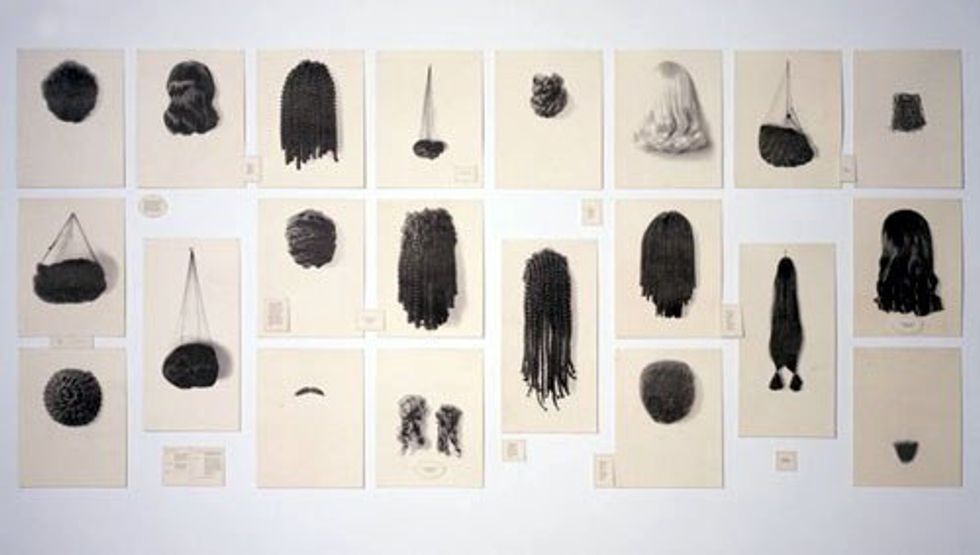
For better or for worse, I associate each wig or piece to a different race and with those different races come different stories. I assume the blonde wig comes from a white woman who probably lived a very comfortable life seeing how nicely curled and maintained the hair is. In contrast, I see some pieces with braids and assume that the hair in these pieces came from a black woman who probably saw much more struggle in her life than did the white woman. I can speculate about each of these wigs but the truth is that I actually don’t know who they belong to. I think that is part of the reason why the piece is so powerful. Because there is so much uncertainty involved with the piece, it becomes universal in who can relate to it. I think that Simpson did a great job representing most, if not all, backgrounds through hair in the piece which makes it easy to relate to.
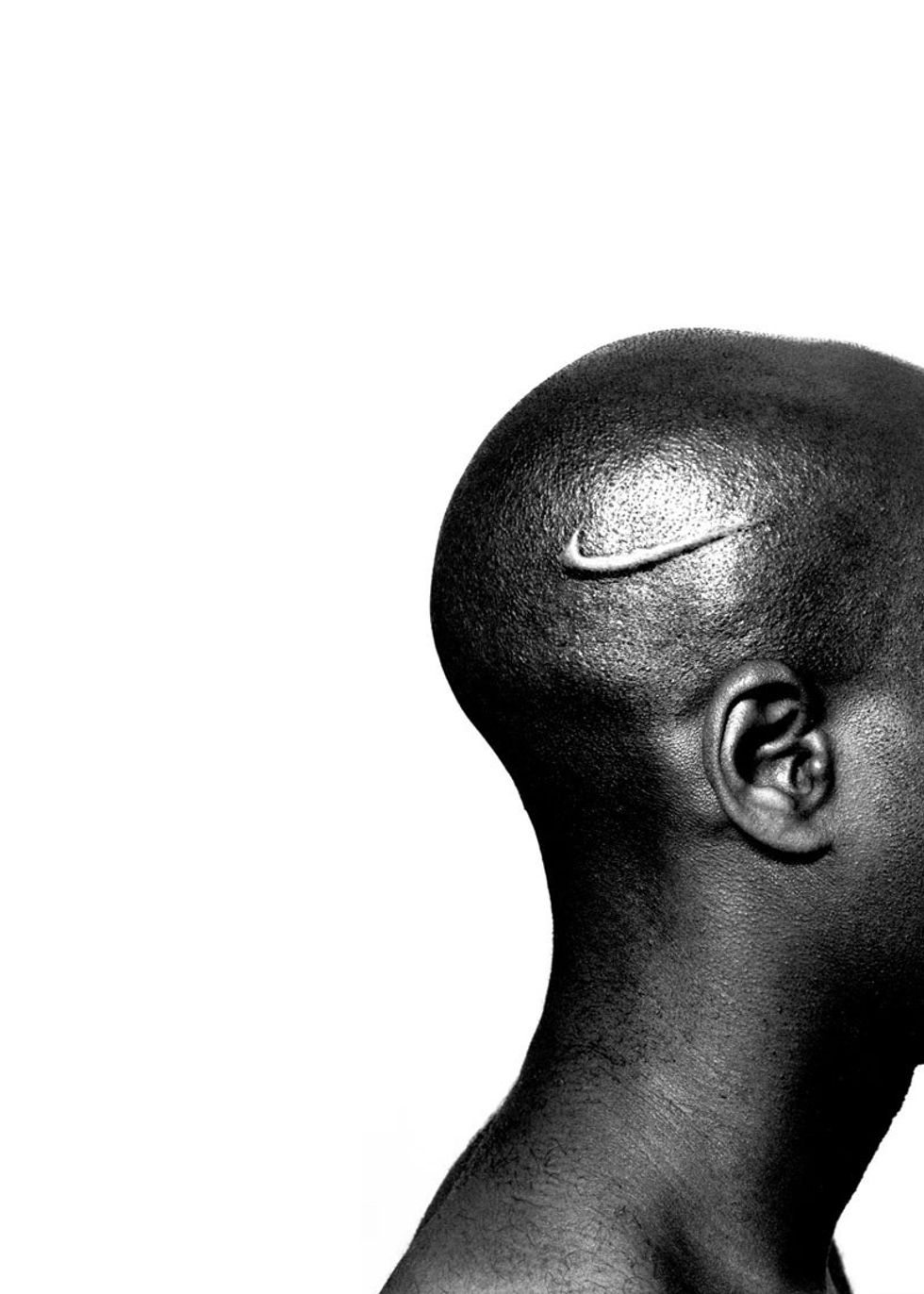
I thoroughly enjoyed looking at the work of Hank Willis Thomas. I thought it differed from much of what I saw in the exhibit. The works reminded me of advertisements and looked much more commercial than other works. It demonstrates how athletes today still are under the power of other people. It is almost like a form of slavery. The work, Branded Head, takes an old concept from slavery of branding slaves and makes it more modern. Athletes are so controlled by their brands and owners today. While they have freedom, athletes are still controlled and monitored by those who have power over them. I did not really think about it in that way before. These pieces resonated with me the most because I am an athlete and it was easier for me to put myself in a position of understanding.
I thought that Carrie Mae Weems’ work was some of the most powerful in the exhibit. The usage of red and black made the photographs dark with a dark story. It took what were photographs already taken and added a message to each person. The photographs alone would have been powerful but they would have been much easier to overlook. With the coloring and the messages added to them, it is nearly impossible to not stop and question what is actually going on during the time.
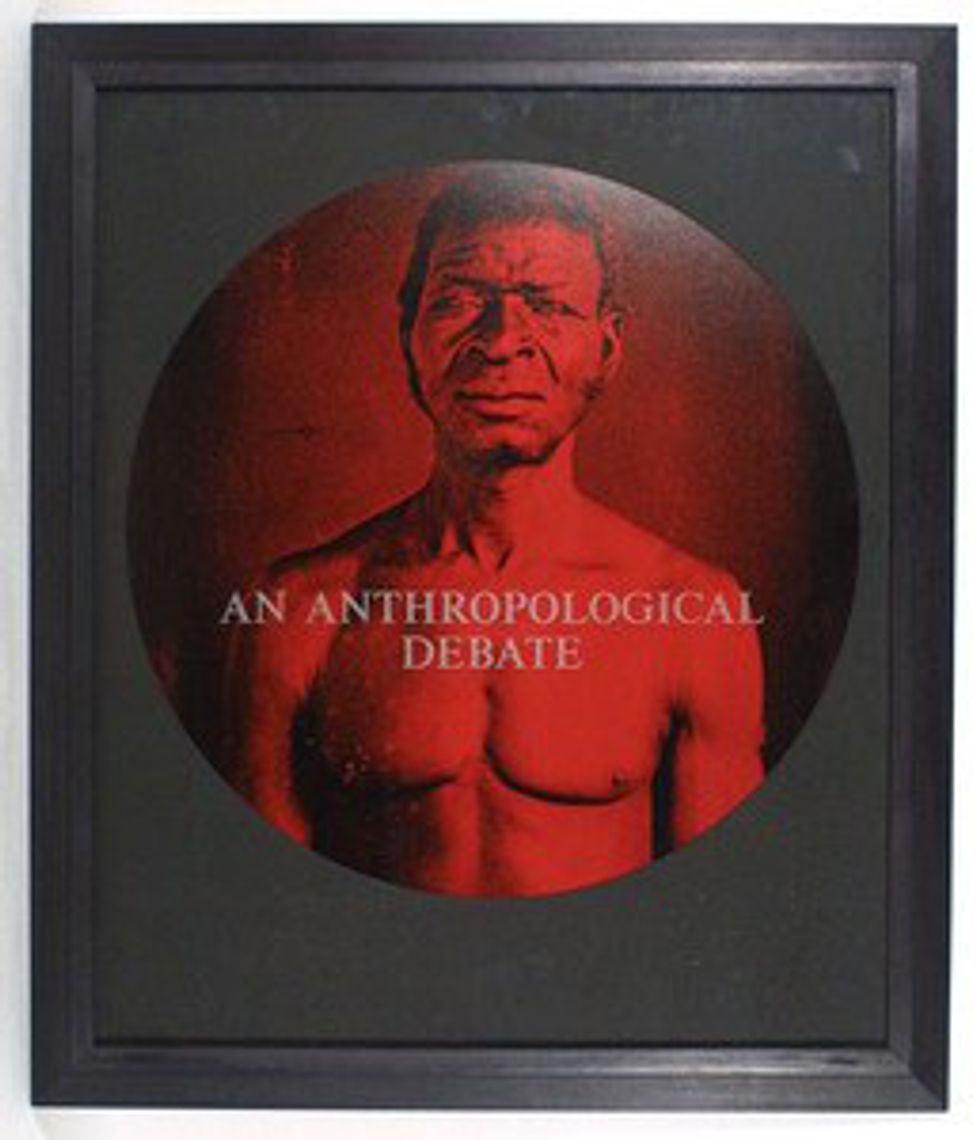
These African Americans were not photographed as people. They were photographed as a scientific profile, an anthropological debate, a negroid type, and a subject. They were never photographed as people. What’s worse is that the people photographed in these photos were all related but they were never photographed that way. They were not photographed as a family or with love in mind.
I looked at the work of Glen Ligon next. With Ligon’s work, I enjoyed it but don’t think that it was made for me to claim. I appreciate the artistry behind the works but I felt that I could not identify with any of the pieces because of what I imagine they represent.
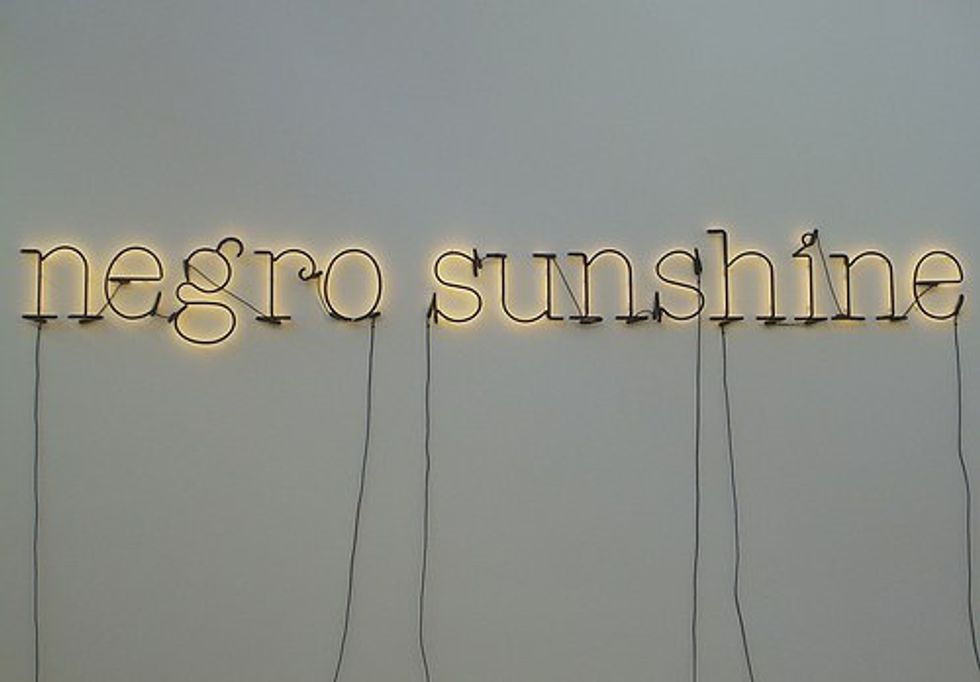
I do think that the use of words in his work was interesting. The neon sign pieces, Gold Nobody Knew Me #1, and Gold When Black Wasn’t Beautiful #1 took what I imagined to be stereotypes or daily life scenarios that African Americans must deal with and then flipped the script in a way. For example, I liked how Untitled (Negro Sunshine), 2006, used the word Negro and Sunshine simply next to each other with a neon light. This simple depiction simplifies a complex issue – which may or may not be a good thing. It juxtaposes the idea of dark skin and unfortunately maybe even a darker life with light. Negro Sunshine says that Negro is not lesser than white – the equivalent to light.
Overall, I thought the exhibit was very moving and beautiful. The pieces worked cohesively and sent a message that I found very powerful. It is important to showcase work by African Americans for African Americans because they understand how to send a message in a way that a white artist may not. The message or intent may not be the same.
I enjoyed looking into each piece and working to understand them.