
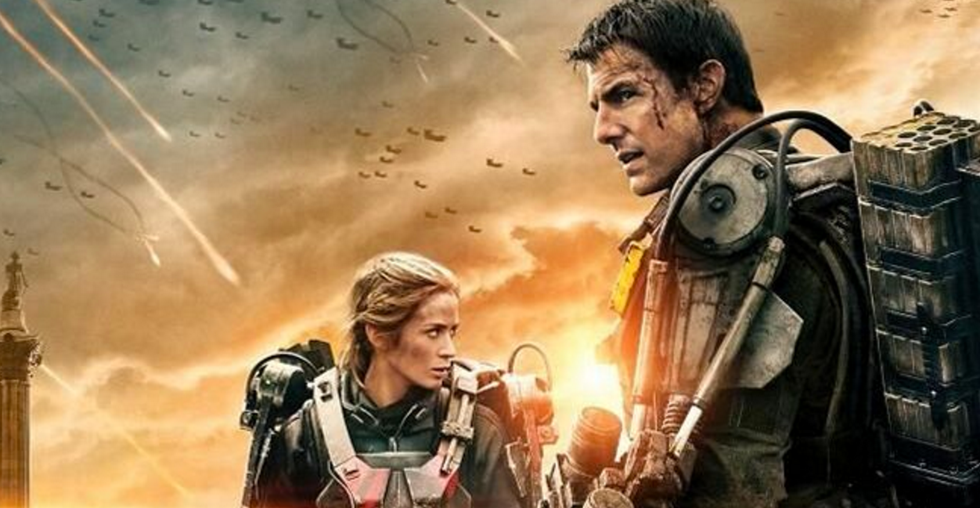
Storytellers have been fascinated with the bending of the passage of time since - well, since all of time. The way time works is inextricably tied in our minds to more spiritual concepts like fate and destiny; in a sense, isn't hearing a prophecy of what you will do in the future just like your future self-telling you what will happen? The cause is different, but the effect is the same: Oedipus murders his father and marries his mother despite running away from his future, and Marty McFly's parents still end up getting married despite a visit from their future son.
The concept of a time loop is a subset of time travel that specifically deals with the concept of being "stuck" in a particular moment - an hour, day, or year - and reliving it, again and again, ad infinitum and ad nauseum. Time loops aren't really featured in many novels or T.V. shows (probably due to its repetitiveness), but do have a short story or two. The short story 12:01 PM has directly inspired one of the first commercial films containing a repetitive time loop - unsurprisingly named 12:01 PM. Despite not being too successful, it spawned a resurgence in the theme of time loops, and since 1933, there have been more than twenty movies featuring time loops as a significant plot feature (not just sci-fi, but also fantasy, romantic comedy, and horror).
Time loops are particularly interesting in films because films heavily rely on audio-visual stimulus to keep the story moving forward; due to time loops involving repetition (a lot of repetition), movies with them run two heavy risks: they will bore the viewer, or they must break their own "rules" to wrap up the story (a common criticism given to the rom-com About Time, which is still a pretty cute movie). These are two HUGE risks, and that's why making a commercially and critically successful time loop film is an impressive achievement.
Below are three movies with time loops that I strongly recommend you watch; the required simplicity that results from replaying a scene over and over again provides an outlet for artistic complexity in other forms. Even though these are all my personal suggestions, I'll provide Rotton Tomatoes, Metacritic, and IMDB scores, so you didn't just hear these films from me were good!
1. Source Code - 2011
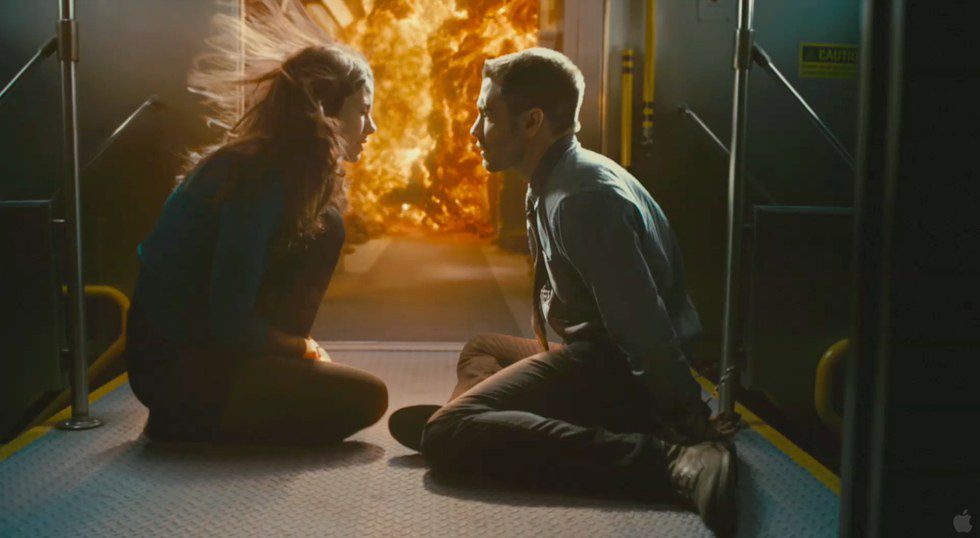
RT: 92% | Metacritic: 75/100 | IMDB: 7.5/10
Director: Duncan Jones | Screenplay: Ben Ripley | Starring: Jake Gyllenhaal, Michelle Monaghan, Vera Farmiga
Synopsis: Army pilot Colter Stevens (Gyllenhaal) wakes up on a train, not knowing how he got there. Before he can try to understand what is going on, the train explodes, killing everyone inside, including Colter. After that, Colter finds himself inside an Army base and is informed that a terrorist attack blew up a train earlier that day. He is then instructed that he is on a mission: through the use of a futuristic machine, he is reliving the last eight minutes of another man's life, a man on the train. He has to relive these eight minutes again and again, and try and find out who had bombed the train. In his futile efforts to solve the mystery by dying again and again, Colter begins to question his mission and the very meaning of time and life itself.
Thoughts: This was the first time loop movie I saw. A young, 14-year-old me went into the theater skeptically, thinking, "It'll just be the same thing over and over again." I came out of the theater proven resoundingly wrong: Source Code makes the most of Jake Gyllenhaal's amazing acting talent to portray the humanity in this sci-fi mystery-thriller, which shows the human determination of not resigning to a fate that others have written for them.
2. Edge of Tomorrow - 2014
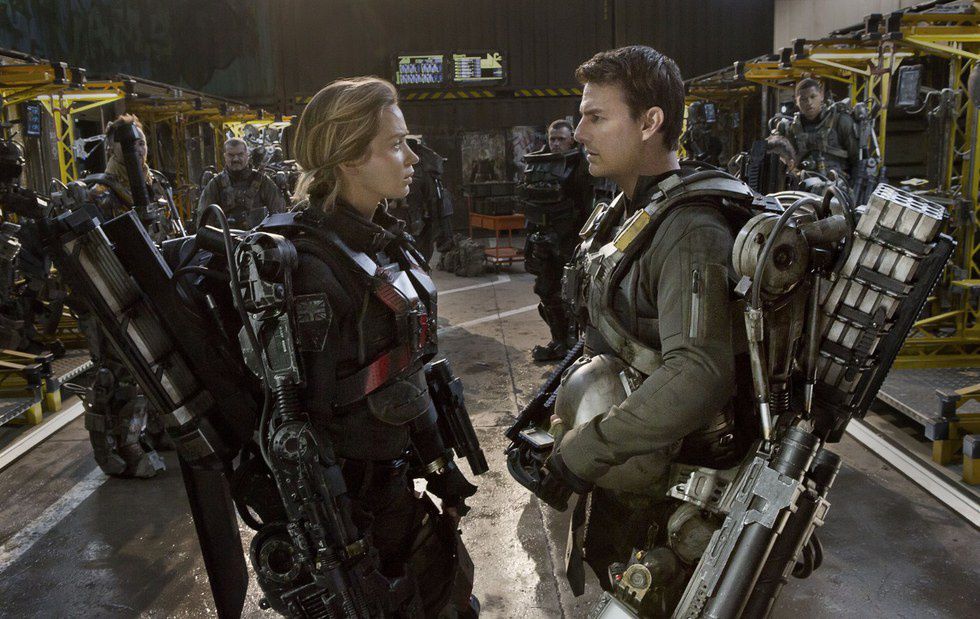
RT: 90% | Metacritic: 71/100 | IMDB: 7.9/10
Director: Doug Liman | Screenplay: Christopher McQuarrie | Starring: Tom Cruise, Emily Blunt, Bill Paxton
Synopsis: Adapted from the Japanese young adult novel All You Need is Kill, Edge of Tomorrow takes place in a future where aliens have overrun almost all of Earth. William Cage (Cruise) is a public affairs officer in the military, who one day finds himself demoted to private and brought to battle with no real field experience. Quickly killed by an alien, he bizarrely wakes up again at the beginning of the day. Cage soon realizes that due to his alien encounter, he will wake up at the beginning of his arrival at the military base every time he dies. He seeks out the only other person who believes him: the renowned Sgt. Rita Vrataski (Blunt), and she trains him. Cage and Cruise train, die, and start all over again and again, trying to find a way to stop the aliens from overrunning the last bastion of human civilization.
Thoughts: Edge of Tomorrow decided to stray from Source Code by immersing itself in an entirely fictionalized future, and changing the focus from the human aspect to the action-packed plot that Tom Cruise movies are known for. What this film lacks in thematic significance, it possesses in the screenwriting and the character of Rita Vrataski, played by Emily Blunt. Christopher McQuarrie, the screenwriter of one of the most complex (and good) movies ever, The Usual Suspects, writes on yet another confusing concept - time loops - and implicitly likens the respawning of Cruise's character to a video game, embedding the plot's moving forward not in the change in events, but in the change in how the main character responds to those events. Emily Blunt's character has been lauded by many critic-activists for being a strong female character throughout the story, which is, unfortunately, an uncommon characteristic in action movies. While I didn't enjoy it as much as Source Code or Groundhog Day, when thinking of movies to watch with time loops (an increasingly popular plot device), Edge of Tomorrow is a good way to be introduced to it.
3. Groundhog Day - 1993
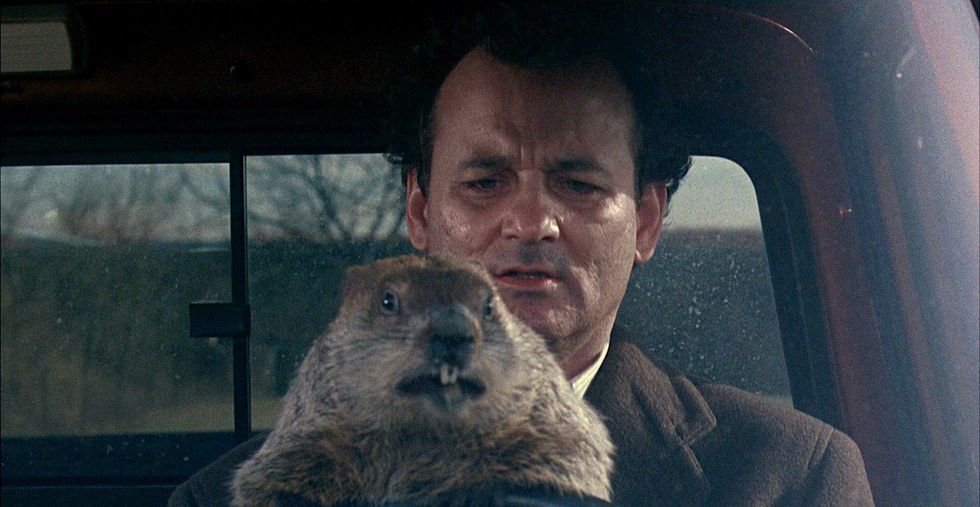
RT: 96% | Metacritic: 72/100 | IMDB: 8.1/10
Director: Harold Ramis | Screenplay: Danny Rubin, Harold Ramis | Starring: Bill Murray, Andie MacDowell, Chris Elliot
Synopsis: Phil Connors (Murray) is a misanthropic, arrogant meteorologist, who's down in the small, quirky town of Punxsutawney, PA to see their Groundhog Day celebration, with producer Rita (MacDowell) and cameraman Larry (Elliot), who both hate Connor's irascibility and self-serving nature. After being trapped in the town by a blizzard, Connors wakes up the next morning to find that it is still Groundhog Day, and soon realizes that he is trapped in a time loop, living through the day again and again, and only he has knowledge that the day is repeating. Indulging in hedonistic pleasures, Connors eats a lot of food, sleeps with a lot of women, and does whatever he wants without fear of consequence. After living the same day again and again, though, Connors realizes that his blessing is a curse, and is faced with either going mad from his situation, or make the most out of his special immortality.
Thoughts: In my opinion (and it would seem, that of the critics), this is one of the best movies of the early 1990s. Added to the National Film Registry for being "culturally significant", Groundhog Day is a wonderfully light feel-good movie that examines the human spirit and the meaning of life just by looking at one day, albeit looking at it again and again and again. This movie singlehandedly established Bill Murray as a serious actor, not just a comedian, and also solidified Harold Ramis (previously known as one of the four Ghostbusters) talents in directing and writing. With impeccable acting from the leads down to the most minor of roles, Groundhog Day has left a legacy like no other movie with time loops: it has been directly cited as inspirations for many time loops movies after it, with "Groundhog Day" now being used as a term for an unpleasantly repeating situation. Unlike Edge of Tomorrow and Source Code, Groundhog Day has immense re-watchability, with Robert Ebert once writing that the movie could only truly be appreciated through repeat viewings. What's more, the film is on Netflix (joy), and it's even going to be adapted into a stage musical this year!