
Every four years on the second Tuesday in November, Americans go the polls in order to vote for the next President. The process is not as simple, however, of going to your nearest polling station and pushing a button or puncturing a hole on a ballot. If one has turned on television news, searched the web, used social media or tuned into a news broadcast on the radio, the electoral process has been in full swing for many months pre-ceding the national Election Day. This series will take a closer,and to an extent, simplified look at the process of nominating a candidate from the two major parties for president while analyzing the principal candidates as they move deeper into the critical weeks of the primary season.
While a candidate is not officially running for the highest office in the land until filing with the Federal Election Commission (FEC), for months, the election cycle begins on the day following the last presidential election. This period of the “invisible primary” is filled with potential candidates making their journey around the country in an effort to gain traction and explore their traction in the event that they announce their election bid. It is during this period that individuals who were once seen as front runners for the nomination are weeded out. Further, not all individuals who will ultimately campaign during the official primary season are visibly campaigning during this “invisible” season.
The principal focuses of these early candidates are the states which hold their party primary or caucuses the earliest: Iowa, New Hampshire and South Carolina. The hope here being that if a candidate campaigns heavily in these early states, that they will be able to gain traction before any other candidates, start gaining delegates (individuals who are locked in to supporting the specific candidate at the party’s national convention), and win the nomination. These states have different means for choosing who wins the state’s winner: primary and caucus. Each of these are run by different organizations and have their own ways of deciding on a winner.
A caucus, like the first in the nation in Iowa, is funded by the state party committee. The caucuses are held in a variety of locations ranging from college campuses to school gymnasiums. The individuals participating in the caucuses are not completely voting on a candidate but on delegates to the state and, ultimately, national party conventions. In the democratic caucus in Iowa, supporters of a specific candidate, be it Sanders, Clinton or O’Malley, gather together in one corner of the room and are counted. If a candidate does not reach a certain percentage in a precinct, his supporters are forced to choose between the other candidates running, allowing for supporters and precinct captains to sway now untied voters to their side. On the Republican side, Iowa’s winner was decided by a secret ballot. Much like many other states before March 15, Iowa is not a winner-take-all state. The candidates who reach a certain percentage threshold share a proportion of the state’s delegates, with the candidate with the highest percentage gaining the most delegates.
A primary, like the one which occurred in New Hampshire and South Carolina, is more similar to the general election. These elections, funded by state governments, allow for voters to choose their nominee through a secret ballot format. Primaries become more complex with their being two different types a state may adopt. In an open primary, voters may vote in a party’s primary regardless of their own political affiliation. On the flip side, in a closed primary the voter must be a registered Republican to vote in a Republican primary or a registered Democrat to vote in a Democratic primary.
In order for a candidate to become the party’s nominee, they must reach a particular delegate threshold. This is reached, as already noted, by winning a state or gaining a specific percentage of the vote in the state to gain a proportion of the delegates available. On the Democratic side, there are 4,763 delegates available, with a 2,382 delegate threshold needed to become the candidate. Similarly, the Republican candidate who hopes to win the party’s nomination must gain 1,237 of the 2,472 delegates at play.
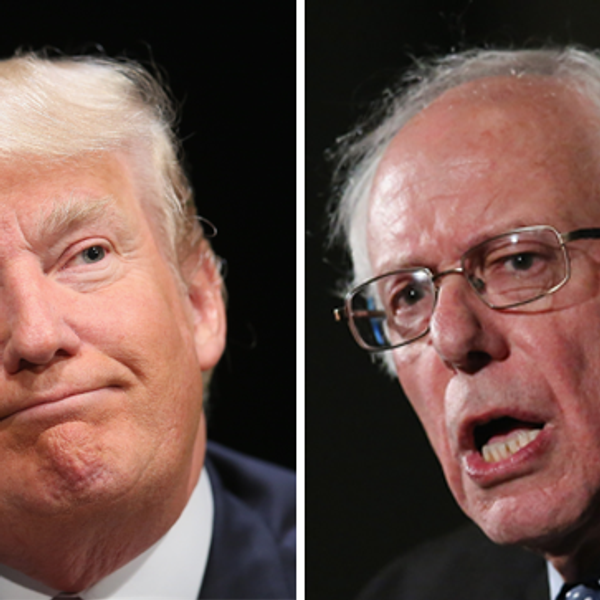
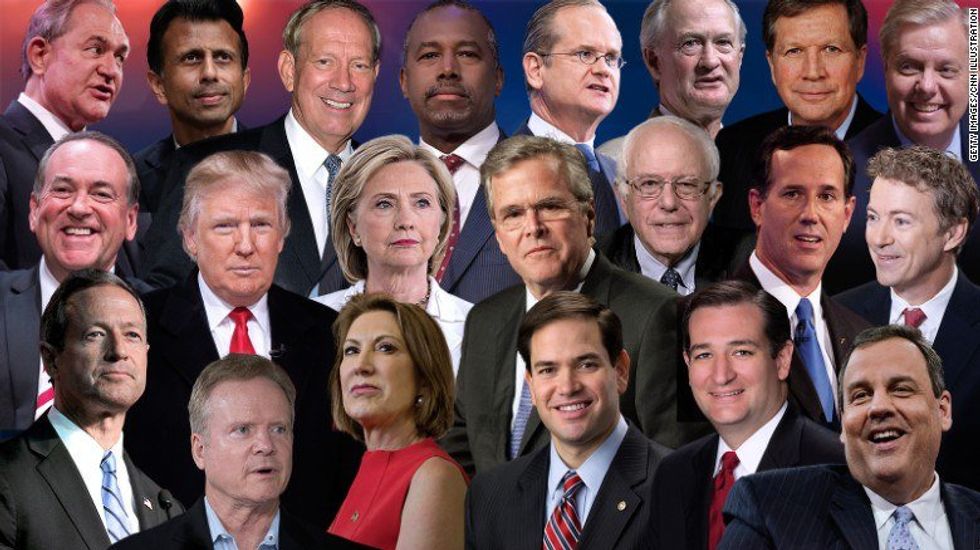
As noted, up to this point in the election, states which have voted have not been winner-take-all, but have rather followed in the proportionality rule. As a result, many candidates on either side were not able to gain traction and have since withdrawn from the race. On the democratic side, the field has winnowed down from five to two candidates (in order of delegate count): Former Secretary of State Hilary Clinton and Senator Bernie Sanders (VT). On the Republican side of the spectrum, a field which started at seventeen individuals seeking the nomination has now winnowed itself down to four principal candidates (in order of delegate count): Businessman Donald Trump, Senator Ted Cruz (TX), Senator Marco Rubio (FL) and Governor John Kasich (OH).
This week begins the winner-take-all contests, serving as a critical point for those challenging the front runners on the Republican front. On the Republican side, Kasich and Rubio, both trailing in the delegate count, face primaries in their home states of Ohio and Florida, respectively. If either is to continue deeper into the primaries, it is essential for them to win their own states on March 15. On the Democratic side, Sen. Sanders comes off a win in Michigan with hopes of winning more states on Tuesday and shrinking the delegate differential with Clinton.
Will Sanders be able to keep the support going past Tuesday? Will Kasich and Rubio fend off collapses in their home states? Will Cruz be able to gain traction before it is too late? Will Clinton and Trump be able to keep their momentum, grow their delegate counts and solidify their positions on the inevitable party nominees? It all hangs in the balance as voters go to the polls on Super Tuesday, Round Two.