
This past summer was the warmest recorded summer in 135 years, National Oceanic and Atmospheric Association (NOAA) announced on Thursday.
From June through August, both global land and ocean temperatures augmented 1.53 degrees Fahrenheit above the 20th century average.
According to NOAA, this data isn’t shocking. The entire year of 2015 was the hottest year in recorded history. We have seen a 1.51 degrees Fahrenheit augment from the 20th century average.
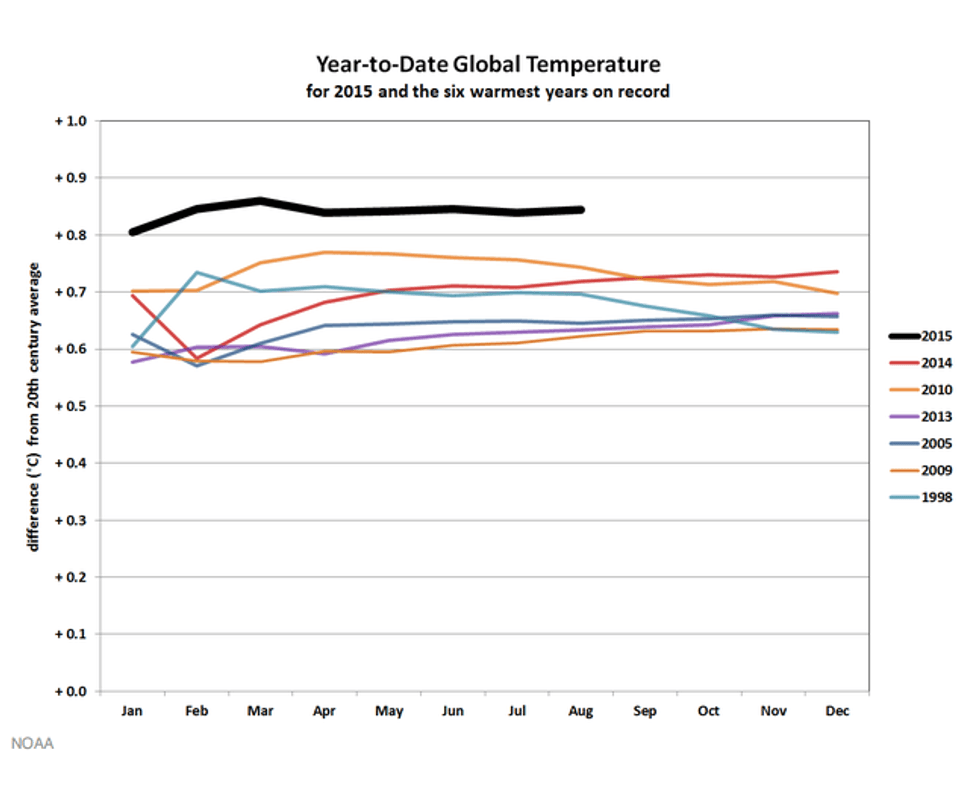
(NOAA illustration of rising temperature)
The Japan Meteorological Agency and NASA also released that the summer of 2015 was the warmest recorded in 2015.
Nearly 200 nations including the United States will be meeting in Paris later this year to discuss the details of curbing greenhouse has emissions.While humans continue to escape the effects of climate change with shelter and the power to alter their environment, wild animals are horrified.As temperatures rise, countless plants and animals are blooming and developing earlier in the spring, and surviving longer into the fall. Migration and hibernation patters have been altered with several species, and North American animals and plants are moving farther north and to higher elevations to survive.
Habits are also disappearing. If the earth continues to get warmer, up to one-fourth of all species on Earth could become extinct within the next 100 years. This is due to the domino effect that occurs in ecosystem, where the death of one species affects the food source of another.
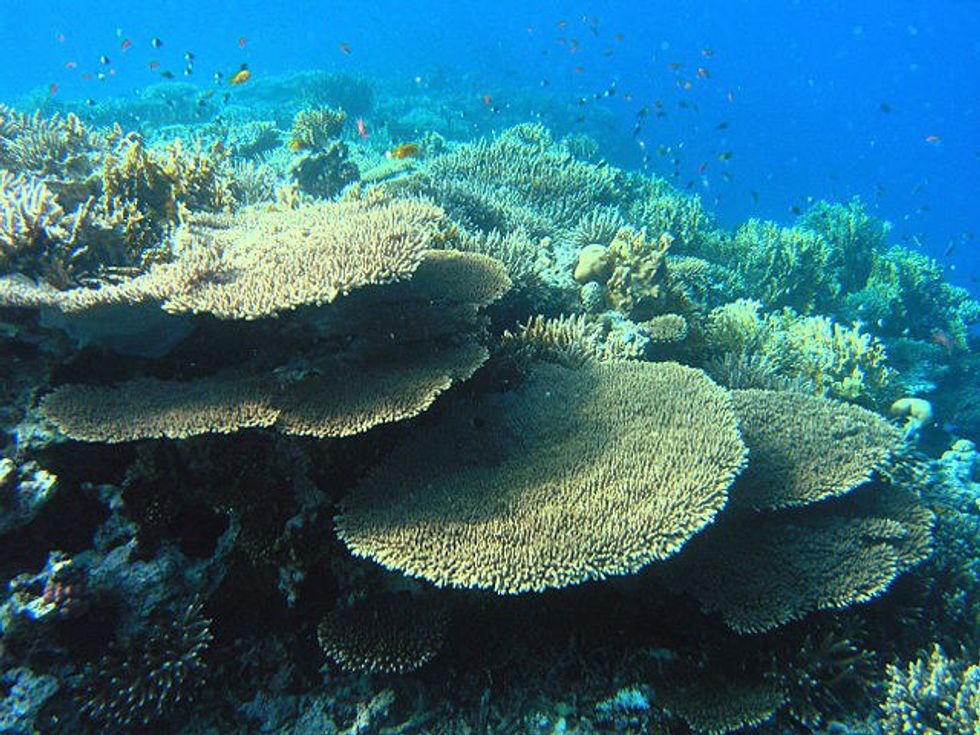
A new focus in the world of science is the concern for corals, the millions of tiny animals that create coral reefs in shallow tropical waters. By creating skeletons for themselves, corals constitute the coral reef that many fish and sea creatures depend on. Warmer climate has caused coral bleaching, a type of damage to corals, and by 2050, corals have the potential to become extremely rare. The warmer water and increased ocean acidity from more carbon in the atmosphere will affect them, which will then sabotage the food web that connects all aquatic species.
“The need for action on climate change has never been more evident,” Lou Leonard, vice president of the World Wildlife Fund, said lamenting the latest data. “It’s up to world leaders: 2015 could go down as merely another record-breaking year of warming and its costly consequences, or it could also be the pivotal year of progress in the fight against climate change. The pressure is on, and Mother Nature is turning up the heat on global leaders to deliver meaningful climate action in Paris.”