When does something become a classic? This question has always fascinated me- often when perusing bookstores, and noting the ‘Literature’ section and the ‘Classics’ section. At some point, there is a crossing point, when various bookstore clerks deem later-20th-century novelists as being worthy to make the move from fiction to classic. It seems pretty clear who gets the bump, at least when it comes to postmodernism: Don DeLillo, Kurt Vonnegut, Thomas Pynchon, Orhan Pamuk, Haruki Murakami.
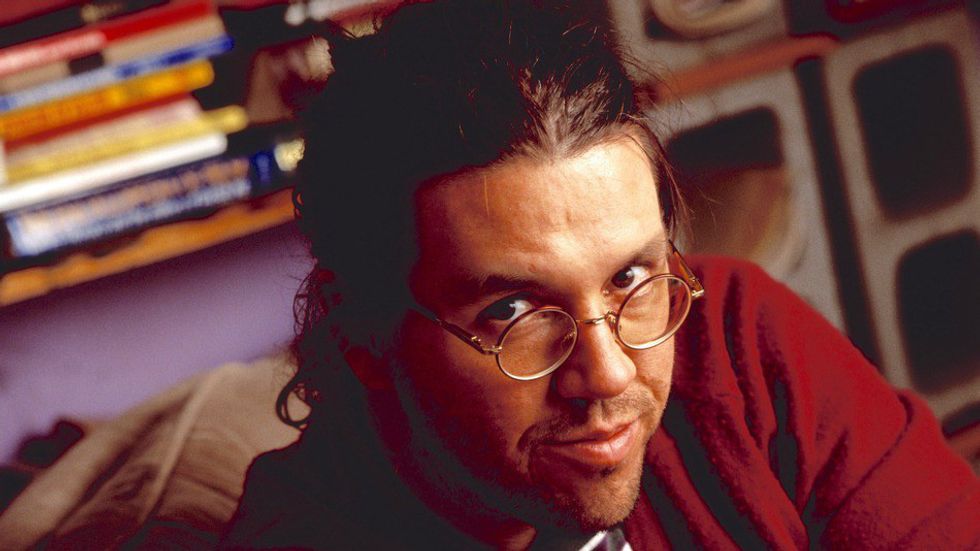
Perhaps most worthy, at least to 90s literati, seems to be postmodern mastermind and absolute genius, David Foster Wallace.
Wallace was a Pulitzer-Prize finalist, a recipient of the McArthur Fellowship and he won Time Magazine's Best Books of the Year award in 1996 for his magnum opus Infinite Jest.
There’s something so absolutely magnificent about Infinite Jest. A mesmerizing, triumphant quality. Whatever it may be, it seems to have captured the hearts of readers and literary scholars alike. Last year, James Ponsoldt directed Jesse Eisenberg and Jason Segel in "The End of the Tour," a film about the book tour for "Infinite Jest." The film is an adaptation of Rolling Stone editor David Lipsky’s remembrances in his novel "Although of Course You End Up Becoming Yourself" from 2010.
In the film, Lipsky (Eisenberg), quips “You don’t crack open a 1,000-page book because you heard the author is a regular-guy. You do it because he’s brilliant.” As good a summarization as any on the rapid consummative quality of the novel.
If you are unfamiliar with the book, which turned 20 in February, it is considered by many to be a masterpiece of the hysterical-realism genre. Describing the book is a difficult, task, as illustrated by Sam Pott's detailed geographical character diagram. It is a dense and complicated book, I'm comfortable admitting I do not understand it whatsoever, despite hours and hours of in-depth analysis, though what is absolutely certain to me is that it makes me feel and think more than most books ever have.
There are four narratives in "Infinite Jest." Each as superb as the last. There are many overarching themes of the novel, perhaps as important as the narrative itself, the entertainment set to destroy is pretty elemental. Perhaps it is the idea of the novel that is just as startling and emotionally affecting as the book itself. For me, at least, as a reader, I find myself deeply moved by the themes of the book, as much or more so, than the story itself, which, makes sense, really.
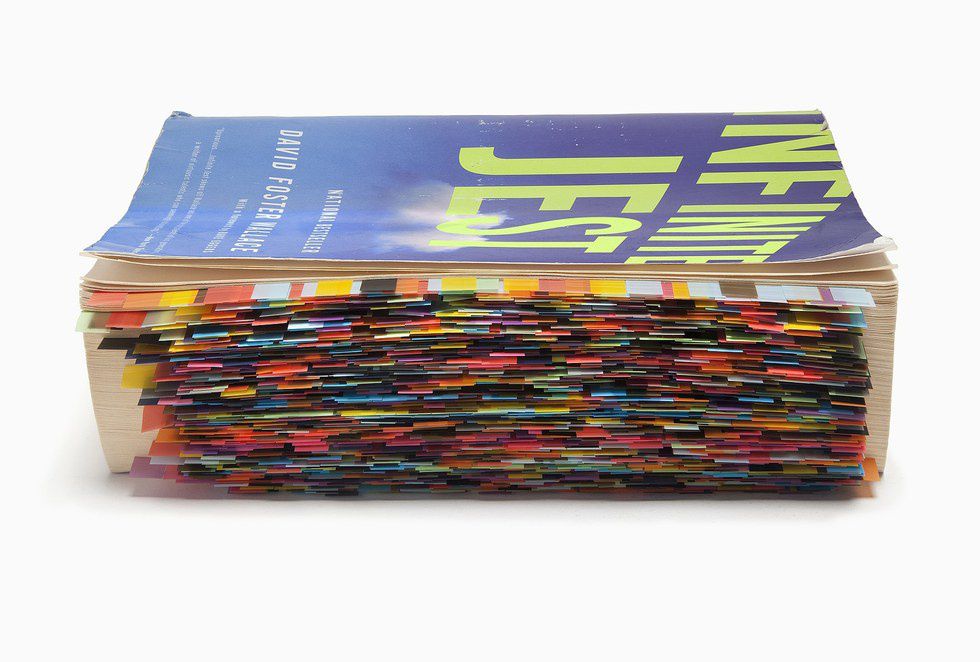
The primary setting for the novel is The Tennis Enfield Tennis Academy ("ETA") and Ennet House Drug and Alcohol Recovery House in Massachusetts and a mountain range outside of Tucson, Arizona.
What was already an enormously championed book by its cult following, has grown immensely in the internet era, topping book lists on hundreds of websites, and recently, surpassing 1 million copies sold.
David Foster Wallace was deeply troubled; he committed suicide in September of 2008, hanging himself in his garage, leaving the incomplete manuscript for his third novel "The Pale King" has a quasi-suicide note, alongside his suicide note.
"The Pale King" has a hell of a following itself, but it has yet to surpass the incredible curiosity and intensity surrounding "Infinite Jest."
Wallace has numerous other works, collections of essays, short stories and even a published commencement speech. You should read all of them.
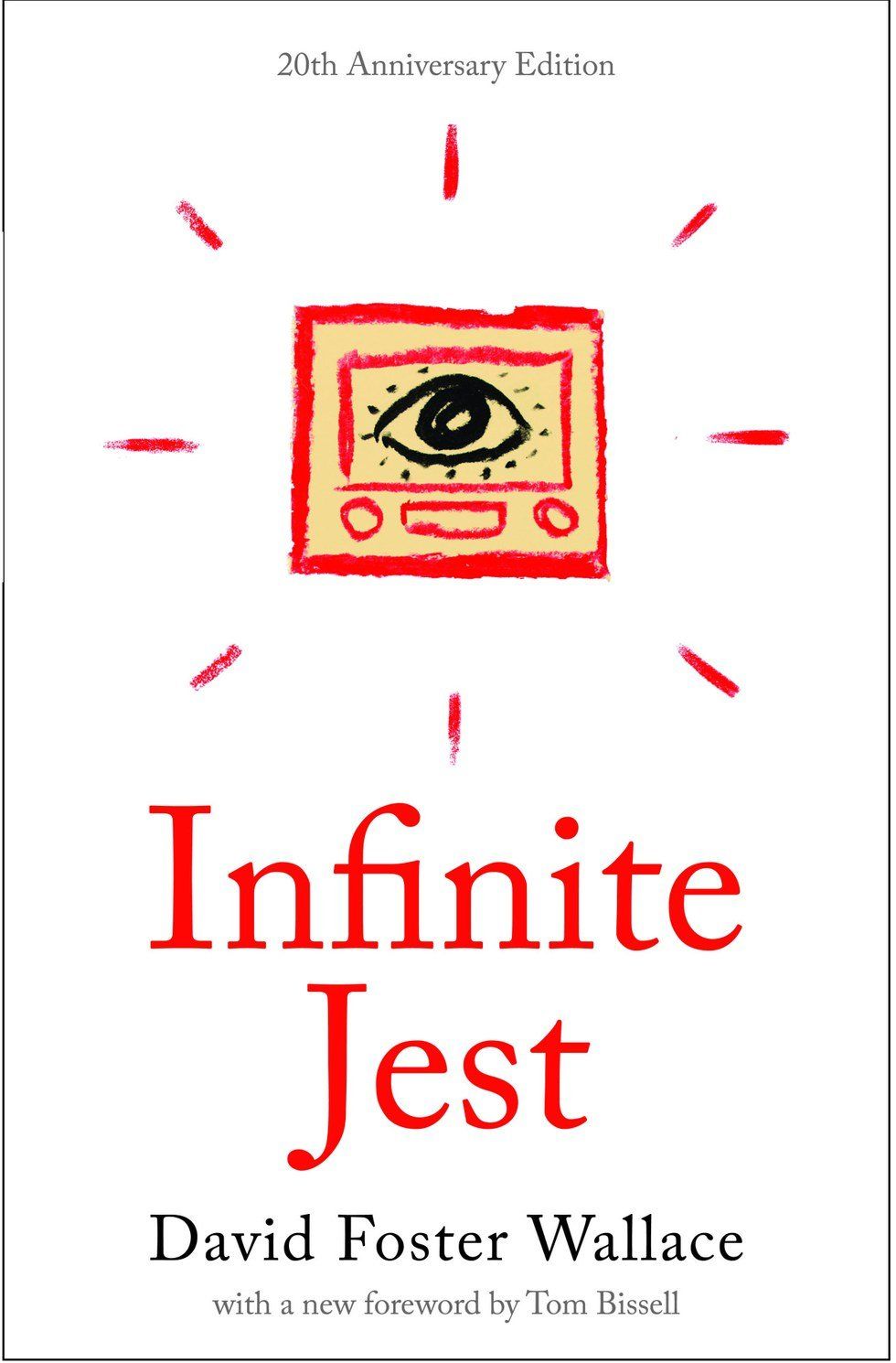
The 20-year anniversary edition of "Infinite Jest" is available now from Back Bay Books, with a new book illustration from Joe Walsh, the winner of a contest to create a new cover for the book, as well as a new forward from literary critic Tom Bissell.