
When you spend time learning a non-native language, you realize that there are some words, some concepts, which simply don’t translate. This is because different cultures have different ways of approaching other people and the world around them—and their languages reflect this. For example, English, which has strong Germanic roots, is often beautifully technical. Other languages, typically Latin-based languages in particular, are known for artfully capturing emotions and experiences in a simple word or phrase. But just because you aren’t proficient in another language (yet!) doesn’t mean these words are inaccessible to you!
Learning some of these “untranslatable” words—and how we can incorporate them into our everyday lives—can help us be more aware of the way someone from a different culture than ours may approach a situation. Plus, once you begin to get the feel for these words, there’s a good chance you’ll be inspired to learn more about another language or culture!
There are loads of lists out there to sift through like this one, this other one, or still yet this one (or with lovely illustrations!), but the numbers can be overwhelming. So, I’ve culled the harvest to create this handy list of 16 words that will enrich your vocabulary in 2016. Enjoy!
1. Greng-jai (Thai)
This is “basically a feeling of not wanting to impose. Not wanting to put someone to any inconvenience on your behalf. If you offer to help someone and their answer is “greng-jai” then a similar answer in English would be “I wouldn’t want to be any trouble” or something like that. Hands up if you’ve ever felt this. (Two arms up, am I right?)

2. Gigil (Tagalog)
This word’s complex meaning can be explained as “that shivery, teeth-gritting thrill that accompanies a strong urge to lay your hands on something (while possibly holding yourself back from doing so). It usually happens when you see something super adorable (ex. wanting to pinch a baby's cheek), but can also be caused by something that makes you gut-wrenchingly angry (ex. wanting to punch someone).” For a more complete understanding of how the word is used, check out this grammar lesson.
3. Ya’arburnee (Arabic)
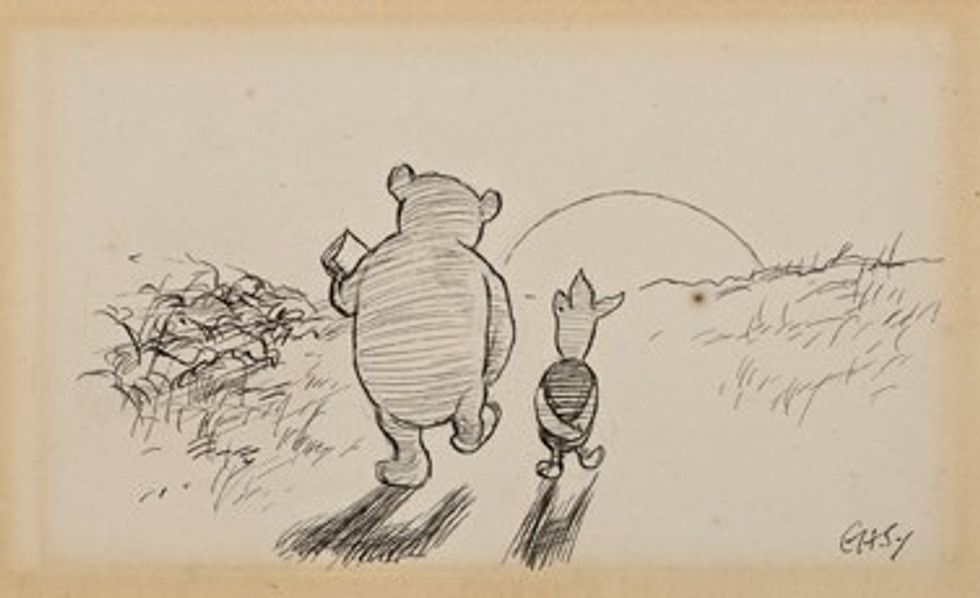
“This word is the hopeful declaration that you will die before someone you love deeply, because you cannot stand to live without them. Literally, may you bury me.” Or, as stated in "Pooh's Little Instruction Book," "If you live to be a hundred, I want to live to be a hundred minus one day, so I never have to live without you."
4. Hygge (Danish)
“Hygge is as Danish as pork roast and it goes far in illuminating the Danish soul. In essence, hygge means creating a warm atmosphere and enjoying the good things in life with good people.” Cheers to that!

5. Fremdschämen (German)
“This German word is made up of two parts, with fremd meaning 'foreign' and schämen meaning 'to be embarrassed.' The term is typically used to describe someone who feels embarrassment on behalf of someone else. The corresponding noun for this feeling is Fremdscham.” Let’s all hope 2016 involves more fremdschämen than schadenfreude.

6. Luftmensch (Yiddish)
Good ole Merriam-Webster has our back for this definition: “an impractical contemplative person having no definite business or income.” Otherwise known as me, in T-minus one semester.

7. Jayus (Indonesian)
“From Indonesian, meaning a joke so poorly told and so unfunny that one cannot help but laugh.” I don’t know about you, but I strongly suspect this word came about after one too many “dad jokes.”

8. Wabi-Sabi (Japanese)
“Pared down to its barest essence, wabi-sabi is the Japanese art of finding beauty in imperfection and profundity in nature, of accepting the natural cycle of growth, decay and death.” If you’re not belting out "The Lion King"’s “Circle of Life” right now, what was your childhood?

9. Dépaysement (French)
This is the disorientation, pleasurable or not, of being removed from one’s regular environments, habits or, specifically, home country. It comes from the verb dépayser. In my personal experience, dépaysement is most certainly a mixed bag of emotions.

10. Fernweh (German)
Buh-bye, wanderlust; hello, fernweh. “Germans "suffer" from Fernweh. In contrast to its opposite Heimweh (homesickness), Fernweh describes a deep inner urge to visit other countries/cultures, to be at a place faraway from home and to have new experiences.” Fingers crossed you get to indulge your fernweh in the coming year!

11. Won (Korean)
“The reluctance on a person’s part to let go of an illusion.” Aka mid-February, when we try to convince ourselves we’re still doing great on our New Year’s Resolutions.

12. Lagom (Swedish)
“Often misconstrued as indifference, or the stereotypical Scandinavian 'coldness,' lagom is loosely translated from Swedish as 'just the right amount,' 'in moderation,' 'appropriate,' and other such synonyms. For example, a common usage would be: The water is lagom hot, or the coffee is lagom strong.” Goldilocks may have been a little misguided, but I think she understood lagom.

13. Shouganai (Japanese)
“Shoganai is an important word in Japanese. It can be translated 'it can't be helped.' It's often used to describe Japanese culture, thinking, and values. Shoganai is essentially a philosophy. It says that if something is out of your control, it's better to quickly accept it and move on.” Sort of like the philosophy of the contented shrug.

14. Fargin (Yiddish)
In short, “to wish well; not begrudge, not envy; indulge.” Go on, let the gold stars rain!
15. Saudade (Portuguese)
“The concept has many definitions, including a melancholy nostalgia for something that perhaps has not even happened. It often carries an assurance that this thing you feel nostalgic for will never happen again." According to Portuguese writer Manuel de Melo, it is "a pleasure you suffer, an ailment you enjoy." ‘Nuff said.

16. Au revoir (French)
In French, this is how you say goodbye. Literally, however, it means “to (or until) the seeing again.” This is probably my favorite word in French—because saying goodbye never has to be final.

Alright, vas-y! Get on with your smarty-pants self—and enlighten your friends with your newly enriched vocabulary!