For many college students, next week is one of the best weeks of the year -- it's HALLOWEEN! Admittedly, Halloween in college is not just a one-day holiday, especially when it falls on a Friday; it's more like three days of partying, costumes, and pure awesomeness. Along with all this Halloween-ness comes the weird, the creepy, and the supernatural. On that note, this week, I'm talking about 13 famous women I'd like to raise from the dead: 13 because it's the scariest number (obviously). Without further ado, in order of the people I want least to resurrect to the people I want to most:
13. Amelia Earhart
Of course, part of the reason I want to meet Amelia Earhart is because she broke so many barriers and was the first woman to fly solo across the Atlantic Ocean. However, to be honest, I'd also like to resurrect Amelia Earhart to ask her what happened to her and to find out more about her disappearance. If anyone can tell us more about the Bermuda Triangle, it's her.

12. Anne Boleyn
If I had to choose one way to describe Anne Boleyn, I would say power-hungry. She manipulated a king in order to achieve a marriage for political gain and forced him to choose between her and the church. She proves that women in history were just as prone to politic and manipulation as men. Despite the fact that she's been amazingly portrayed over the years, in adaptions such as "The Other Boleyn Girl" and "The Tudors," it's not the same as meeting the real deal.

11. Morgan Le Fay
OK, so I realize that the legend of King Arthur is a legend and this does not really count as a real historical woman. Nevertheless, I would love to be able to talk to Morgan Le Fay. My obsession with her began when I watched "Merlin" and saw Katie McGrath's portrayal of her (If you haven't watched "Merlin," you need to watch it. Just saying.). Like Boleyn, Le Fay was power-hungry. Her story demonstrates how women are just as multi-faceted as men, a portrayal that seems rare in ancient times. Also: MAGIC.

10. Emily Dickinson
The weird thing about poetry is that there's only a certain time period of poetry that I like, from about 1800 to 1960. Of all the poets during that time, Dickinson is my absolute favorite. Her unique formatting and syntax, as well as her well-written stanza's, help her poems speak to the soul. My favorite quote from her: "If I can stop one heart from breaking, I shall not live in vain."

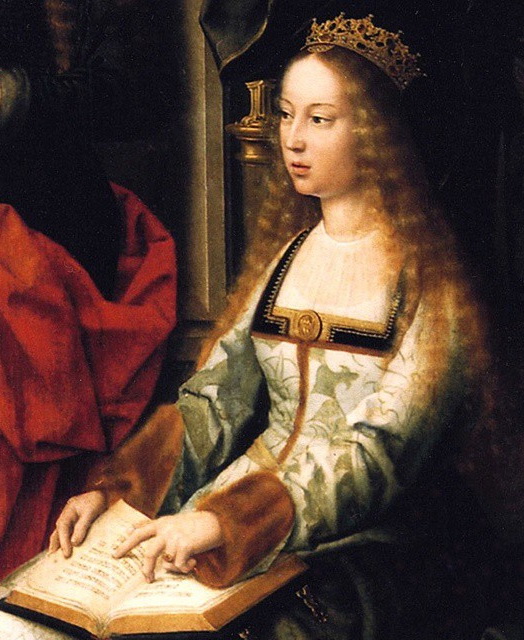
9. Queen Isabella of Castile
She financed the voyages of Christopher Columbus, so "what were you thinking?" would probably be the first question that I would ask her. She's portrayed in different ways - as someone who supported Columbus throughout his trips or as someone who gave up on Columbus when she realized his support for slavery and that his venture wasn't as lucrative as she'd hoped it would be. Nevertheless, she was greedy and power-hungry as well and her decision led to the slaughter of millions. I think it would be interesting to see how she justified her choices if she saw the extent of the destruction they've caused in the past 500 years, so that's probably what I would talk to her about.
8. Kalpana Chawla
Kalpana Chawla is another woman who broke barriers; she was the first Indian-American woman astronaut and the first Indian woman in space. In 2003, she was one of the seven who died in the Space Shuttle Columbia Disaster.

7. Zelda Fitzgerald
"Wouldn't we be quite the pair? You with your bad heart, me with my bad head. Together, though, we might have something worthwhile." I realize that many today aren't fans of Zelda Fitzgerald, but anyone who can write something that profound is worth talking to. Some say that Zelda was troubled because of a mental illness and her over-bearing husband, while others suggest that she was controlling and negatively impacted the life of her husband. Whatever your viewpoint, she inspired some of the most famous women in literature, and some of the lines in F. Scott Fitzgerald's books came straight from her journal.

6. Laura Ingalls Wilder
Like many, I grew up with the stories of "Little House on the Prairie," and a lot of what I know about life in the 19th century in America is from Laura Ingalls Wilder's stories. While her books convey a fascinating story about what life was like, it's not the same as being able to talk to her.

5. Margaret Sanger
Sanger fought tirelessly against maternal mortality and worked to increase the use of contraception in America at a time when it was seen as taboo. She founded the organization which evolved into Planned Parenthood. It would be interesting to talk to her not just to find out more about her own life, but to learn about how she would suggest to solve the high rates of maternal mortalities and taboos surrounding contraception that still exist today.

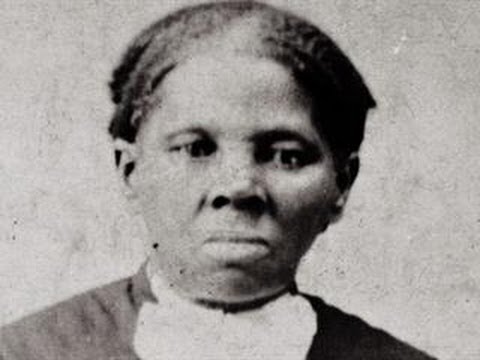
4. Harriet Tubman
The whole world was against Harriet Tubman: She was a black woman at a time when both characteristics were seen as inferior. Yet, she was braver than arguably anyone during her time period, escaping from slavery herself, rescuing at least seventy others, and working to abolish slavery.
3. Anne Frank
Reading Anne Frank's journal in 8th grade was painful, not because it was badly written, but because readers knew the tragic way the story would end. She was able to write remarkably well for someone her age, but if I had the chance to resurrect her, I wouldn't just do it to talk to her about her life story; it would be because she, like so many, wasn't given enough time to live.
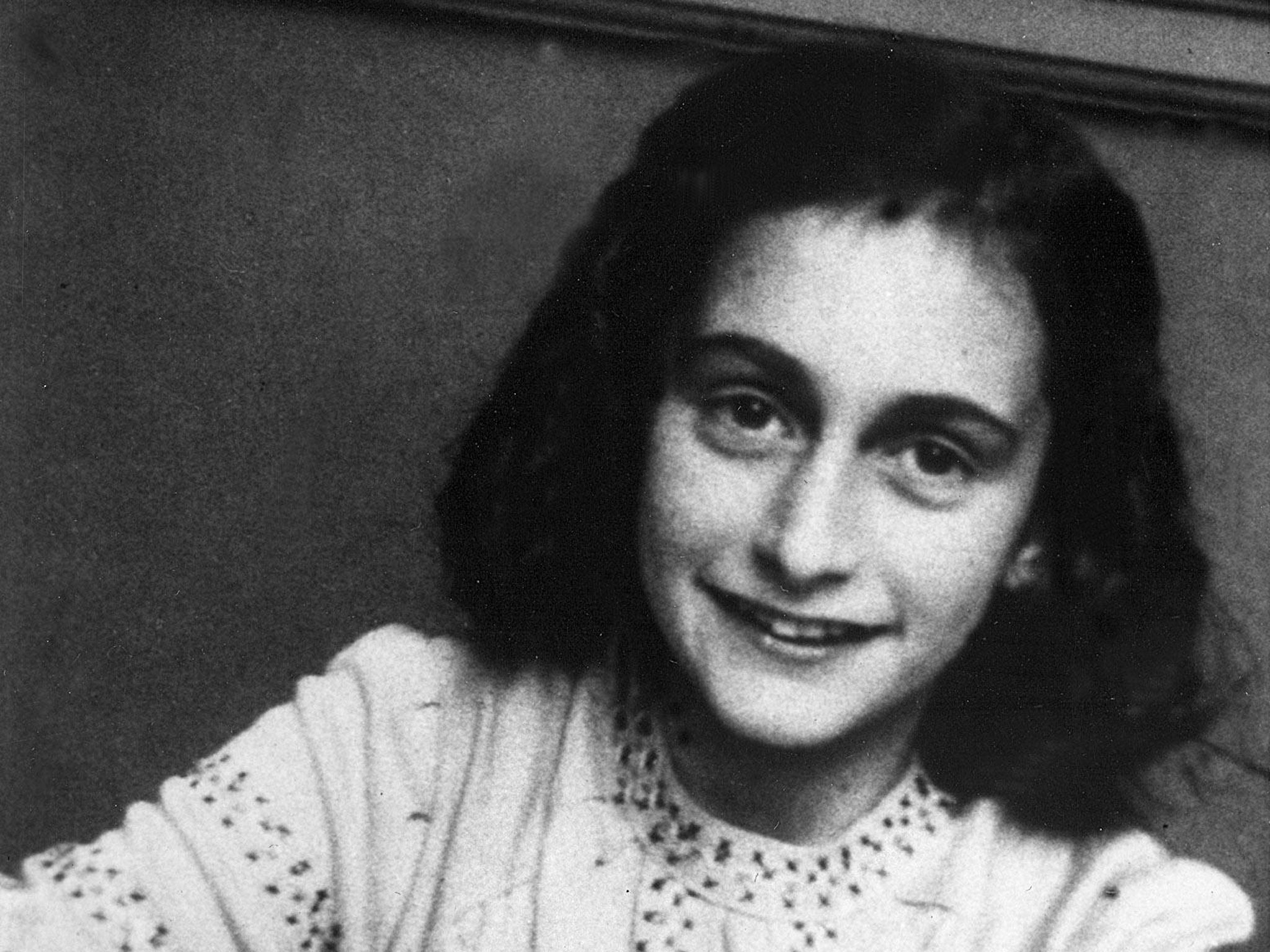
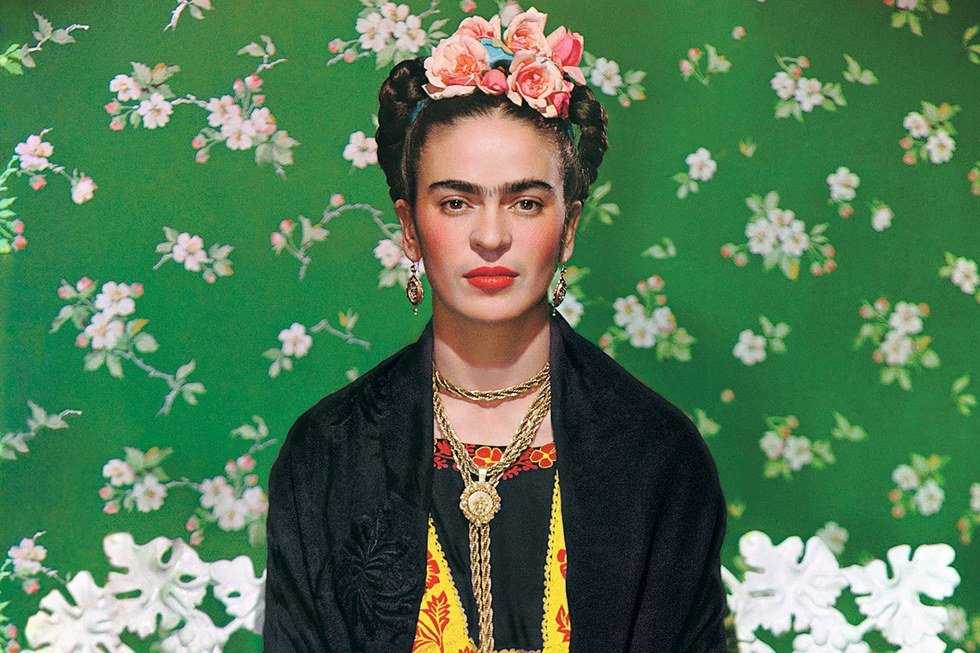
2. Frida Kahlo
Frida Kahlo brings a more diverse perspective to art, and her unique way of depicting the pain and emotions that she felt throughout her life made me admire her even before I knew about the other aspects of her life. She was a bisexual feminist who was active in politics and who introduced an entirely new and unique form of art.

1. Sylvia Plath
Sylvia Plath's book "The Bell Jar" is my all time favorite novel. Some compare it to the "Catcher in the Rye," but the characterization is offensive considering "The Bell Jar'' is so much better. Plath suffered from depression and was frequently frustrated by the constraints which women in her society were under and she expressed her sadness and frustration through the story of Esther Greenwood, the main character in ''The Bell Jar." She conveys so much emotion through her writing, with quotes such as the iconic: "I took a deep breath and listened to the old bray of my heart. I am. I am. I am."