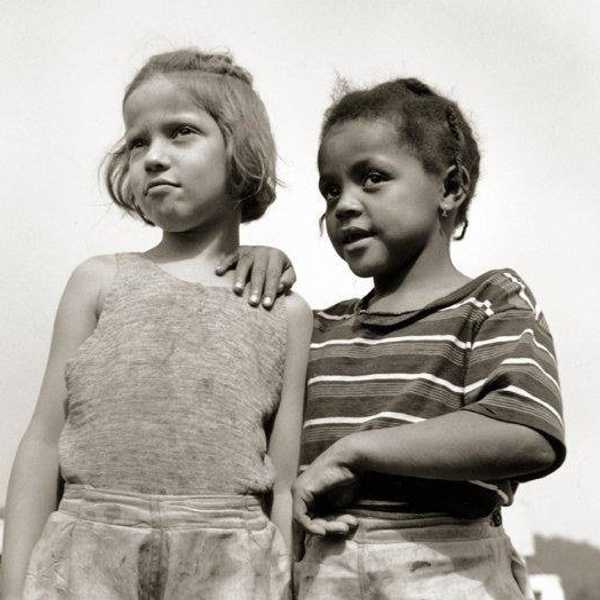
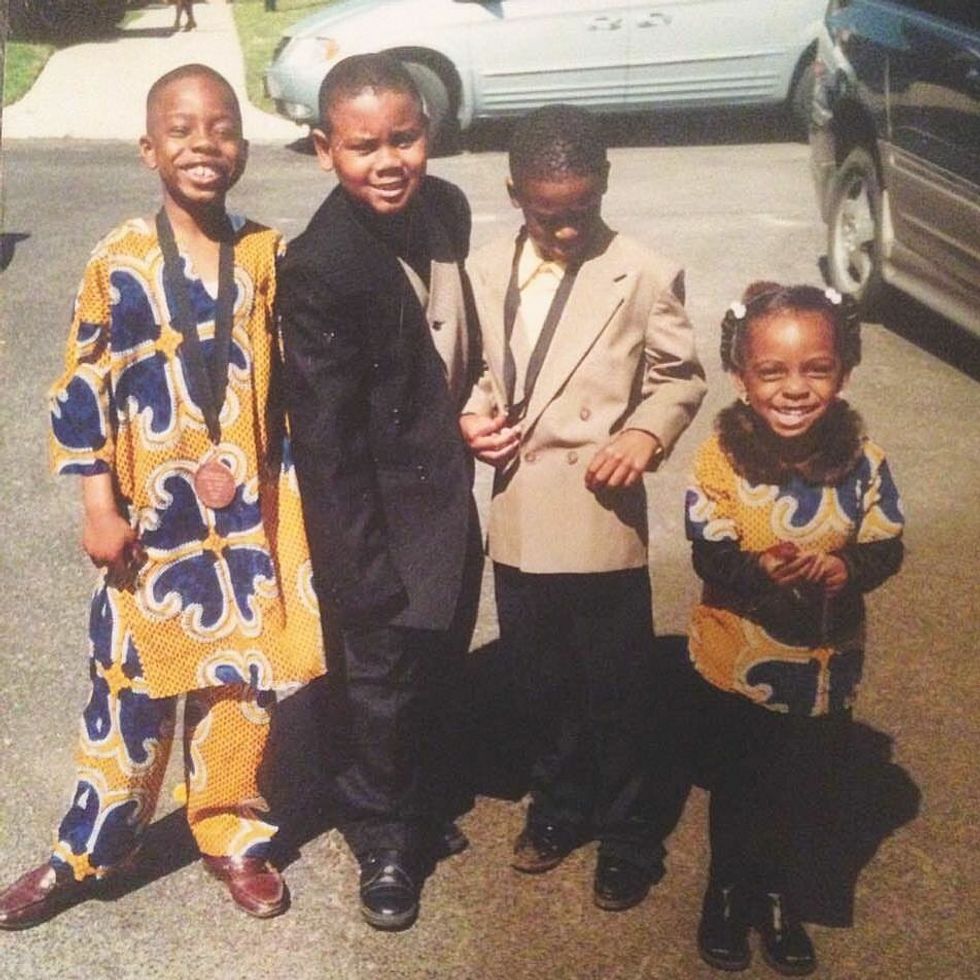
A couple of articles ago, I said that this presidential election was about more than just politics. This presidential election has brought out racists, fascists, xenophobes, and many other hateful groups as you can imagine. Now that the dust is beginning to settle, I wanted to write about something that I think will be the most important issue that could harm the future of our country: the effect of this election on the children. I decided to write about my own struggle with racism. Many people don't understand how years of microaggressions and blatant racism can affect a child. Now that many racists don't have to hide and can spread their rhetoric in our schools openly, I am worried about the rising generation of children and their development. I learned a few months ago that the racism I thought I had overcome still affected me in some ways.

Growing up in a predominately white country/suburban area in Texas and being the only black girl in my class was hard at times. Every slavery talk turns into an awkward staring game, and every segregation talk turned me into the example. Some of it was harmless to me now that I look back on it, but other parts — not so much.
Because of the fact that I was the only black student in most of my classes throughout most of my K-12 journey, I was often subject to a lot of racism as one might imagine. From the oh so frequent "Is that your real hair?" comment to the occasional "Can I call you n****?" school was hard. When you're dealing with racism from students (and their parents) that's one issue, but when teachers ignore and partake in this unruly bashing it becomes a completely different monster. I have so many horror stories of the things teachers have said and done to me, but I don't plan on going through them all here.
When a teacher has a racial bias — whether unconscious or conscious — a student will notice. I had a teacher once ask me in front of the entire class in the middle of a chapter on Keynesian policy if my hair was real. When I was shocked and simply shook my head for yes, she shrugged and said "Oh" before going back to the lecture. I was natural but my hair was straight on this day and a different color. My principal tried his best to help with all of the incidents that occurred at my school, but things happened every single day and I didn't want to feel like a sore popping up all the time. When I told him about this one and explained why it was racist, he took some action (a talk or maybe some form of discipline) that resulted in my teacher treating me differently for the rest of the semester. Before the incident, my teacher would ask me a lot of questions often related to my race in one way or another (I simply considered these inquisitive and an opportunity to learn). After the incident, she would often glare at me and ignore me as if I wronged her in some way or another.
When the work got harder or I had questions, I began to need to stay longer after class for questions and more. I learned then that once all the other student were gone the teacher often belittled me by referring to the material as uncomplicated and effortless when I didn't understand it. I knew this was some form of disdain, because when she helped other students she asked them about their day, checked in on their family, and never made it seem like it was just the student who was misunderstanding the material. She got so nasty with me that at one point I would only go in with friends outside the door and only when I absolutely had to ask something.

This is not the first time that this happened. In elementary school when I got to class early in the morning one day, I left my bag in my teacher's room for a few moments. When I came back, the teacher was still at her desk, but my bag had been opened and dragged across to the room to the point that all my belongings were on the floor and my money was missing. Her daughter was the only person who was there before and when I asked her about it, she said nothing had happened. A year before, I was told by a teacher that "black people couldn't have superpowers" in the superhero game we played on the playground. I was told by another teacher that nobody would ever like me and that I would never have friends. I was told by another teacher that Oprah Winfrey, President Obama, Michael Jackson, and every famous black person was evil and worshiped the devil. I had a teacher grab me after school and dig her fingernail into my arm while walking to my mom's car because I printed out two pages instead of one in the computer lab. These incidents (which are few and far in between) all occurred before 7th grade. Later down the line, I had even more horrific interactions, but by that time I had decided I wouldn't talk to teachers unless there were many people present, or I absolutely had to. I became a child of frequent parent teacher conferences because I felt I could only stand up for myself when my mother was present. Being cursed at, singled out, and even physically hurt by teachers created a fear and a separation between me and my education, and these are only a few of the instances I dealt with. It's hard to focus in class when your teacher makes blatantly racist comments and everyone laughs. It's hard to do well when you know your teachers and classmates hate you for something you can't change. Will your work be graded fairly? Will your tutoring receive as much attention as others? Is it worth doing the work at all? This doubt resulted in bouts of depression, anxiety, and self-deprecation. Despite all of these problems, I did manage to find a few educators I could be myself around. I had Mrs. Foust in the first grade, in middle school and Ms.Cole and Ms. Lidell in high school.
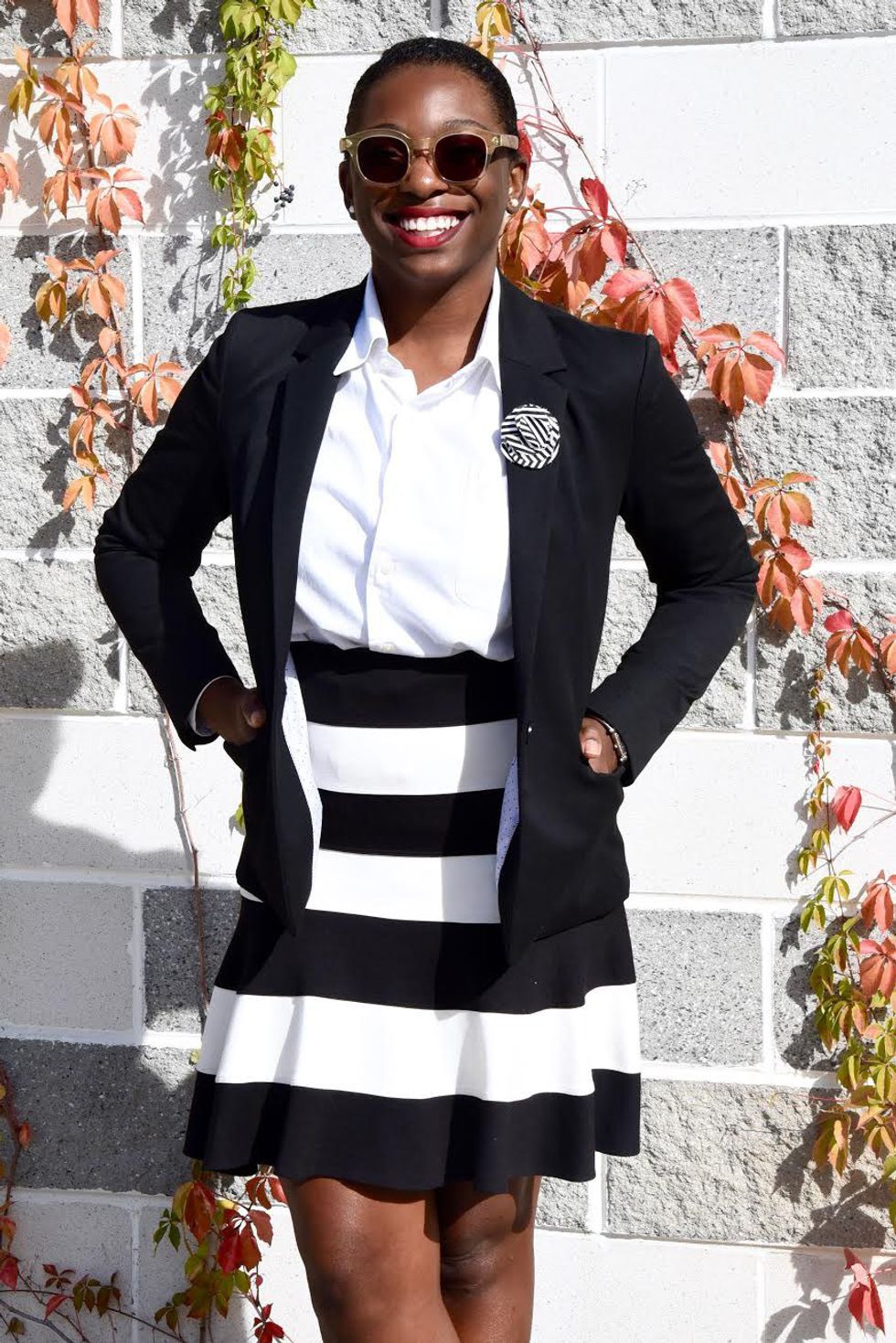
Since I have been at college, I have realized that this subconscious fear followed me. One of my professors met my parents during parents weekend at GW, and while he was talking to them he brought up how he was upset that I never went to his office hours. I was shocked at hearing this, and when my professor and parents turned towards me I explained that I felt like I was wasting his time with what were stupid questions that could be emailed and which wasn't fair to him. He responded to me by explaining that even if I have no questions I should always go to office hours and make-up questions to ask - even if I don't have any. This shocked me, and as we went back and forth about what constitutes an office hour visit and what does not, I realized that I was afraid of talking alone with my professors. I was afraid of getting in trouble with professors, I was afraid of being personally insulted or cursed at, and I was afraid of asking for help in person without others present. Here I was, at college still afraid I might be hated by a professor without reason. My professor was asking me to talk to him for fun.
When I thought about this a little more, It blew my mind. If you ask people who know me if I am fearful or meek, they'll probably laugh at you. I consider myself strong as someone who has completely overcome the effects of racism and loves the skin I am in, yet it clearly has had an effect on me. The racism I dealt with could always be fixed if we barely threatened to record it or tell the media about the issue, but now you have teachers who are fired for speaking out about the racism, and teachers who aren't afraid to lose their jobs if they share their racist views. You have teachers that are not concerned about students videotaping their racist rants, and that changes everything. Even if they are fired, those words can affect you forever.

Why does this matter?
Freud believed that a child's experiences in their first 5 years of their life determine who they will be and how they will act. With some level of reality to this claim and this new climate that has been created, there is a lot of concern I hold for the children of this time period. I was strong, and it took me years to become who I am, so how will this new generation of children be able to fare? They need everyone that can help them grow and love on them now more than
—
Here are links on how to help your child cope with racism, become an ally for POC, or learn when to recognize it:
https://www.psychologytoday.com/blog/life-liberty-...
http://www.blackgirldangerous.com/2015/07/teach-ki...
http://www.parents.com/parenting/better-parenting/...
http://www.tolerance.org/publication/how-do-parent...
Here are links of accidents that have occurred in classrooms and in public:
http://www.11alive.com/news/local/gwinnett-co-moth...
http://www.aol.com/article/2016/08/03/man-goes-off...
http://www.salon.com/2015/05/13/snapshots_of_a_rac...
http://www.mommyish.com/2013/10/29/racist-rant-tea...