
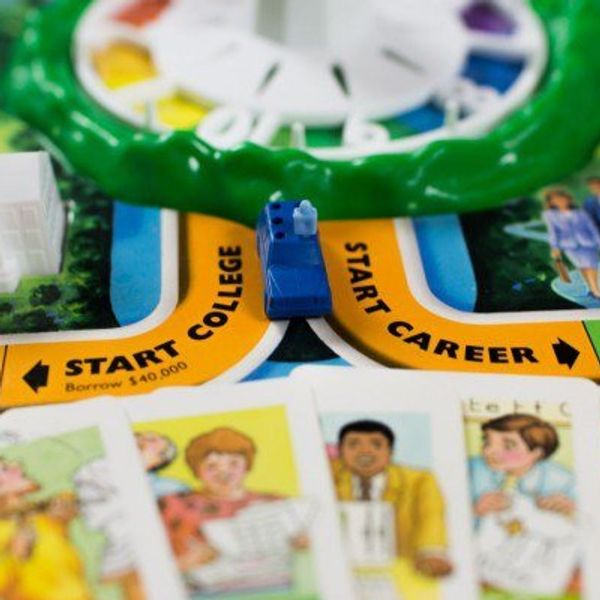

Now that those fun high school times are over, it’s time to challenge yourself with a more enriching educational environment. I’m sure you already have the idea that college-level work is obviously tougher than high school work, and that you will pull all-nighters at one point. In the end, though, it’s worth the struggle. You’ll definitely learn how to connect concepts to “the real world.” But not if you slack off or don’t motivate yourself. Here are tips that I, a college senior, suggest you do to prevent that.
1. Take notes in your own way.
When I was in high school, some of my classmates had a class for which the teacher required them to take Cornell notes for every lesson. Truth is, college professors don’t care about how you should write notes. If Cornell notes actually help you, stick with it. Prefer bullet points or color-coded? Go for it. Do what works best for you. It’s your class, not your teacher’s.
2. Finish all of your GEs first.
General education classes can be a drag, as some won’t relate to your major whatsoever, or are just review from what you’ve learned in high school. Though some GEs are intriguing and are admittedly more engaging than from how you have been taught before, it’s still better to get them out of the way. You don’t want to wait until your very last year as an undergrad to complete a lower-division science requirement; you have your majors and minors to focus on! If you’re undeclared, GEs can also help you find a subject that you’d be interested in studying.
3. Be the undeclared leader of a group assignment.

via quickmeme.com
With a lot happening in college, someone can bail out on their part of a group assignment or project. If you aren’t this type of student or just feel like you’re doing all the work, be the one to communicate and negotiate with your group. Bother them about the assignment. You’re saving not only your own grade, but theirs too. If you can all meet up and work well together, your assignment will surely be a success.
4. When reading a complex text: annotate, comment, and write questions.
Your high school English teacher might have often bothered you with this, but marking up a text actually helps you understand your readings more. You will become an active reader when doing so. Annotating or commenting on a text can also help you come up with writing ideas if your essays will be based on readings. I’m an English major, so I annotate a lot, even in my non-English classes. It might seem like more work, but it’ll get fun. Trust me.
5. Study in chunks.
Some students can cram all material the night before the exam, and still get a high grade. Unfortunately, not all of us can do that, which is why I recommend you study in chunks of time. Instead of taking in everything for three hours straight, try to divide concepts into different sections or categories, and study them for around 10-25 minutes each. Take a break in between! Your mind will have much more ease and fluidity if you study small bits of material in a shorter time lapse. Just don’t do this on the night before, though.
6. Practice, practice, practice!

via missouri.edu
This would specifically be for classes in which you have to perform, speak in public, or solve intricate problems, but I think practicing works for any subject—even and especially in writing. Whether figuring out a solution to a Calculus problem or trying to speak grammatically-sound Spanish, you won’t improve if you don’t practice regularly. Don’t rely on luck to master such skills. Practice every day, and you’ll be guaranteed a good grade and, even more so, future success in your field.
7. For essays/writing assignments: read your work out loud.
Effective writing assignments should not only look good content-wise, but should sound strong and convincing, too. When you finish writing, read your essay out loud to catch all of those grammatical and structure errors your professor might notice. Also, read after you write a paragraph or two; this will save you more time later. If your high school teachers told you that reading your essays out loud is the best way to improve your writing, do it. They’re right.
8. Connect to electronic media sources.

via variety.com
I find it upsetting when teachers use only outdated textbooks and their own biased knowledge to teach the course. Living in 2015, we are beyond that, and have significant connection to electronic media, like the Internet and films. Consult those sources to fully grasp what’s in the now, and apply them to what you are currently learning. Even professors today use the Internet to look up some things, and you should too. Google is our bff, right?
9. Speak up in class discussions (even if they get boring).

via tumblr.com
This is one that has taken me a while to do, since I’d always assume that what I’ll say would sound “dumb.” If you happen to feel the same, that’s okay—as long as you make an effort for an input. Don’t exclude yourself from the rest of the class; your input is just as important as your classmates’. Say it loud and proud. If you’re shy, just remember that you are in the same boat as everyone else and shouldn’t feel too uncomfortable.
10. For concept-based exams: use colored flashcards.

via pacon.com
Overwhelmed with all the stuff on your study guide? As I have briefly mentioned in tip five, break them into sections in which the concepts somehow relate to one another. For each section, jot them down on a different colored flashcard to help you understand and remember which goes with which. Doing this has saved me in those long multiple-choice exams for a history or social science class.
11. Try to attend events/conferences your professors announce.
What you will learn in college applies to ideas and activities beyond the academia; you don’t learn for the sake of just completing a class. At times, your professor suggests you go to an out-of-class event relating to the course, like a play or a guest speaker’s lecture. By attending these events, you’ll feel more connected to the course, and see what it offers in our society. You may even earn extra credit just for going! Can’t you spare an hour or two?
12. And most importantly, ask for help.
 via uloop.com
With the work being more demanding and difficult to tackle, you can’t do everything by yourself. Your professors are there to help you. Go to their office hours, and ask them questions if you’re having a hard time. Bug them! It’ll only benefit you in the end; and remember that tutoring resources are also available on campus. Take advantage of them. Shoot for that A!
I hope you’ll find my tips helpful, as you’re now starting a new learning path. May you have an awesome school year, and welcome to college!