

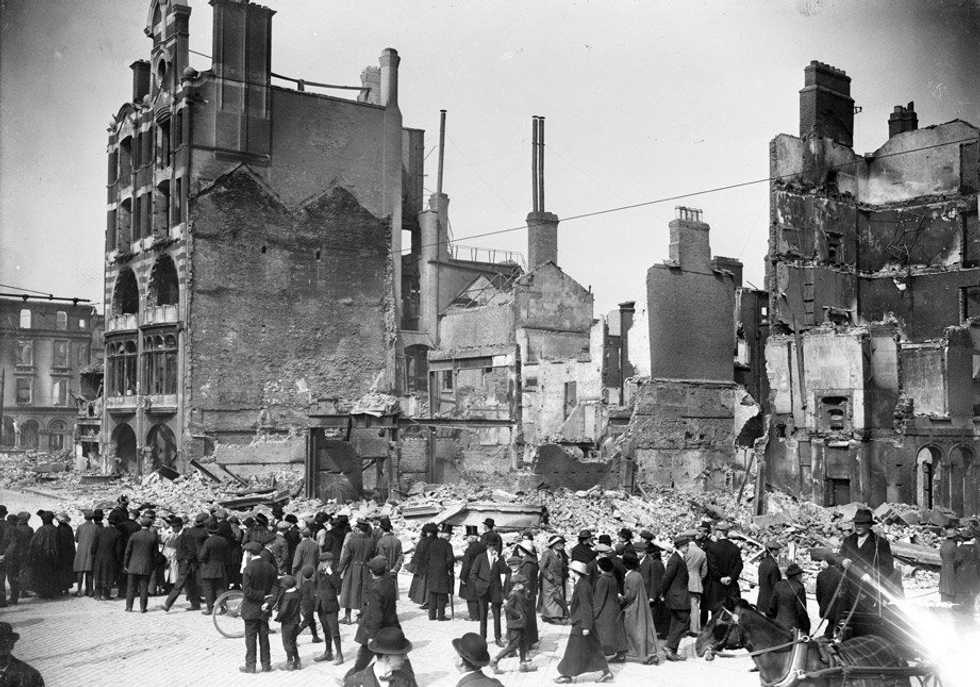
My family has never gotten excited about Easter Sunday, but we do get excited for the anniversary of Easter Rising. This year, on April 24, it will be the 100th anniversary of the Easter Uprising in Ireland. On the Monday following Easter, a group of the Irish Republic Brotherhood, Irish nationalists and their followers started a rebellion against the British Rule. The idea was to attack the British while the country was preoccupied with their involvement in World War I. The revolt capitalized on the lack of forces protecting what they hoped would become an independent Irish republic. The Union Act of 1800 had joined the British and the Irish into the United Kingdom of Britain and Ireland, which ended with Ireland losing their parliament in Dublin. The Uprising, over 100 years later, was ended quickly with its leaders were executed and over 3,000 suspected followers arrested. While the rebellion itself may have failed, it set the stage for the Sinn Fein Party to rise in England and establish the Republic of Ireland. They freed all but six counties that chose to remain a part of England's commonwealth.
My father's grandfather, John Andrew Rea, was born in Limerick in 1891. Although he was only five when his grandfather passed, my father remembers his grandfather as a hard and incredibly skinny man. In 1916, John, along with 1,800 of his countrymen, were arrested and thrown in jail in England without trial. My grandfather will have you believe that after the Uprising, British soldiers went around and arrested any young man they could without reason or suspicion. My great-grandfather never spoke about the rebellion or made mention of any involvement. Though he never mentioned his part, everyone who was arrested at that time was suspected to have given some form of support to the Uprising. During John's time in Wormwood Scrubs Prison in London, he went on three separate hunger strikes. He did not go on these hunger strikes for himself but rather to plea for the release of a fellow prisoner whose wife was dying. After his third hunger strike he was so ill that he was released into a convalescent home, presumably to die. He did not die. When he was nursed back to health, he walked home and left for the United States of America.

John Andrew Rea standing in front of the destroyed GPO building on a return visit in 1960
We will probably never know how my great-grandfather contributed to the rebellion but his Irish pride lives on through the generations. We may not celebrate Easter Sunday every year, but we can surely celebrate our heritage every day.

















