If you attended elementary school in the United States, I’m sure that you wouldn’t miss a beat upon hearing “O beautiful for spacious skies, For amber waves of grain,” nor would you think twice about the lyrics themselves. Well, this weekend take a minute or two and reflect on just how beautiful America truly is as we celebrate the 100th birthday of the National Park Service!
Earth truly is a big place with so many things to visit, touch, see, taste, and experience. Plus with more flights to more places than even five years it is becoming easier than ever to get out and explore the world. Not to mention that being able to run a quick search on Instagram #hashtags and location tags and then pulling together a Pinterest board sure makes creating the (literally) picture perfect itinerary to any spot your heart desires a breeze. But when you’re telling your BFF about why you ought to visit Iceland for spring break or planning that post-grad group trip to Portugal, does it ever cross your mind to stop and think about everything that you are missing out on without even needing to ask your mom where the heck your passport is? Probably not, but I believe that you ought to.
The United States of America, this massive country that we often put on the backburner, has more to offer than many millennials realize. Sure there may not be any architecture as impressively ancient and precise as the Pantheon or bizarre and accurate as Stonehenge, but there is a lot of stuff here that you also won’t find any place else.
The National Park Service (NPS) was created on August 25, 1916 by the United States Congress through the National Park Service Organic Act to carry out the roles of preserving the ecological and historical integrity of places entrusted to its management while also making them available and accessible for public use and enjoyment. The NPS manages all of the U.S. national parks, the majority of the national monuments, and some other conservation and historical properties. The first spot to be declared a national park was Yellowstone National Park, one of the most popular. Today there are 59 national parks, 79 national monuments, and hundreds of other nationally recognized and preserved places such as highways, forests, and seashores. To be recognized as a national piece of land, no matter which category, there are multiple criteria that must be met. They vary greatly but if you are interested in the factors and how the process works, I suggest following the current events taking place in Maine surrounding the Katahdin woods. There is a lot of praise and a lot of criticism as one can imagine, so check out various sources such as Portland Press Herald, National Public Radio, or the New York Times.
While chatting with my co-workers about their own experiences with national parks, each of them expressed the hope that their children will see at least one while they are still young enough to be awestruck and appreciative of the wonder that is our country in it’s most natural state. A lot of kids today, including us that are in their 20’s, might take these incredible places for granted simply because we are too preoccupied with seeing the hottest new destination and racking up the likes on our Insta while sliding through each city"s new and exclusive Snapchat filters. But why not spend that time exploring what makes America the beautiful country that we once sang about? A close friend of mine spent a summer working in the Wildland Fire sector of the National Park Service and has experienced a handful of them and was able to share his thoughts with me about what makes them so special and an ideal travel destination as any other place:
“National Parks preserve unique environments in their 'natural' state from otherwise being developed or disturbed by mankind. They are a window into nature that is easily accessible by the public. They provide education through guides and interpretive sites. The parks provide relief from the usual anthropogenic landscape we see everyday. The now 'unique' habitats they preserve were once not so unique but have been altered or lost by human use. I think the most important service they provide is just existing as a landscape to view, walk through, spend time with your family in, and most importantly think. Think about the Earth, how powerful nature is, human place in the greater ecosystem, our impact, and how lucky we are that someone cared about preserving these special places for future generations. My favorite national park that I have visited in Glacier National Park. Although I want to visit Sequoia, Yosemite, Yellowstone, Grand Teton, Zion, so on and so forth. I have been to (as far as the major ones): Glacier, Crater Lake, Theodore Roosevelt, Badlands, Redwood, Grand Canyon, and Hawai'i Volcanoes. A big reason to visit them is they may be gone! Glacier National Park is running out of glaciers for one example. Many other countries have lost the chance to create and preserve these places so we shouldn't take advantage of them.”
Sure, America might not be as old as an aqueduct or as ‘grammable as the Eiffel Tower. But you’d be hard-pressed to argue that it is not as diverse, impressive, and beautiful as any other spot you could choose to explore. My personal travel bucket list is about a mile long and another mile wide, but you can bet that I have a handful of U.S. national parks front and center and I can’t wait to check off a few more.
Happy Birthday, NPS, 100 looks great on you!
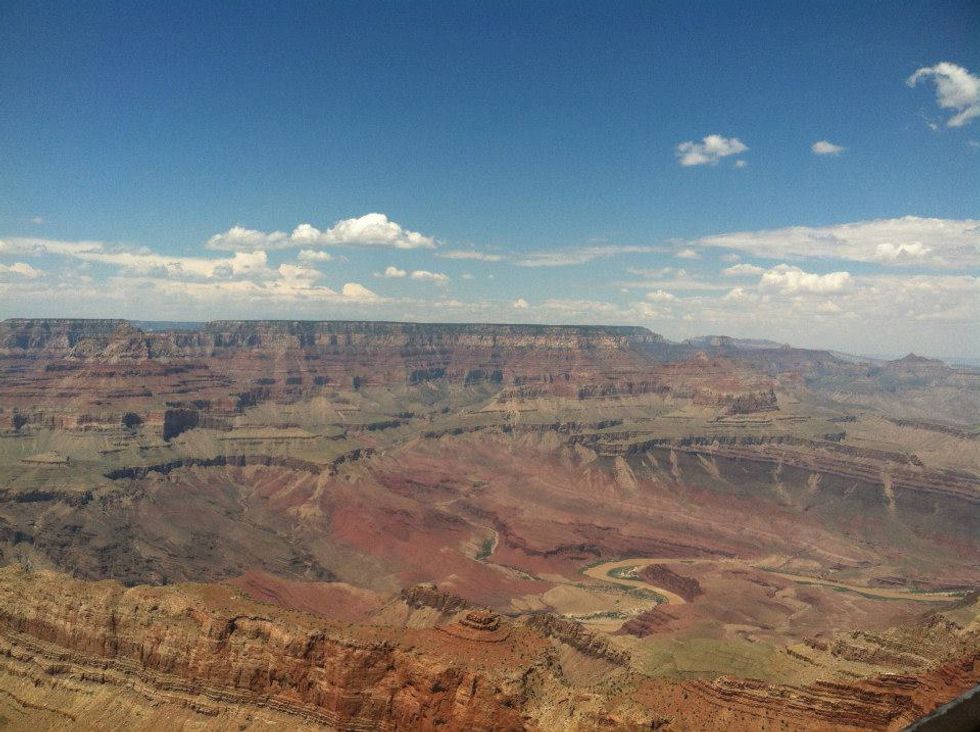 Lippan Point, Grand Canyon National Park, August 2012
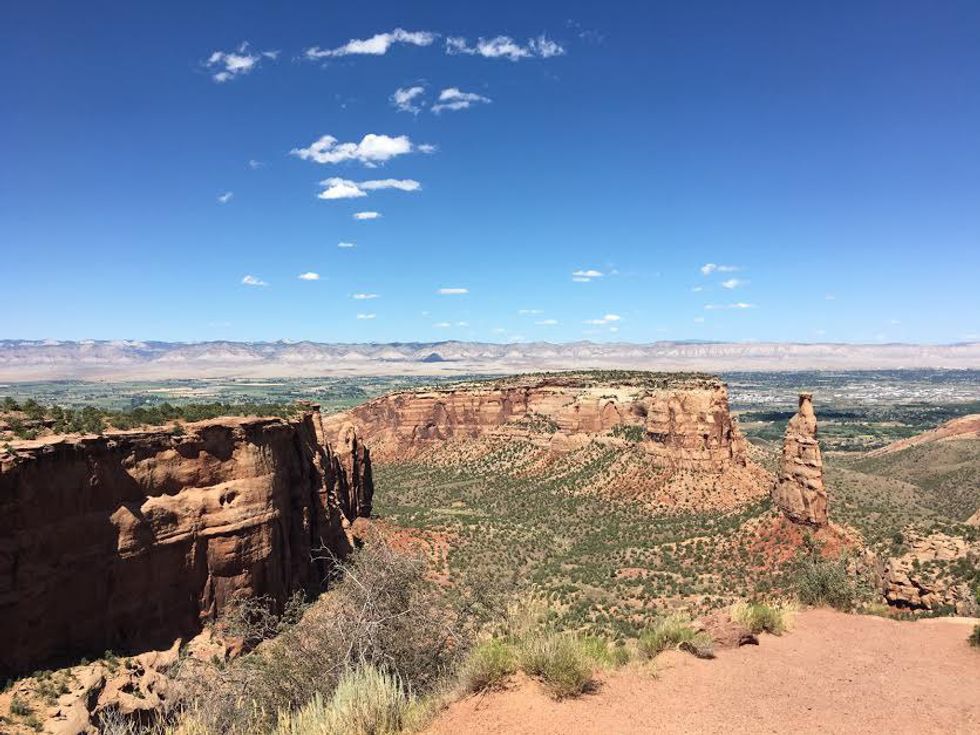 Independence Monument, Colorado National Monument, July 2016
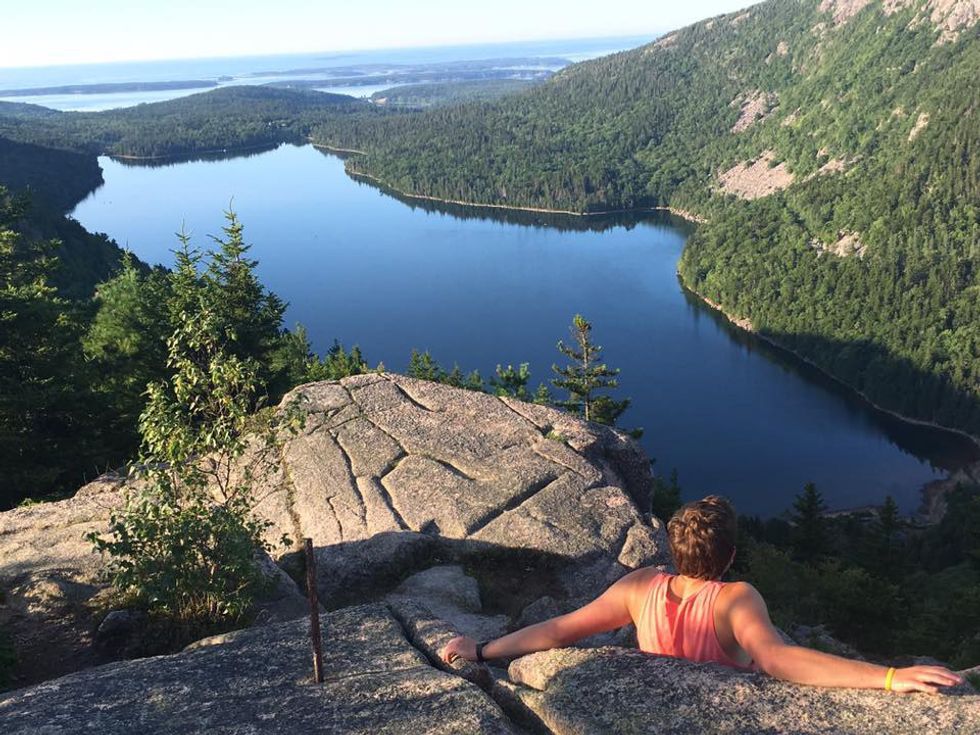 North Bubble Summit over Jordan Pond, Acadia National Park, August 2016