

Your freshman year of college is a stressful but exciting experience! Everything is new and different: ideas, places, professors, and people, but without a little guidance anyone can get lost in the hullabaloo. Provided below is a list of helpful tips and guidelines for the incoming and curious students of college. Following these tips can help the freshman year go as smoothly and efficiently as possible. Everyone's year goes differently but try to the best of your ability to have a good time! You are only young once so don't waste it! Make memories but use this time to set forth your future and everything will be golden!
1. Get to know your roommates
Moving in is the first real experience of your freshman year. There are a ton of things to do, but getting to know your roommates should be one of the first. Don’t be bashful and shy, they’re just as nervous as you. Roommates are honestly a gamble, unless you picked each other. Some roommates click and get along great and have very few problems throughout the year. Others, however, can start off shaky and end great or end in complete ruin. It's OK if you and your roommate don’t get along completely but do try to make the best of it. Technically, you only have to deal with each other for a year.

2. Get to know your professors
Your professors decide the fate of your life, but you however decide how well you do in their class. Your professors are just normal human beings like you and me and actually have lives out of school. Find out their interest and hobbies and use this to try to connect with them. Sports, music, movies and their Alma Mater are great ways to connect with your professors. The better you know your professors the better you do in class.
3. Attend class daily
As tempting as it is to miss class, it is highly suggested* you don’t. Lectures provide the most information on the course. Always take notes and write down questions you have or what other students have asked in the class. Make note of what the professors have emphasized, both verbally and in the notes; professors will mostly likely use this on tests. Make note after the first test where most of the information came from, whether it be the book, the notes or the lecture. But, you won’t know unless you go to class.
*Tip: When a professor says an event or an assignment is “Highly recommended/suggested,” it is actually mandatory.
4. Do not sit in the back of the class
Where you sit is a big factor on how you do in class. For the first week of class, students have to fight for a seat to call their own until there is a basic understanding where everyone sits. This may be different in big classes, but for smaller classes, it is pretty understood. The simple structure of classes goes like this: First row usually requires a fight but is possible if you get there early enough. The professor knows if a student is absent in the first row, but that’s the best place to hear the lecture. You will be the first to be picked for answering questions and writing on the board. If you’re out spoken and comfortable that’s the row for you. Second row is much more lenient. It is close enough to hear everything in class without having to answer as many questions. Occasionally, the professor will notice you’re gone, but unless you are a professor’s favorite, it is not a huge deal. The back rows are for late students and those taking this class for a second time. It’s a miracle when the professor knows your name by the final, and sitting in the back doesn’t help with any attendance points. Ideal spot? Second row little to the right or left so you’re not directly in view for questions, but can the most out of the lecture.\
5. Find your study patterns
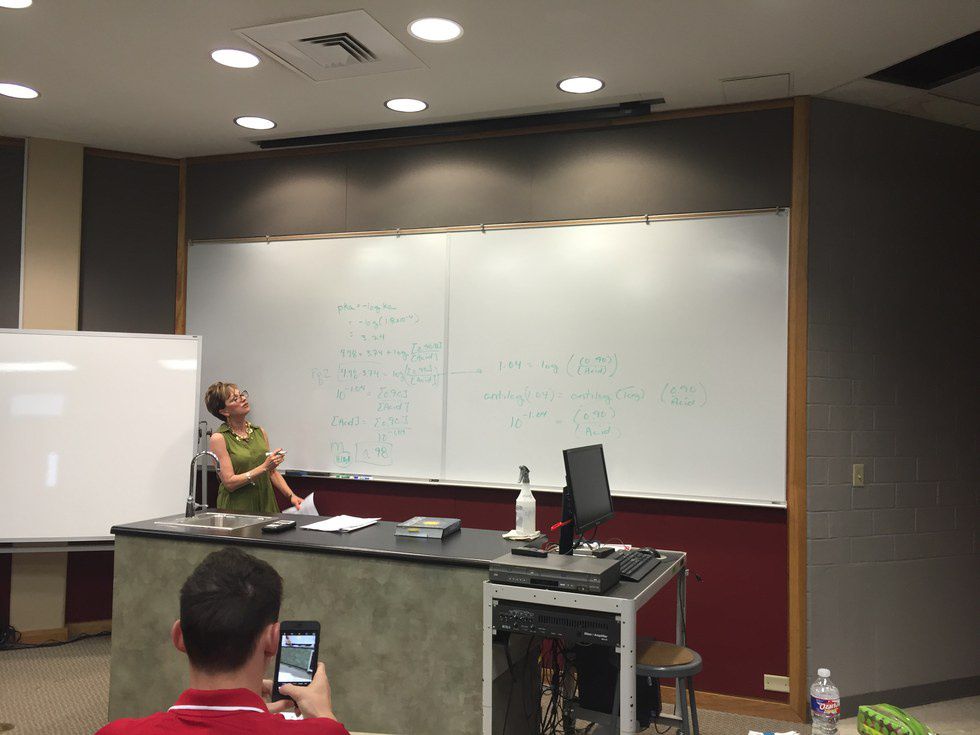
Studying for college is very different than for high school. Information is given to students in multiple ways so find the best way that works for you and use that in as many classes as you can. Studying styles will vary from class to class. While in biology, you only have to read over the content a few times to get it; in chemistry you have read, work practice problems, remember everything from the last test your professor may throw at you and find the hidden subjects you barely covered in class but are heavy in the book. It simply depends on the professor. Studying in groups is beneficial if you are actually studying; not goofing around, but actually working problems on the whiteboard studying. Teaching each other is extremely beneficial. It not only helps others but allows you to remember the content and use it in a different form. The best way to remember something is to teach it to somebody else.
6. Have a calendar or planner
Organization is key to getting things done efficiently and quickly. Writing down events, test, due dates, things you did in class and reminders help you stay efficient and responsible. Some people benefit from color coordinating classes and notes while some benefit from lists. Lists are great for stating what needs to get done all at once. It may seem overwhelming if it’s a lot. but it feels great when you can mark something off.
7. Use the tutoring center and supplementary instructor sessions and office hours
Tutoring and SI sessions provide great ways to learn the curriculum and tips on how to do better in class. You can ask extra questions, spend a little time on one thing, and work with others in that particular class. Usually students that have had that class and professor before so take their hints, ask to use old test, and much off of them what you can. More than likely they won’t mind. Office hours are also great if you want to show the professor you are working hard in their class and it's solid connecting time between student and professor.
8. Remember to treat yourself now and then
Everyone needs a break every now and then. The little things like a cup of hot chocolate or a fancy coffee will do wonders. Take time to relax your brain. Coloring between sessions is extremely beneficial and helps your mind work to the best of its abilities. Movie nights after a big test are relaxing and fun, and give a sort of comfort in the new world of college.

9. Try to have a regular sleep schedule
College students need 8 (plus) hours of sleep each night. Of course there will be cramming sessions the night before a test, requiring you to go to sleep at 4 a.m. or 5 a.m. then wake up at 7:45 a.m. for your 8 a.m. test. Try to eat breakfast before class and especially a test, but it is understandable if you don’t. At least have an apple ready for when you crash.

10. Find a spiritual connection
Whether it be fishing by yourself or going to church on Sunday, find something to connect with. Use that connection to find peace within yourself and happiness around you.