


As the school year winds back up, and we all return to our classes, the time has come to begin pulling ourselves together. The start of a new school year always brings certain levels of excitement (seeing your friends, catching up over coffee, decorating your new room) but also certain levels of high anxiety (the start of classes, the frantic return to old extracurriculars, trying to figure out your new schedule). As you enter into this time, it's important to keep in mind that starting off on the right foot can set you on the right path from the very beginning. Here are some tips on how to do that:
1. Buy a planner you will actually use.

If you don't love your planner, you will not use it. Get one with cute designs in it, or one that's small enough that it won't weigh down your back, or whatever you want. Don't just pick up the basic planner at the bookstore. Go planner shopping, and find the one that suits your organizational style.
2. Keep all your syllabi in a place where you can easily access them.
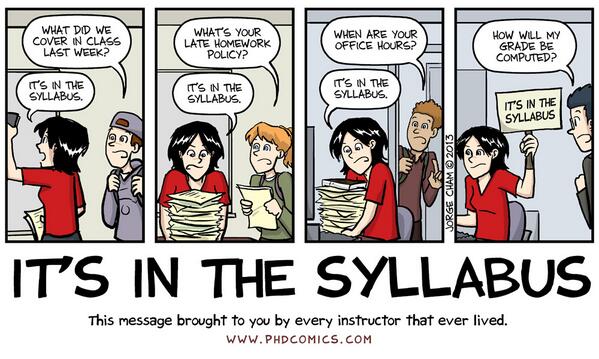 You don't necessarily have to print them out (save paper!), but even having them in a folder on your desktop instead of having to dig through the internet to find them will make you much more likely to reference them in your time of need. And it will save you a lot of time.
3. Write down the most important dates from those syllabi in the planner.

Write down when those readings are due. Write down when those papers are due. Write down when you have an exam. Even if it changes, it's better to be prepared. This way, you have to see that due date every time you look at the planner, and you won't forget.
4. Use a different pen/highlighter for different classes/activities.

If everything is the same color you will not know what you're looking at, and you probably won't try to understand it. Color coding will help your brain better decipher the information.
5. Plan out your readings over several days.

Instead of trying to read it all the night before, divide up the reading into segments. Read 40 pages in two 10 page increments each day over two days. It will make the reading feel like it's going faster, and it will be less stressful.
6. Schedule in your meals/workouts/personal time.

Do not forget personal health and hygiene in the midst of your busy schedule. If someone asks you to do something that might cause you skip a meal or a workout, or takes away from much-needed down time, seriously ask yourself if that is the best thing for your mental health at that moment.
7. Use post-its to make notes on your readings.
 This will prevent you from having to flip back and forth in between a notebook and a textbook, and in class it will put your notes directly next to the correlating piece of information.
8. Try to plan as far ahead as possible.

Those projects and papers due in November may seem far up, but they will creep up on you, and if you do a little work each week the end result will be much easier and much less stressful.
9. Never leave the house without a water bottle.

Dehydration is a serious issue and it's not something you need to worry about on top of everything else.
10. Be realistic with yourself.

Know your limits. Know when you need a night at home. Know when you really can't help your friend with that thing. Know when catching up on sleep or work or eating a necessary meal might have more value than going to class that day. My theory is always utilize your time to do the thing that is best for you in that moment- and sometimes that happens to be a nap.