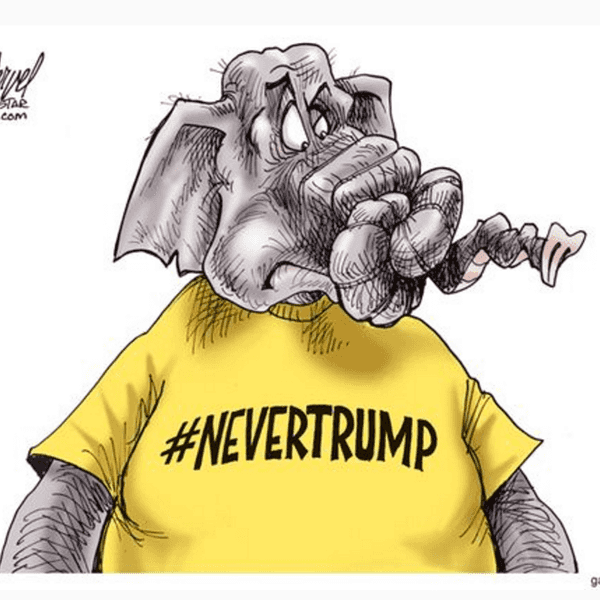
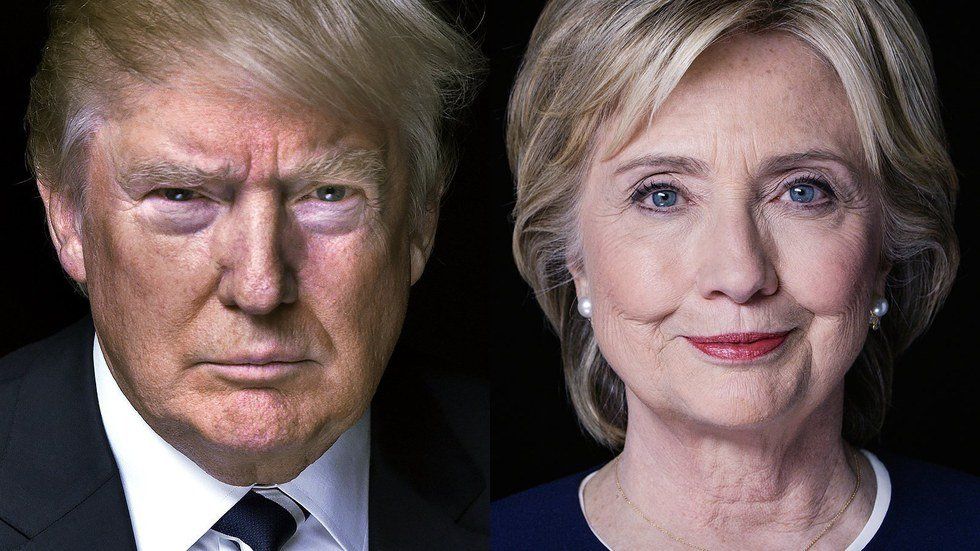
Some people believe that 2016 is one of the strangest presidential elections of all time. It is a face-off between two deeply unpopular candidates who the American people generally don't trust. However, the U.S. has a precedent of having odd elections in our history. Here are 8 of some of the most unusual presidential elections ever.
1. The 2000 Election
The 2000 election might be one of the first ones you think of. The contest featured Republican nominee, Texas Governor George W. Bush against incumbent Vice President Al Gore, the Democratic nominee. The election featured talk of the Lewinsky scandal, talk of Gore "creating the internet", and a successful third party candidate, Ralph Nader. Ultimately, the election came down to the wire in Florida. A recount was called due to "hanging chads" or ballots that hadn't entirely been punched through. Despite winning the popular vote, Gore had lost the Electoral College vote to Bush. The U.S. Supreme Court ultimately intervened and Florida was awarded to Bush, who went on to become the 43rd president.
2. The 1824 Election
The 1824 election was truly a bitter moment in American history. It featured another son of a former president, John Quincy Adams, running against popular war hero Andrew Jackson. The election involved attacks on each others characters and spouses. Adams was accused of being elite and out of touch. Jackson's wife, Rachel, was accused of being an adulterer for marrying Jackson before her divorce to her former husband had become official. The election ultimately ended in the most insane way possible. No one received enough votes in the Electoral College to win! Therefore, the election was to be decided by the House of Representatives which ultimately chose Adams. Jackson and his allies cried foul over this, they felt that Adams had bribed the Speaker of the House, Henry Clay, with a cabinet position. They referred to it as "the corrupt bargain". Jackson would ultimately go on to defeat Adams four years later as the nominee of his new party, the Democrats.
3. The 1912 Election
The 1912 election seemed like it would be a normal year. Democratic candidate and New Jersey Governor Woodrow Wilson was running to unseat Republican President William Howard Taft. From out of nowhere, former President Teddy Roosevelt came out of retirement. Roosevelt had vowed that he would only serve two terms, despite the 22nd amendment not having been added to the constitution yet. Roosevelt had been a Republican president and had even hand-picked Taft to run as his successor. However, Roosevelt wasn't satisfied with the work of the Taft Administration and decided to mount a challenge. Taft was suddenly in a contest with his former mentor for the nomination. Taft ultimately won the primary but that didn't stop Roosevelt! He created his own party, the Bull Moose Party, and launched his campaign for the presidency. Taft and Roosevelt ultimately lost to Wilson, likely due to the Republican vote being split between the two men. Roosevelt managed to garner 27% of the vote, the highest vote count for a third party candidate in American history.
4. The 1860 Election
The 1860 U.S. presidential election was one of the most divisive elections of all time. The nation was on the edge of a civil war and slavery was splitting people and political parties apart. The popular Whig party had completely collapsed over the issue. Some former members of the group who had been part of the abolition faction formed in order to form the new Republican Party. Their nominee was a rising star, Illinois congressman Abraham Lincoln. The Democrats were far more divided when it came to slavery. It was such a difficult topic, that the party nominated two different candidates! One for the north and one for the south. Lincoln went on to win the White House and a few short weeks later, nearly the entire south had declared secession.
5. The 1876 Election
This was another election that resulted in one candidate, Samuel Tilden of the Democrats, getting the popular vote while Republican nominee Rutherford B. Hayes won in the Electoral College. It is how the matter got resolved that makes this election so special. Democrats had a pretty firm handle on the devastated south, which had lost the Civil War a decade ago and was under strict supervision by the military. An informal deal (the Compromise of 1877) was made between Tilden and Hayes where Democrats agreed to let Hayes become president in exchange for Reconstruction coming to an end and troops being removed from the south.
6. The 1972 Election
If you thought that these previous elections were strange, wait until you hear this one. In 1972, the Democrats selected South Dakota Senator George McGovern to defeat Republican President Richard Nixon. McGovern was not a popular candidate and needed a running mate who could give him more appeal. He ultimately wound up picking Missouri Senator Thomas Eagleton. It was later revealed that Eagleton had suffered from depression in his youth and had to undergo electric shock therapy. Despite claims that McGovern would stick with Eagleton, he ultimately asked him to leave the ticket in fear that Eagleton could become president and his mental illness could reoccur. McGovern's lack of faith in Eagleton is believed to have seriously hurt him on election day. He lost every single state with the exception of Massachusetts.
7. The 1976 Election
This election is unique due to the turmoil that the Republican Party was in. President Gerald Ford was in office despite having never won a single vote, he had been appointed vice president and became president upon Nixon's resignation. Ford had lost popularity after he pardoned Nixon for any criminal actions involving the Watergate Hotel break-in. Things got worse for him when California Governor Ronald Reagan announced a primary challenge against him. After a hard-fought battle between them, Ford emerged as the winner. The battle between them however allowed for relative unknown Georgia Governor Jimmy Carter to appear on the scene as a more popular choice. Carter went on to win the election.
8. The 1796 Election
By far one of the most unusual elections of all time. Occurring before the twelfth amendment which outlines the rules of selecting a president and vice president, the election matched up two opposing candidates as president and vice president! In other words, if we had the same rules today and Hillary Clinton won the presidency, Donald Trump would be the VP! The second place finisher gets awarded the second-in-command spot. That's exactly what happened when John Adams was forced to work with his bitter political rival, Thomas Jefferson, for four years. Even worse, Jefferson launched another bid for the presidency four years later and defeated Adams. So much for bipartisanship.
With all the oddity in the 2016 race, sometimes we forget just how unusual past elections have been. The United States has certainly seen some odd elections in the past and we are likely to continue to see more odd moments in the future.