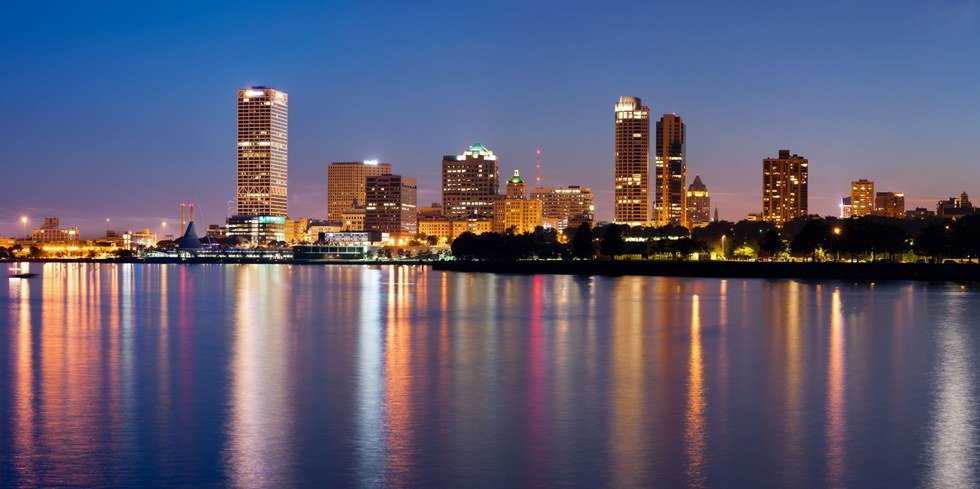
I watched from the couch of my living room, with phone in hand constantly refreshing my Facebook feed for new updates on the event, waiting for a reply or some reassurance of my closest friends’ safety. My grandmother spoke loudly over the phone with her longtime friend, declaring the death of the city and its deterioration from its “glory days” to the point where it was unrecognizable to her. Comments, posts, and videos on the events occurring came across my Facebook feed like the waters of a storm surge rushing onto the streets of an already decimated city, destructive and uncontrollable. There was defaming of the city and its inhabitants. The people rioting in the streets were reduced by the online population to senseless animals and our city became the punchline of a situation that was far from a laughing matter. I watched, as the neighborhood known as Sherman Park, the neighborhood which was home to my church, and the bearer of my many childhood memories burned to the ground.
The violence and rioting came as a result of the shooting of African-American Sylville “Seville” Smith by a police officer who was also African-American. There are many speculations about the death of Smith and whether the officer was truly justified in taking the 23 year old’s life, one being that he had a loaded firearm and was waving it in the air and after refusing to put it down; the officer (who has yet to be identified) gunned him down to ensure public safety.
I wasn’t there, so I don’t know the true story, and I'm not going to convince you to believe something I can’t be sure about myself. That’s not why I’m writing this article. However you view the situation, a son, a brother and a father’s life was cut drastically short and many took the streets to express their hurt, their pain, and their voices, in the only way they thought they could be heard. Shots were fired all around the city, stores were looted, businesses destroyed, and in addition to seven other buildings, a gas station was set ablaze in a situation that could have easily became explosive (but thankfully it didn’t). Soon enough, there was an unofficially declared war against police officers for what many thought - failure to do their job, and because of white people for the disparity of wealth between the suburbs and inner cities as well as its neglect.
The violence and riots began approximately 3:30 on Saturday and wasn’t concluded until Monday when the mobs no longer appeared at Sherman Park during the night hours. As a city, all eyes are on us and the question of “what now?” sits in the hearts of people extending beyond the Sherman Park neighborhood. Well, within the neighborhood, the family of the late Smith have been hosting nightly barbecues in an effort to fund Smith’s funeral and bring the community and all its people, no matter the color together. I’ve attended a few of these along with local churches and many other people and the atmosphere is a complete opposite of what the riots stood for. There was so much love and support among people who hardly knew each other and these people as well as the local churches refused to let violence consume the neighborhood and become a label for it.
Just this Friday there was also a listening session for all people as well as elected officials to promote ideas and solutions for mending Milwaukee and beginning a change the city has been in dire need of for a long time. In fact, the younger brother of Smith, Sedan, has made it clear he wants to be an advocate for change and peace within the city and many more from all across the city and the nation have come forward in hopes of being a part of the change in the inner city and the reconstruction of Milwaukee’s identity. It is indeed a tragedy that the city had to have been overcome by such horrific events to open the eyes of many residents to the city’s needs, neglect and injustices, but it is a testament to how events such as these can create a sense of realignment and hope. When we hit our lowest points, we are open to the greatest change.