

Yes, newsflash, you are biased.
It's easy for me to say, "I treat everyone equally." One of the major “don’t do’s” in life is to assume bias, but this isn’t always easy to acknowledge. Most of our biases are unconscious, or a simple accumulation of us viewing and interacting with others on a daily basis. It’s important to not only identify our own biases, but keep them in mind when we’re dealing with our peers, our superiors, and most importantly, strangers.
Guess what? The only way to solve a problem is to admit there is one. If we, as individuals, are not able to self-reflect and identify the biases that make us act non-objectively, then we cannot make objective decisions. Let me say that again: If you can't identify your own biases, you aren't an objective or effective judge.
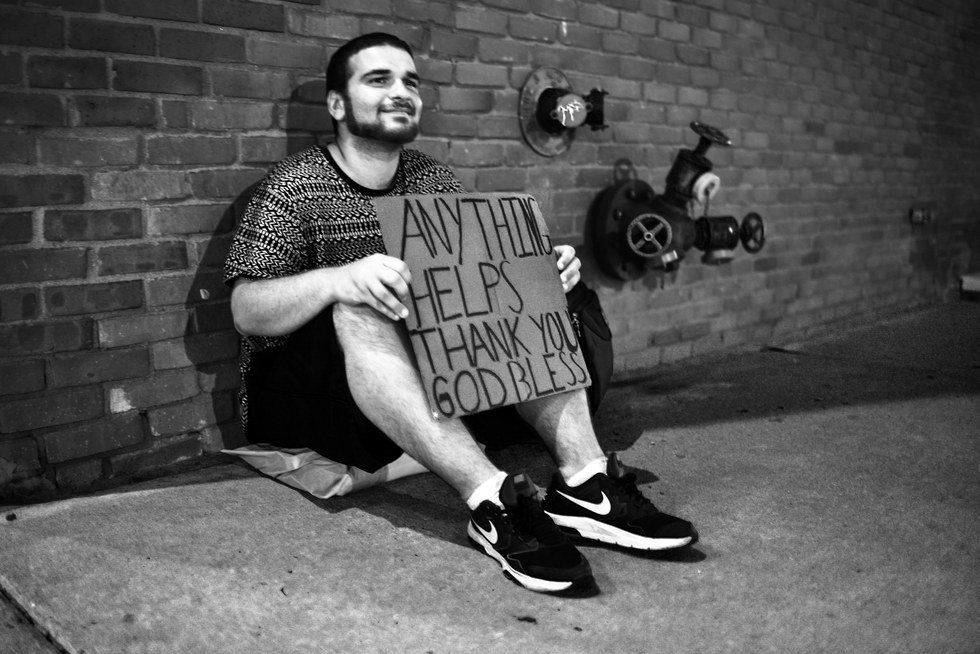
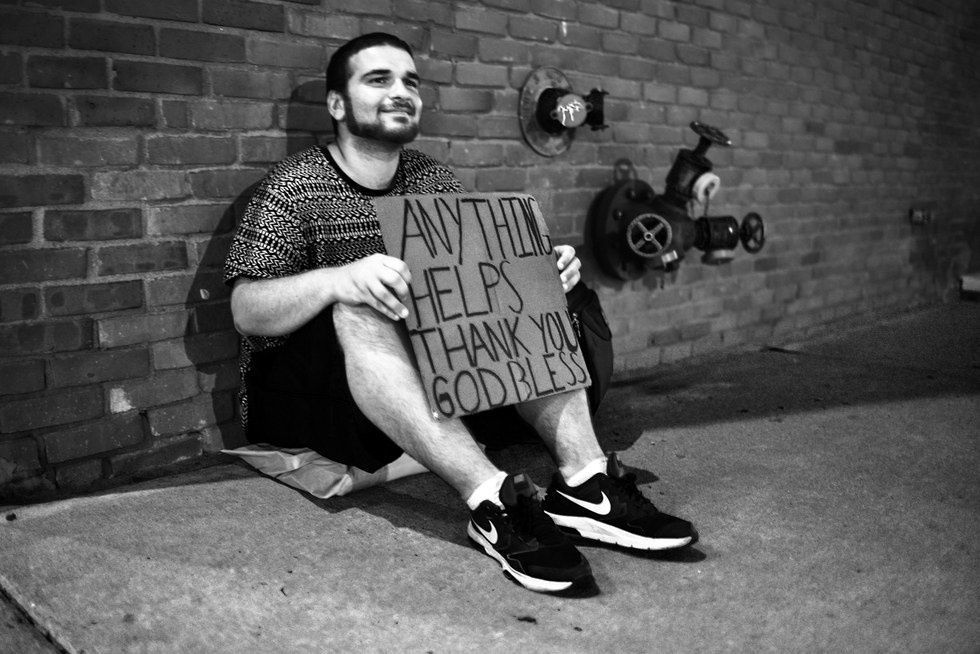
One of the many biases I've noticed-- just this week, I might add--has to deal with an encounter I witnessed regarding a homeless man. I had my camera, and I wanted a shot of his sign. I asked if I could get a picture of the man, as long as I didn't see get his face in the picture. He agreed, and told me I had permission to get his face too. (What a nice guy!)
I caught up with my friends, who had walked a couple hundred yards in front of me. We had just been to a baseball game, and we were in a wealthier part of downtown Minneapolis. My--cynical--friend made a comment about how he witnessed the man's friend, also appearing homeless and young.
What's wrong with this picture?
It's easier to identify bias when we ask the question, "What would I have to assume for this to be true?" This is very different from saying "How am I wrong here?" The latter tends to make us resistant to admitting when we are wrong because we feel unintelligent, which is neither helpful or relevant.
Let's first off, talk about my friend. He's grown up in a wealthy part of the country, is educated, employed and just bought a condo. He's single with no kids, has his parents to fall back on, and is cared about and supported. This assessment of him is already biased because I've only known him a short while, and that's what I see of him.
Now, back to the story for our list of assumptions:
1. The man isn't, in fact, homeless because his friend had a cell phone.
2. The man with the cell phone was his friend and not a passerby.
3. Homeless people don't have cell phones. (Fun fact, not always true.)
4. The man deserved to be judged one way or another.
Here are my biases.
1. I'm a female, and therefore, know quite a few things about being judged.
2. I'm young, and still feel what it feels like to be broke, alone and afraid.
3. I've cared about, volunteered for and read works by the homeless.
4. I tend to lean with more communal views.
5. I empathize with these experiences and tend to act on them.
These are biases because they influence the way I see the world. They are my lenses, my experiences, and my beliefs. Though they may change over time, I can safely say that I stand by them, which is important.
Now, f*cking own it.
If ever there was a time to dust off your soap boxes, it's now. The thing about being biased is you have to know yours and admit them. How do you expect to consider an opposing view if you don't know yours?
As for the man, I'm not sure if he was homeless. I'm not sure if he wasn't. But I know that at the end of the day, the only state-of-being that mattered was whether or not I was viewing him correctly.
Ask yourself, "What would I have to assume for this to be true?"

Like my vibe? Cheers.
Hop over to my website: www.don9.me/blog/ or follow me on http://vsco.co/don9canamar

















