

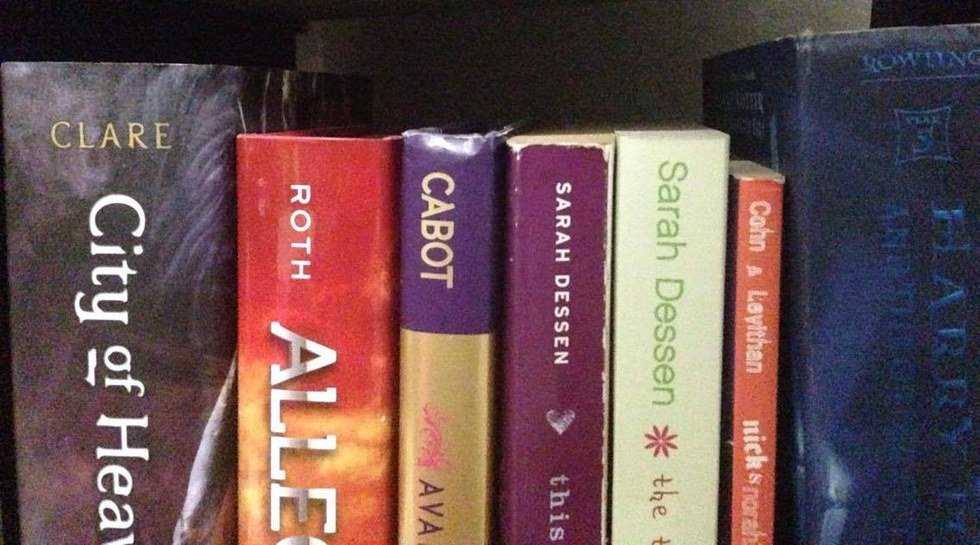
It seems that every week there is a new think piece, article or interview dumping all over young adult literature. They discredit it, claiming that it doesn’t count as “real literature." Young adult literature, apparently, isn’t meant to be taken seriously. It’s "frivolous," targeted at teenage girls. And, as we all know, things loved by teenage girls are trash (Like The Beatles. They’re widely regarded as trash, right?).
Even authors who write Y.A. don’t seem to want to be associated with it, such as writer Paul Rudnick, who, in an interview promoting his Y.A. book, said, “I want to write things that will be a relief from the earnest torment of typical Y.A. literature.” Recently, author Maggie Stiefvater gave an interview about her successful Y.A. series, "The Raven Cycle," where she called Y.A. “a bullshit genre.” Both authors benefit immensely from the Y.A. label and then bite the hand that feeds them. This type of flippant dismissal of young adult literature is not just about the "genre," but about the fans as well. Imagine picking up a book only to find out that the author is deliberately trying to distance themselves from people like you. When Y.A. authors trash the Y.A. label, they’re telling their audience, “I don’t respect you, but I still want your money.”
I always knew I wanted to be a Y.A. author. From the very beginning, I only wanted to write Y.A. Before I was a writer, I was a reader. I ran a book review blog and was a BookTuber. Y.A. is what made me fall in love with both reading and writing. All my life, I’ve heard people put down my favorite books. I’ve had so many people scoff at the fact that I read/write Y.A. novels. I once had a professor promise to “cure” the class of thinking "Harry Potter" was good literature. As an English major, I’m constantly surrounded by people who don’t even count Y.A. as literature at all.
The fact remains that Y.A. is highly successful. Young adult literature dominates bestsellers lists, and the movie adaptations rake in millions of dollars. It is also a demographic primarily written by and for women, which contributes to how often Y.A. lit is disregarded. One of the things that drove me to Y.A. in the first place was female authors writing stories about female protagonists. Go into a bookstore and look at the teen section; look at how many of the books are about or by women.
Young adult literature is important. It isn’t hindered by the fact it’s written for/about teens, as some claim. It covers deep topics such as suicide, sexual abuse, domestic violence and LGBT issues. Teenagers are important; they’re the backbone of Y.A., and they want to read stories that reflect their voices and their struggles. They’re often overlooked and dismissed, and Y.A. gives them a voice.
It isn’t about the money or the fame or pretentiousness. It’s about the readers. Y.A. is for the teens; discrediting it is discrediting them.
















