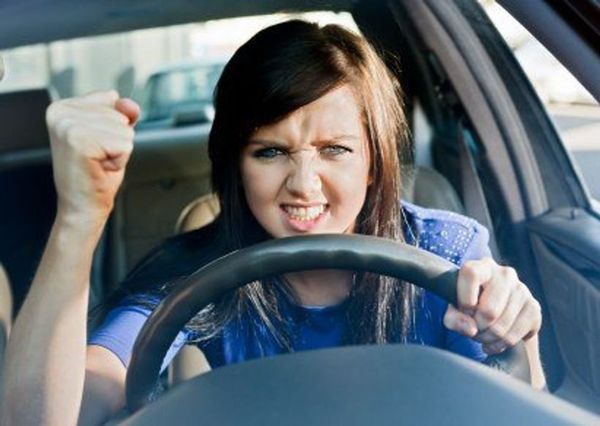
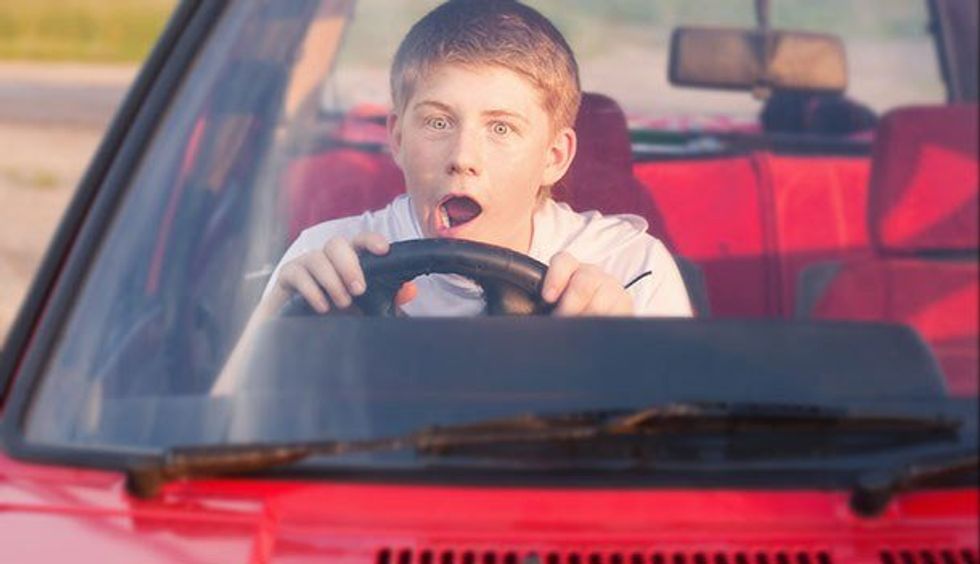
We all know the situation: You’re driving home from a long trip, you’re a few exits away from getting off the highway, and all of a sudden, you find yourself at the back of a long line of slow-moving cars. And you think, maybe there’s an accident. And you don’t get super enraged at this point, because maybe somebody got hurt in the accident and that’s a big deal. So you patiently wait it out for the first few minutes. But then somehow, the traffic just disappears! You look to the right shoulder and see a car and a cop car. The car has a little ding on the bumper, but that’s it. And all of the vehicles in front of you thought it was so super important to start driving ridiculously slow just to stare it this minor incident. This may be the single most irritating thing about driving.
Rubbernecking, it’s called. By definition, it means to gawk or stare at something of interest. And for some reason, Americans find the aftermath of traffic incidents to be so intriguing that they must drive at 5 mph on a busy highway just to sneak a peek.
In fact, according to the word’s etymology, the term was first coined in 1890 to characterize the American tourists, and has been described as being “almost a complete treatise on American psychology.” Americans are notorious for being eternally curious and love to be in the know at all times. But why can’t they be curious and still drive at a normal speed?
Maybe it’s just me, but the feeling I get after realizing I sat in traffic for 20 minutes because overly curious drivers wanted to stare at a banged-up car is one of intense anger. Accidents happen all the time, and often they are mild incidents where nobody is hurt. Regardless of the magnitude of the accident, it happens. And although it seems rather unpreventable, perhaps there is a solution out there.
The term "rubbernecking" is American, yes, but the act of slowing down just to stare at bright ambulance lights happens all over the world. A group of college students at the University of Central Florida conducted a psychological test on an English freeway to see if putting up incident screens -- basically blockades that shield the accident from other drivers to see -- has an influence on where drivers look. They used eye-tracking goggles to indicate how long drivers were viewing the incident for. And, as you would predict, the incident screens show that rubbernecking is highly preventable. The study showed that when incident screens were up, drivers spent only four seconds peeking at the occurrence. They knew there was an incident since a screen was displayed, but without the details, it was instantly less appealing. This was a stark contrast to the drivers who were able to see the accident, for they spent a whopping 12 seconds staring at the incident. The U.K. has already begun to invest in these screens to reduce rubbernecking. Maybe it’s time for America follow in its footsteps.
Rubbernecking is annoying and often silly, but it happens. And even though you might get a little heated about it, you’ve probably been guilty of it once or twice, too. But luckily, there’s a simple solution: Keep your eyes on the road