
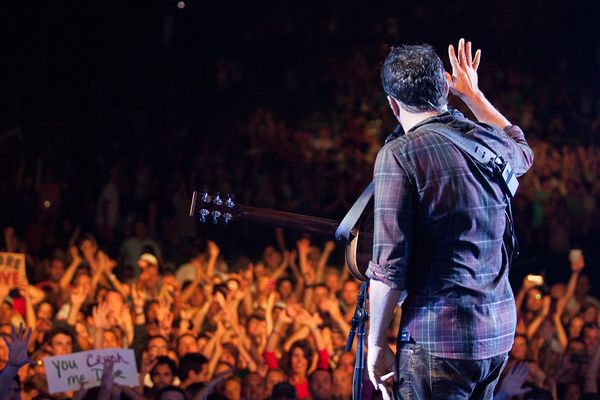



Since their inception in 2003, Yellowcard have always managed to inspire something within their listeners that goes beyond mere enjoyment. There’s this attachment, as if the band has become the spokesperson for our lives by penning lyrics that we’ve always come up just a few words short of being able to articulate ourselves. Yellowcard’s earnest and sincere coverage of themes like love, home, and friendship have formed countless bonds between them and their fans. There’s this common notion among followers that each successive album is like “a new chapter” in their lives, which speaks volumes about the group’s ability to connect with their audience on a substantial emotional level. The band that got many of us through rough patches thanks to their sincerity and overarching optimism is now pulling the curtain on their act. Each band member is now well into their late thirties and far removed from the angsty twenties, but that’s what happens when you grow up – your priorities shift, and you begin to drift away from the people and things that mattered most to your youth. Through ten full-length records, thousands of live shows, and millions of album sales, Yellowcard may still stand as one of their most impressive feats yet. Serving as their most captivating and emotive release since Ocean Avenue, their self-titled album is the perfect swan song for a band that seems to be hanging up the mic on their own terms, opting to go out on top in a way that their fans will never forget.
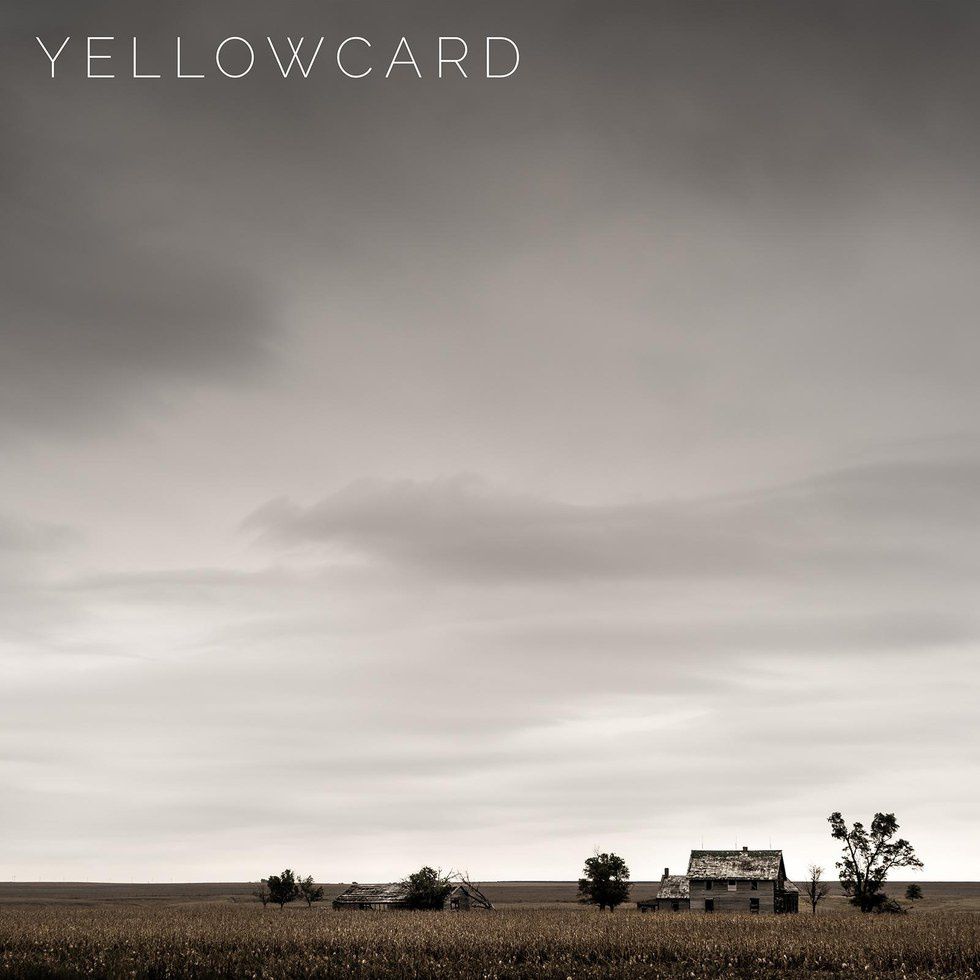
Yellowcard is, not shockingly, an album all about resolution. It’s about the band thanking their fans and reminding them of all the tremendous memories they’ve shared. It’s also about burying the hatchet on grudges and relationships gone sour. The above quote, taken directly from the chorus of the opening track and lead single "Rest in Peace", is the ultimate tone-setter for what is to follow. Gliding in on buoyant, weightless-sounding keys along with some reverb, the track crashes like a wave into a sea of electric guitars and drumming that will take any longtime fan back to stalwart openers such as "The Takedown" and "The Sound of You and Me". Ryan Key’s opening line “It was the best that you could be for me” combines with his earnest plea for forgiveness to form a powerful and moving statement. It’s no secret that Key has had his share of ups and downs in relationships both romantically and within the band, and the song seems to atone for whatever differences may still remain between him, any former bandmates who may have split, and – speculatively, at least – the longtime object of his affection who sparked Ocean Avenue’s heart-wrenching lyrics, When You’re Through Thinking, Say Yes’s unrequited pleas, and ultimately Southern Air’s goodbyes. However, it’s just one resolution in a long string of loose ends that get tied on Yellowcard.
As "Rest in Peace" fades into the boundlessly energetic, thumping beats of "What Appears", it becomes clear that Yellowcard’s finale isn’t going to be composed merely of acoustic guitars and sappy ballads. "What Appears" features a plethora of creative and high-energy drum fills – something that’s been sorely missing since the departure of Longineu W. Parsons III, as well as one of the most infectious choruses the band has ever written, an emotional and resolute “I’m still out here looking for answers / I’ve ended up wrong, the faster I’ve gone / but I know I am finding the answer…I am not what appears / I am failures and fears / But I am on my way.” To be frank, if pop-punk was still as relevant now as it was in 2003, "What Appears" would be the mega-hit to bring this band back right back to immediate relevancy. "Got Yours" doesn’t squander an ounce of the momentum crafted by its immensely catchy predecessor, drilling straight forward with chugging pop-punk riffs and even a series of hoarse shouts that complement the gorgeous melody laid forth by Ryan Key. “Stacking bricks on broken ground, building towers to watch them come back down!”, exclaims Key at the track’s forefront before delving into a more personal chorus: “Maybe it all comes out right here, what I couldn’t say to you for fear of telling true, what I need from you.” The tradeoff between all of the uptempo instrumentation and straight-from-the-heart lyrics is emotionally exhausting in the best way possible, and the straightforward blaze of these two tracks in succession illustrates that even though Yellowcard may be on their way out, they still possess the same level of passion that launched their careers and that kept them vital for practically two full decades.
"A Place We Set Afire" is the first track that pumps the brakes, but it is gorgeous both in sound and meaning. With verses that will punch you right in the gut and a chorus that sways atop well-paced electric chord progressions, it feels like a diamond in the rough. The lyrics once again hone in on the topic of finality, as is evidenced by the contemplatively sung, “You tell me there must be a little light left flickering, burning in a place we set afire…We don’t have to say goodbye, but we can’t get lost in time / I’ll be yours and you’ll be mine, maybe in another life.” If there were one track on Yellowcard that feels representative of the work as a whole, this would be it. It feels like their farewell song, blending all of their best elements to form a stunning midtempo piece that also lands within the album’s epicenter – sandwiched between the record’s blazing start and more pensive conclusion. The follow-up piano ballad "Leave a Light On" doesn’t execute these goals quite as effectively, but it still offers up some beautiful falsetto cuts and serves as a chance to exhale before the album enters its poignant – at times even emotionally devastating – final half.
There’s something about the way "The Hurt Is Gone" is composed that feels totally liberating. It’s not particularly catchy or ingenious, but it just sounds like Yellowcard letting loose and allowing themselves to do exactly what they feel like. Want to end a song with approximately two and a half minutes of acoustic strumming? Why not - after all, this is their last chance to do so. One suspects that following the failed stint with Razor & Tie to create a “massive rock album” out of Lift a Sail that Yellowcard is just happy to be back with Hopeless Records – free of any thematic obligation and ready to put everything they have left out there before it’s too late. On the surface it’s one of the album’s simpler tracks, but with a little digging there’s a lot you can learn about the band and their motives for breaking up.
By the time "Empty Street" presents us with the above passage, Yellowcard has begun trekking towards its curtain call. With drum beats that ring out triumphantly, one almost feels the sensation of actually being on an empty street, where everything echoes and feels more epic than it otherwise would be. With a crescendo of searing, high-pitched riffs and Ryan Key proclaiming that “this is goodbye”, the finality of it all truly begins to set in. If you’re the type of fan that hangs on every word, this realization really emboldens the impact of otherwise bare tracks like "I’m a Wrecking Ball" – which delivers the opposite of its namesake in one of the band’s most pristine and down-to-earth acoustic tracks since "Ten". Key seems to be painting a picture of family life and its increased importance, stating “I see my latest dream / On these shelves I keep my family / In this bed I watch them fall asleep / In my ears all night I hear them breathe.” It’s a touching sentiment, even if it exists in stark contrast to the late-album banger that follows, "Savior’s Robes." This penultimate track is a song whose guitar tone approaches fiery and features some of the group’s most bitter lyrical passages in a while, such as “you got my heart and tried to turn it black, well now it’s beating and I’m taking it back” as well as “you’re a devil in a savior’s robe, made it easier to let you go…I never should have let you get so close.” Amidst a slower back half, this song is a clear highlight and proves critical to the record’s sense of ebb and flow.
The true beauty of this album’s latter section, however, is the sprawling soundscape of "Fields & Fences." Going down in the books as – in all likelihood – the last thing Yellowcard will ever compose as a band, it is downright jaw-dropping and worthy of the role it plays. Commencing as a simply strummed, vocal-centric ballad, it slowly evolves into something more. Violins chime in midway through, joined by stunning acoustic picking, and as the track begins to wind and turn – almost like a long retrospective walk through the band’s past – it finally erupts into a crescendo of electric guitars, purposeful and echoing drums, and the band’s emotional parting words.

Even with Yellowcard marking its definitive end, it’s still difficult to escape that next chapter feeling. After all, as the band members break up to focus on their own lives and families, many of us find ourselves doing the same thing at this exact moment. Who’s to say that just because Yellowcard stopped making music that the story has to end? As we continue our individual journeys through life, we’ll always have moments from this band – throughout our youth and adult life – that tie us together. Whether it is the heartbreak of Ocean Avenue, the renewed hope of Paper Walls, or Southern Air’s sense of letting go – we’ve always kept this band’s summery optimism hidden somewhere inside us. And that’s something that we’ll always have, even as Yellowcard becomes a distant memory.
Rating: 5 / 5 Stars
















