

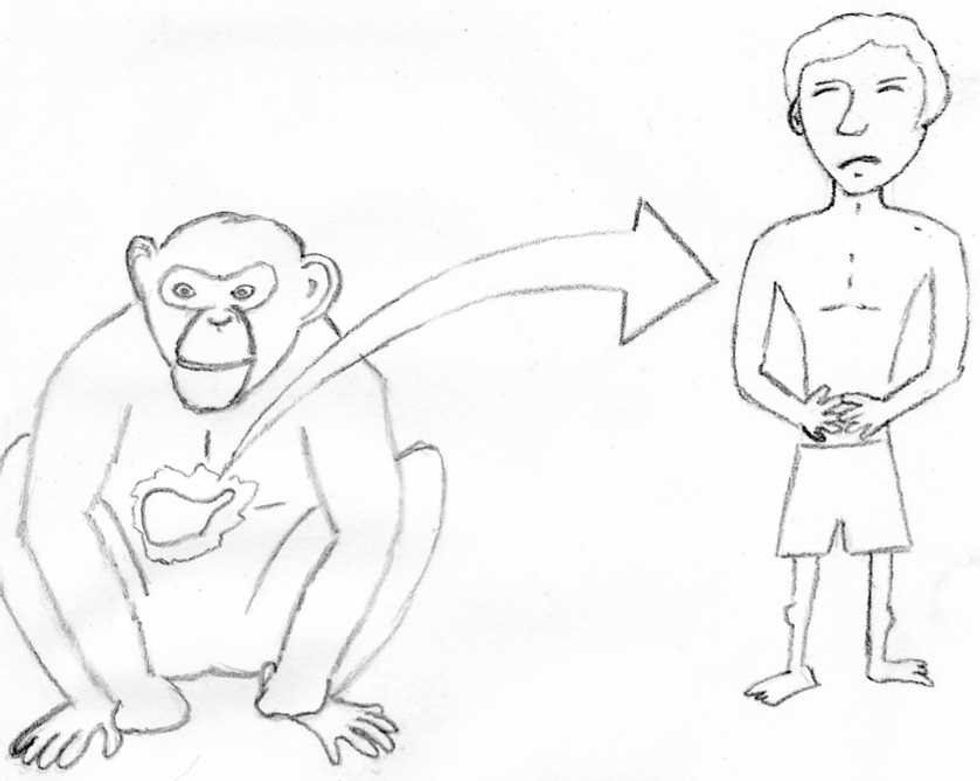
Today, approximately 10 people died due to organ failure. Moms, dads, sisters, brothers...people that mean the world to one another are taken away due to a fatal illness. However, there is a solution that can save these lives: xenotransplantation. Sadly, there is one obstacle in this medical field: money. Money is not being allocated to this field because of obstacles like ethical issues and risk of disease.
Xenotransplantation is not a simple procedure in field of medicine.The human body is a complex machine and can recognize that the organ is a foreign object, so it will attack or “reject” it. By solving and suppressing organ rejection, the entire field of transplantation will reach new heights. New methods are being discovered to bypass this obstacle. The use of transgenic pigs is the most promising of these methods. Many people assume that non-human primates, like monkey and baboons, will be used as donors because of the genetic similarity between them and humans. Surprisingly, pigs are more preferable than non-human primates. They mature at a faster pace, have litters with multiple offspring, large organs and they can be raised in specific conditions. However, their most remarkable contribution towards xenotransplantation lies within their genes. The genes of transgenic pigs can easily be manipulated to express specific human qualities. This amazing discovery will bridge the divide between these two species and will give patients another chance at life, a chance that would not have existed fifty years ago.
Xenotransplantation benefits not only those that are experiencing organ failure, but other domains as well. Mentioned before, approximately 10 people die waiting on the organ transplant list, not including the people who are not on the list.The U.S alone is estimated to have 124,00 thousand patients in need of an organ, while about 28,000 procedures are performed annually.With new viruses and illnesses being discovered, it can be inferred that the desire for organ transplants will continue to rise. Many of these patients are forced to wait for long periods of time to receive an organ. During this time period they undergo excruciating pain. Also, another portion of these patients are given tragic news, that they have been denied an organ because their illness has a higher risk for rejection. The success of xenotransplantation will decrease the shortage of organs, allowing more patients to get the medical care without the severe intermission. Not only does xenotransplantation benefit patients in need of an organ, but also patients that suffer from degenerative illnesses like Parkinson’s and Huntington’s disease. Another source has claimed that recent studies have labeled this method as very promising. With this treatment patients and their families will not have to experience the pain of losing themselves or loved ones.
Currently the U.S., and other European nations, lack knowledge and research regarding xenotransplantation. However, countries like Germany, South Korea, and China have encouraged and financially supported the study of xenotransplantation. Because of their endeavors, it is predicted that they will surpass the U.S. Currently, funding for xenotransplantation has taken a halt. During the years in which xenotransplantation was introduced, the medical industry was very involved. However, the fear of receiving backlash concerning the ethical issues, and the risk of cross-species diseases has caused the industry to shift their focus.The main two porcine diseases that have caused speculation are: PCMV and PoERV. Both have the potential to infect humans, but research has specified different solutions and more information regarding the potential threats. PCMV, porcine cytomegalovirus, has proven to be eradicated through C-section and through detection methods. Ganciclovir, a drug, is an alternative medical treatment for this virus. As for PoERV, a medical study in 1999 concluded that it did not infect the one hundred and sixty patients that received live pig tissue. Regarding the ethical issue, the use of pig, which are constantly killed for food. The fear of these two obstacles and backlash from the public is what is preventing xenotransplantation from reach its potential. The general public must change their perspective in order to real the extensive benefits that xenotransplantation delivers.With the successes of trials and other countries, along with the fast pace of the medical field, the U.S. is guaranteed success.
Nobody thinks that it'll be them. That they'll get cancer or dementia or any horrible disease. God forbid, but it could happen to you or your mom, dad, sister, etc. And if it did you'd want a cure, and now there is one all it needs is support.