
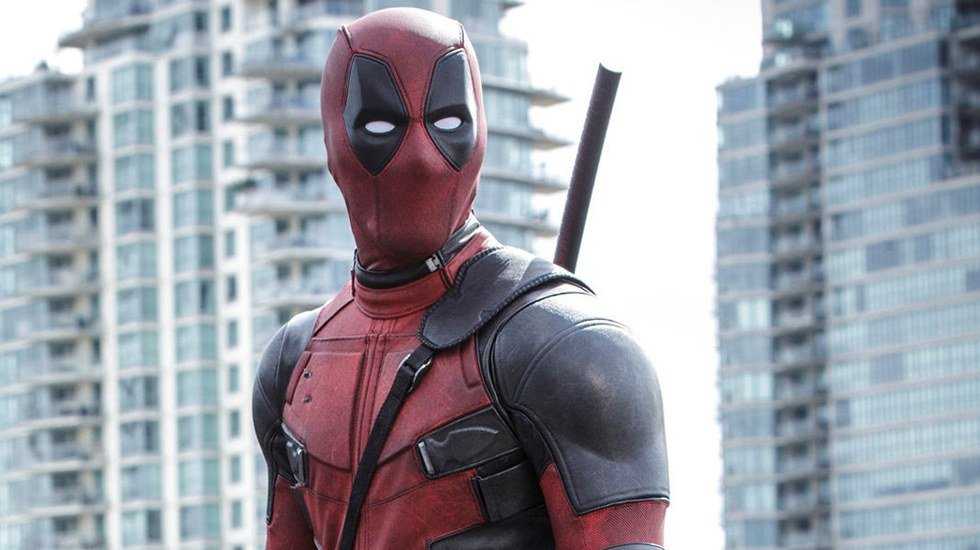
Who would have thought "Deadpool" we be this big of a hit? Even a month out from its release, it sits comfortably in third place at the box office. But what’s more, it is the highest grossing X-Men film in the series' 16-year history. That’s insane. Yes, "Deadpool" has his devoted fans, but as "Scott Pilgrim vs. The World" proved, fandoms don’t necessarily equal financial gain. "Deadpool" feels like a mini-filmmaking landmark, something that temporarily takes pop culture by storm.
So naturally, Hollywood has taken notice and looked to see how they can capitalize on this success. And the immediate after effects? Fox announced that Wolverine’s next film will be rated R, while "Batman v Superman" will have an R-rated director's cut on blu-ray.
Within less than a month, the wrong lessons from "Deadpool" are being learned. Wolverine being R is the more understandable of the two. One of the strange spectacles of the X-Men series is watching a man with swords on his fingers doing no damage. But think about the other example: Superman is going to be in an R rated film. Superman. The symbol of hope and heroism is going to be in an R rated movie. A children’s character.
It is no surprise that Hollywood has already misunderstood the lessons from "Deadpool." As James Gunn brilliant put in his multi-paragraph rant on Facebook, "Deadpool" didn’t succeed by being raunchy or fourth-wall breaking, it succeeded because it did what its competition wasn’t. It was edgier than Marvel, it had more brevity and color than Warner Bros, and it had more of a soul than Fox. But it is far easier to say “get me R-rated characters and meta-jokes.”
This is just one small episode in a bigger game. The Magic of Hollywood is a sort of alchemy: trying to find a formula to turn celluloid into gold by finding the right combination of genre, character, actor, or gimmick to make consistent profits. This is a game that’s been going on since the very early years of filmmaking.
For example, the Golden Age of Hollywood saw a glut of musicals. Typically starring someone like Mickey Rooney or Judy Garland, stagey, extravagant musicals filled the scenes, typically ending in the characters in universe putting on a show. The 50s and 60s saw Westerns dominate (though to be fair, they were present in the 40s). There was a point where the likes of John Wayne was in four movies a year.
Those are broader, genre-wide examples. But as time has gone on, the formulas used have become excessively more specific. "The Matrix" in 1999 built an entire style of colorlessness, a lifeless acting affects, bullet time and leather costumes. Superhero films like "X-Men," "Daredevil," and "Blade" all tried to follow "The Matrix." The monster success of "Shrek" led to everyone trying to ape Dreamworks, by having pop culture references, cynical humor, and themes mocking traditional fairy tales. "Batman Begins" kicked off a brief era of realistic, gritty reboots, including "Casino Royale," "Star Trek," "Amazing Spider-man" and more. And perhaps my favorite example—the one that inspired this article—was the success of "Pirates of the Caribbean." Johnny Depp’s show-stopping performance led to a series of nostalgic properties being kickstarted with him in an eclectic role ("Alice in Wonderland," "Dark Shadows," "Into the Woods," and "The Lone Ranger").
Studios are always trying to find some kind of foolproof formula to guarantee financial success. But no such formula has, or ever will exist. Instead, this impulse results in wonderful films being boiled down to their parts, with what made them special being forgotten. Like Gunn wrote, the only lesson learned should be that films need to be different, special, and fill a gap on the screen. That’s what makes films art, while the other option makes them math.