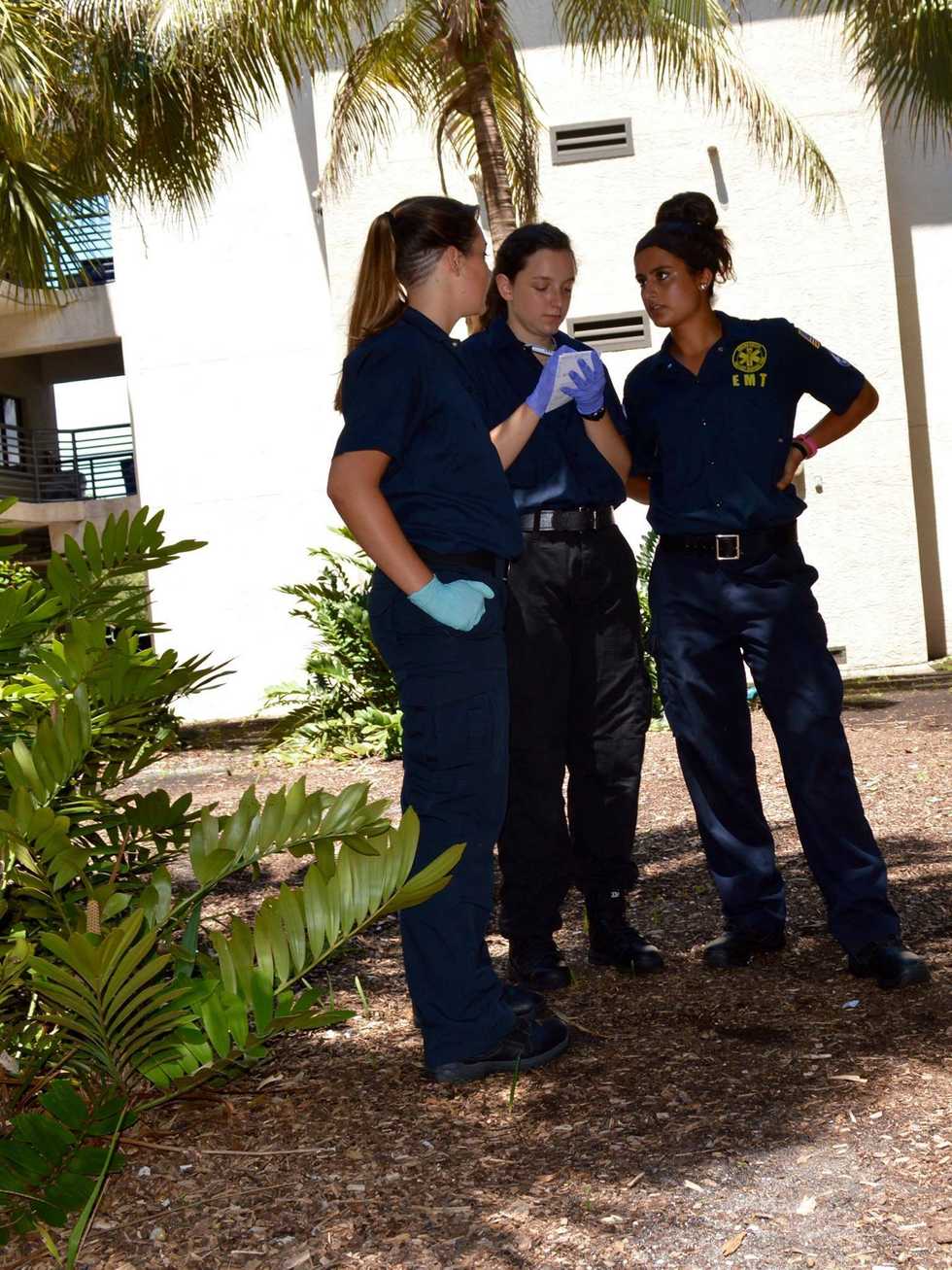
Several campuses around the United States have their own EMS teams that respond to medical emergencies on campus. Most of the time, these teams are comprised of students who not only are working towards their degrees, but dedicate their time to helping their peers and making their campuses a safer place. But what does it really mean to be a campus EMT? It’s not just getting to hang out with the local fireman cuties, or toting around campus in our uniforms looking official. It’s a lot of blood, sweat, tears, and vomit.
Several times a semester I can be seen clutching two cups of coffee, struggling to keep my eyes open in my chemistry class, while my teachers question if I’m hungover or if I pulled an all-nighter studying for an exam. But this is when I’m the happiest. In a single night being on call for my campus EMS team I could respond to several calls, ranging from intoxication, to serious traumas, or an anxiety attack. To know that I helped someone on their worst day, is a great feeling. A moment that is permanently engrained in my brain was being awoken from a deep sleep to answer the emergency phone. I answered with the usual script, but when I stated my name I heard a deep sigh of relief, and I heard a familiar voice say, “Thank God it’s you.” To know that I am known as someone who can be sought out in an emergency, and to be trusted in my skills as an Emergency Medical Technician is a serious confidence booster for a 21 year old girl.
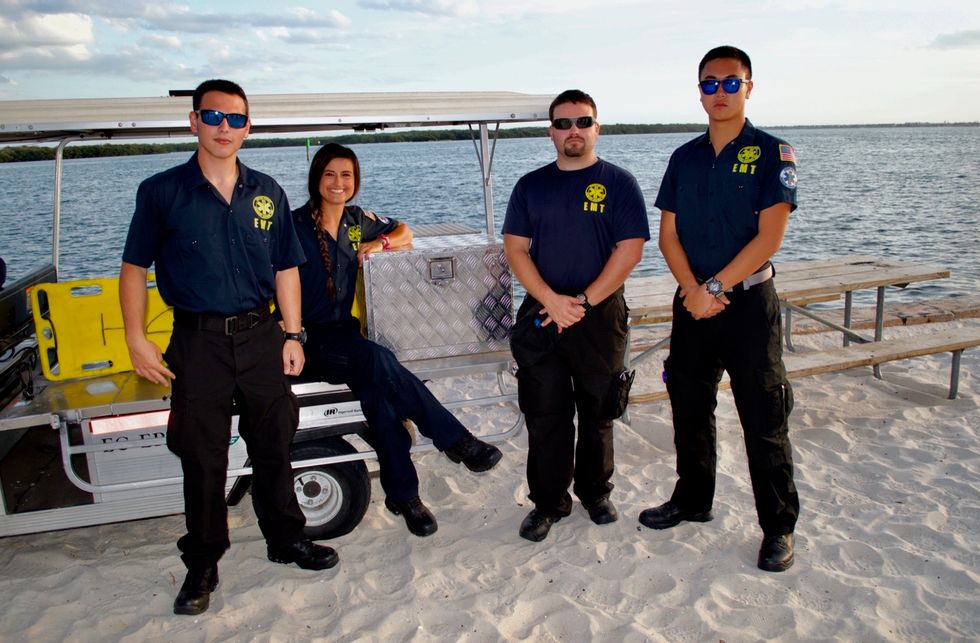
(photo credit Hannah Banks)
But it’s not all sunshine and rainbows. Because the girl you sit next to in class, might be the same girl you’re aiding after an assault. The boy you run next to at the gym everyday might be the person you have to help breathe a few hours later. It’s missed hours of sleep because you’re afraid you won’t wake up if the phone rings. It’s going to bed at five a.m. and waking up at seven a.m. to go to class. And it’s a lot of getting puked on. A lot.We face many of the same issues that EMT’s on the street face, such as aggressive patients, faulty gear, not enough resources, and burnout. But working as a campus EMT adds a whole new layer. Because after we work a bad call, we go to class the next day as if it never happened. We escape our school stresses by substituting them for live-saving stresses. A challenge many of the females on my squad face is sexism. I get called Band-aid Bitch, Vomit-Bag Girl, and it’s amazing how many times I’ve been called “slut” while wear tactical pants. I go to a fairly liberal school, so I can only imagine what other female collegiate EMT’s must face across the country. But hey, who doesn’t love a girl in combat boots?
And we have to respond to our peers. We have to stay focused on the patient, while trying to control the scene, while keeping our own emotions completely under wraps. We may appear stoic, but when we get back to our rooms sometimes it feels like the world is crashing down around us. Our patients are our friends, and often the only people have to lean on is our team members. Tensions run high. It’s not an easy job. It’s not monetarily rewarding. It’s hard, emotional, cringe-worthy service.
I cry a lot. I get scared. I get frustrated. I get exhausted. But when the phone rings, nothing else matters other than my patient and what I can do for them. Whether they need a band-aid, a backboard, or a person to listen to them, I am there. So you can call me a Band-aid Bitch, you can not take me seriously, and you can try to throw a punch at me, but that’s on you. And I will hold no grudge against you, because me and my team and have made a commitment to help those in need. And I will be there on your worst day, and I will do it because I love what I do, and no amount of vomit, lack of sleep, or scary calls will ever take that away from me. And believe me, tomorrow I’ll be back in class with my two cups of coffee ready to do it all again that night.
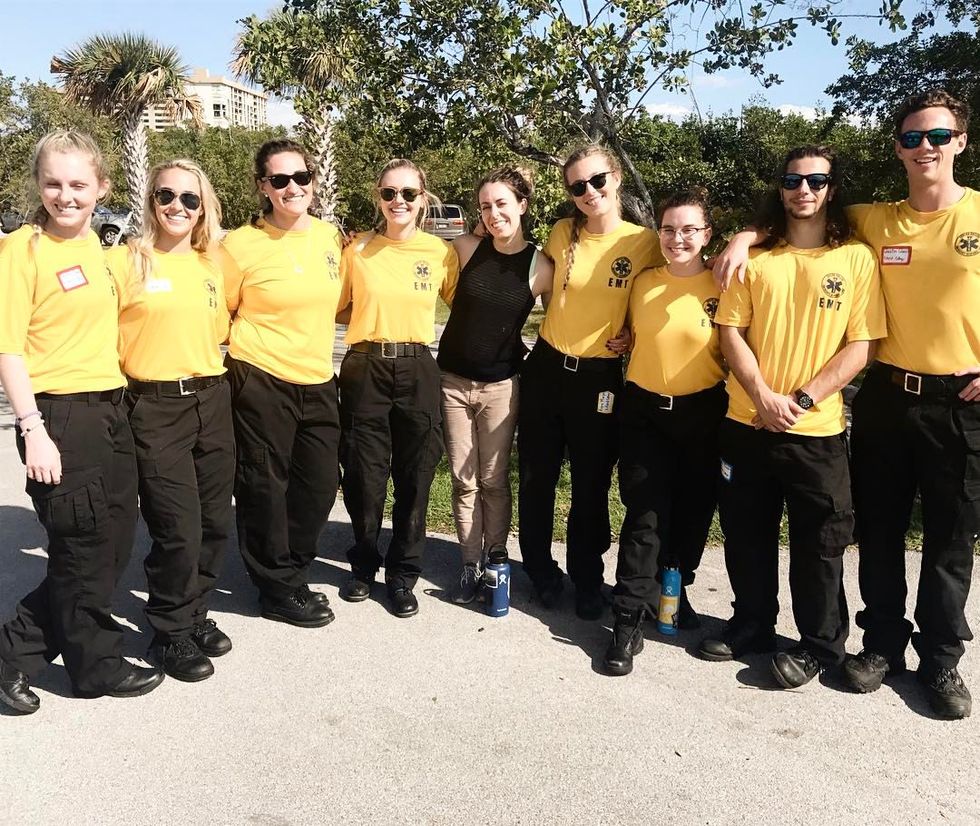
(photo credit Hayley Musial)