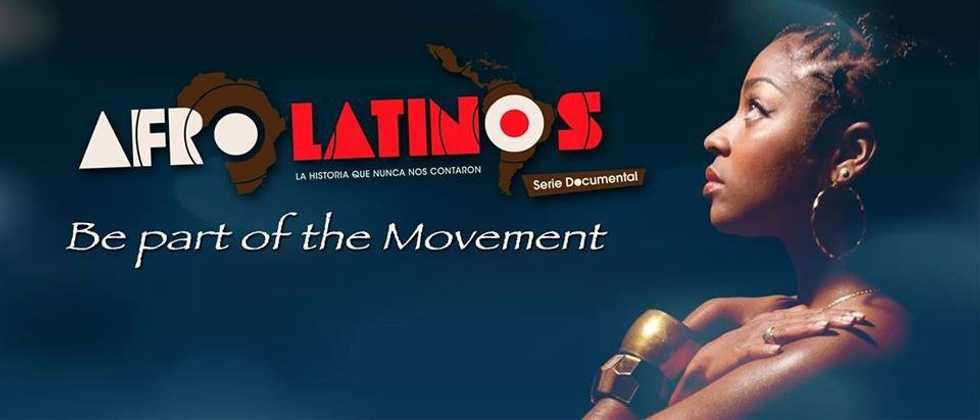
It’s Latino Heritage Month. And that’s really important, whether you identify as “Latino” or not. Now that we’re in college, our teachers aren’t here to coordinate Latin American history lessons or art projects in hopes of culturing us a little bit. But I don’t think that’s really the best way to learn about another culture’s heritage anyway. Instead, in celebration, I’d like to share with you what I learned about one Latina’s experience so that you might understand a little better what it could mean to be Latina in America.
Alicia Anabel Santos identifies, primarily, as a woman. But she also defines herself as a Black Latina, a lesbian, a mother, and a writer. She came to Siena College to present a keynote speech that she titled “Intersections of Privilege: The War on Women and Black Latinas,” and tailored it specifically to Siena—a predominately white school. In speaking to us, Alicia hoped to spark a conversation about race that needs to happen on every college campus.
Alicia’s resume is quite impressive. She’s worked for major fashion magazines, like Glamour and Vanity Fair. She’s written her own book, and she speaks about her experiences as a Black Latina lesbian single mother who climbed the ladder to professional success even though all the odds were, and still are, against her.
It’s no news that women in America do not have the same opportunities that men have. But something we don’t talk about as much is the fact that there are subdivisions to this distribution of power. Alicia wants us all to see that this issue is not just black and white—that it is all based on perspective. Everyday, this woman wakes up thinking about race, and about how she feels like an outsider in her own country. Different people have referred to her as black, as Hispanic, and even as white. They have defined her based on what she looks like to them. On other occasions, even worse has occurred; she has been told to “know her place.” She has been overlooked, ignored, and silenced. It’s sad that Alicia has had to deal with this poor treatment. But this problem extends beyond her individual experience. Across the country, black and brown girls spend their lives in the shadows. It is not a matter of when they will graduate high school or when they will make it through college. These girls are not guaranteed success. For them, success is just one giant if.
After hearing about Alicia's experience, I asked myself, “but what can I do to change this?” And I hope you are asking yourself that, too. According to Alicia, we have to step up and recognize the fact that everyone is an outsider. We all have unique and different experiences, and we all need different types of role models in our lives.
“It is your place to talk about racism,” Alicia told us—a room full of people of all different races, ethnicities, genders, and sexualities. She called for us to think about what our friends and peers and the people around us want and need, but to do so without defining them by what the look like.
“Understanding privilege is knowing ourselves,” Alicia said. She does not want us to “know your place” like so many people urged her to do as she strove to attain her dream job. Yet she does think it’s important for each person to be aware of how others might perceive them because of their gender or the color of their skin.
I didn’t just listen to Alicia’s struggles; I truly heard them. And I went home with one major question in my mind. She called out to black and brown women and urged them to realize how important it is for them to serve as role models for black and brown girls. But I wanted to know what I could do, as a white woman who could potentially be in a position of power someday. Would it be possible for me to inspire girls in the same way?
So I did what any 20-year-old with a burning question would do. I put my Facebook stalking skills to good use and found Alicia’s profile. She answered my message right away, and what she said eased my mind and gave me hope for our generation, as well as the generations to come.
“It’s not about us,” Alicia told me, “it’s about being who you are and allowing them to be who they are. We have to be careful not to mold to our ideals.”
During Latino Heritage Month, and during the months to come, I urge you to think about what it means to be an outsider. To try to connect the similarities and differences that you might have with your friends and peers and even strangers. But most importantly, to understand that everyone has a unique human experience, and that it is not up to you to define anyone but yourself.