The establishment of the United States is rather incredible if you consider all of the factors that had to come together at the right time in order for it to exist. Brilliant minds, tired of the oppressive government in England, somehow ended up in the same area of a new country all at the same time. These men were brave enough and rebellious enough against the government of England to commit treason and form what has become a world superpower and a crusader for democratic ideals.
The U.S. Constitution was written to protect the public from the government because an oppressive government was exactly the thing these new Americans were trying to escape. As you may have heard in history class or on a PBS kids show, these people fought for "no taxation without representation!" Lucky for you, these brilliant minds embedded a safeguard in a document that outlines supreme law. That safeguard is the right to vote.
The right to vote is specifically stated in the Fifteenth Amendment to the U.S. Constitution. It reads, “Section 1. The right of citizens of the United States to vote shall not be denied or abridged by the United States or by any State on account of race, color, or previous condition of servitude. Section 2. The Congress shall have power to enforce this article by appropriate legislation.”
For those of you who say they don't care about politics, how can you not care about what's going on in your country politically? Politics indirectly affect everything you do. If a treaty or deal is passed, the economy could collapse, making it hard for you to find or keep a job. That's only one example.
It's important to pay at least some attention to politics, not only because it is your right to vote as an American citizen, but also because the fate of our country is in the hands of the President and members of Congress. The good news is that YOU get to elect these people.
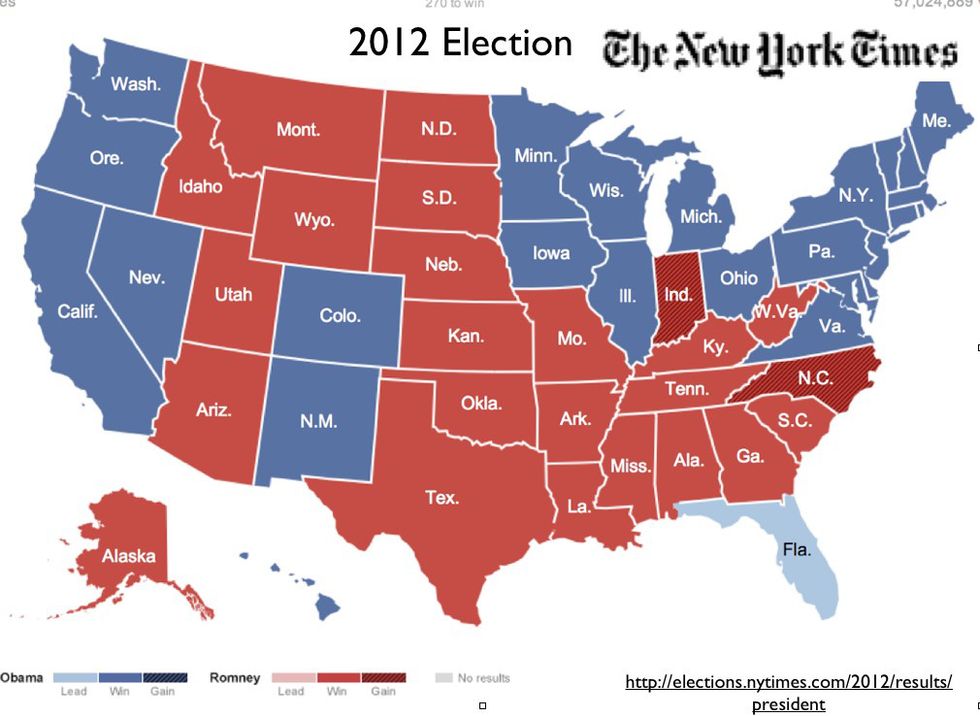
You may feel like your vote doesn't count because of the Electoral College, and in some states, that may be true. How much your vote matters is entirely dependent on the number of voters and overall political views in your state. If you vote in state elections, your vote matters way more than your vote does in a presidential election. This is because the representatives that your state elects for the House of Representatives and Senate seats determine if your state as a whole will vote Republican or Democrat according to the Electoral College.In my opinion, state elections determine whether it is a red or blue state. So technically, your votes in state elections indirectly determine who will win the presidency.
Voting in local elections matters substantially more than voting in a presidential election because there are fewer voters, and based on geographic location, you are likely going to have similar political views with the rest of the population in your area. An example of this is how typically, if you live in a northern state, you will likely vote Democrat, and if you live in a southern state, you will likely vote Republican.
View the Electoral College map below for the 2012 Presidential election for a better understanding:
You should vote because it is your civic duty and for several other reasons. Below is a YouTube video by the channel vlogbrothers that explains exactly why you should vote and two semi-decent reasons why it's okay that you don't:
Before you vote, you should do at least surface-level research on the candidates. One simple, quick way to determine who might be the best choice for you to cast your ballot on is to take a quiz. This quiz gathers general information on what your beliefs are and shows you what percentage of beliefs you share with candidates. It's a great tool to start learning about each candidates with very minimal effort on your end.
So when candidate ads start showing up on your T.V. and political campaign ad signs start covering your city, educate yourself on each candidate, and go vote.