Throughout human history and equally as relevant today, music has been used as a way to unify people and celebrate the human condition. In fact, it has been scientifically proven that just listening to music is beneficial and naturally pleasing to the brain. With this fact considered, it's safe to say that nearly all humans find appreciation with some kind of music, regardless of whether the genre is considered "real music" to other individuals. Technology today has allowed scientists to monitor brain activity when listening to music, which has shown to be a stimulus that almost entirely activates the brain. Our brain dissects the songs we listen to, discerning aspects like melody and rhythm, and recombines the responses to transmit the complete coalition of sounds for our interpretation.

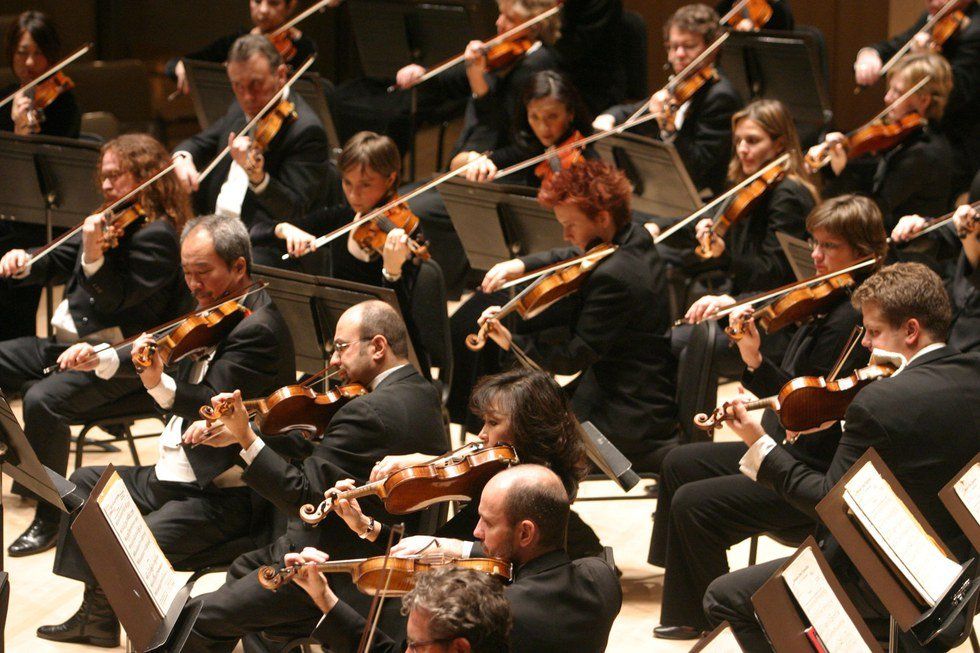
However, when comparing listener's brain responses to those of musicians as they play their instruments, the difference in response intensity is astronomical. Specifically, when reading and playing music, musicians utilize their motor, visual, and auditory areas of the brain at the same time, whereas listeners only have auditory responses. In doing so, musicians exercising these areas of the brain allow for the strengthening of these functions. Similarly to how a fit physical body is capable of more exercise, exercising the mind allows for better overall functionality in a wider range of activities that extends beyond music.
The most recognizable difference between listening and playing music is one that involves fine-tuned motor skills, which involves both sides of the brain. In doing so, the transmission between the two hemispheres become quicker and more efficient, allowing for better brain communication. The left hemisphere of the brain is associated with linguistics, or more factual knowledge while the right hemisphere is involved in concepts like creativity. Since playing music reinforces their connection, musicians have been found more likely to better deal with social problems, succeed academically, and being more capable of recognizing emotion.

Music has been, and always will be, extremely relevant in both the history and future of humankind. In addition to being an important aspect of current popular culture, learning to make and play music can serve many positive benefits. As a past piano and percussion player, I thoroughly regret not continuing my musical habits, since it not only would be a way to de-stress but also connect with new people. Learning an instrument may be a difficult and daunting task, but I guarantee that the benefits are definitely worth it.