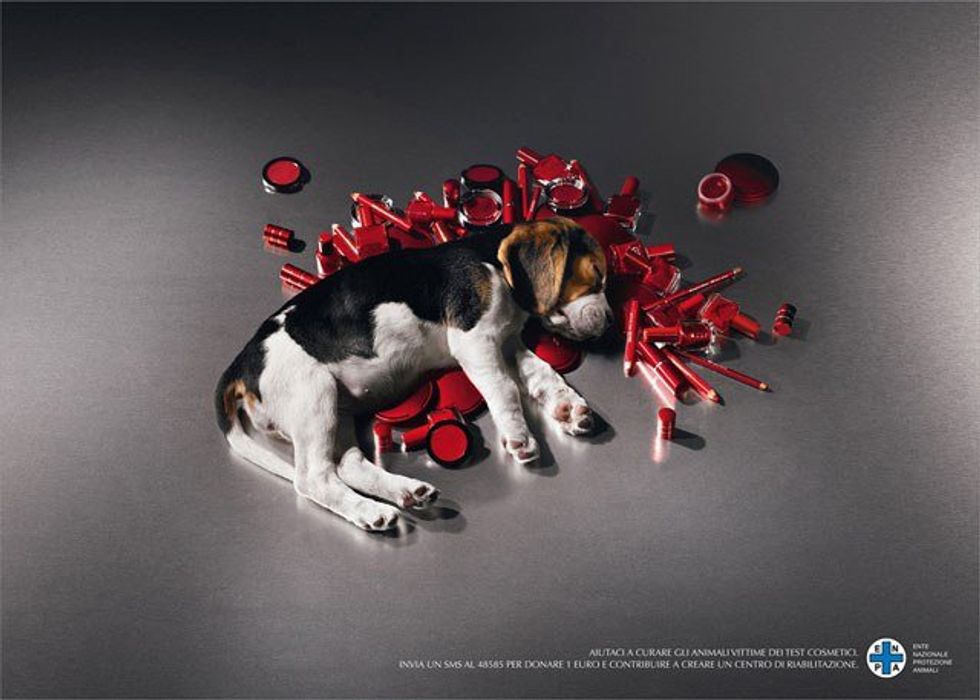
Ah Ignorance: the lack of knowledge of information. It's bliss, right? What we don’t know can’t hurt us. The cruelty of animal testing is unnoticed. It’s behind the brands we have a pseudo-spiritual connection with, the products we constantly purchase. The ignorance of customers should’ve ended a long time ago, yet here we are in 2016, still using innocent animals as an acceptable means of testing products.
Across the country companies are finding it “necessary” to force mice and rats to inhale toxic fumes, force-feed dogs pesticides, and drip corrosive chemicals into rabbits’ eyes. The complete lack of environmental enrichment causes some animals to develop neurotic behaviors such as relentlessly spinning in circles, rocking back and forth, pulling out their own fur, and biting themselves (Peta.org). All this torment is simply to supply consumers with their desired product.
The saddest part about animal testing is that we have alternative ways to test these products, yet we still allow innocent animals to be harmed and killed. These methods are safer, ethical, and even cheaper. Animal testing costs billions of dollars every year; neither the corporations nor the customers are benefiting from it, considering that even if the product is tested for animals, does not necessarily make it safe for humans. PETA challenges those who support animal testing by stating that no matter how many tests on animals are undertaken, someone will always be the first human to be tested on. There’s some food for thought.
So what companies use animals as a means of testing their products? Your favorite make-up brands like Bobbi Brown, Cover Girl, and Sephora test on animals. Along with household products like Arm & Hammer, Band-Aid, and Vaseline (Crueltyfreekitty.com). So what can we, consumers who “need” these brands, do to help?
I’m in no position to tell anyone what to do with their lives, firstly because I am guilty of using products that have been tested on animals. And secondly, because regardless of the facts I state or the arguments I offer, people will buy the products they want to buy. However, I feel as though the solution to this terrible practice lies within us. As the consumers, we dictate whether or not a brand or company will be successful. Instead of instinctively buying products we grow fond of, we should make an effort to support brands that care about the health and safety of innocent animals.
Companies typically do not put “we test on animals” on the packaging, yet those who do not test on animals typically make it known. Look for those products, try them out, and realize that they work just as well as those that test on animals. If this minor adjustment became a national effort, animal testing would be a thing of the past.