

Once in a conversation, somebody told me that they thought it was “ridiculous” when women don’t change their names when they get married. Their main argument was that had the husband traditionally changed their name he would have done so and that it was about the creation of family. I’d not thought much about the subject prior to this conversation as it had not been very present in my life- most of the women in my life did change their names and admittedly I’d considered that the norm. Since then I’ve spent many a car ride thinking about my feelings on the subject.
First of all, I want to establish early on that I speak only for myself. I have no issue with other people changing their names and I don’t think that it’s inherently bad. While I personally don’t see myself jumping at the chance to change my name, if it works for someone else then that’s great.
The practice of women taking on their husband’s name has existed since the 14th century, where the idea was that married women didn’t have a surname and were essentially “owned” by their husbands, as shown in a court document from 1340 which said “when a woman took a husband, she lost every surname except 'wife of’”. With that said, the motives in changing one’s name are obviously different now. Women are acknowledged as being their own person, and hopefully, nobody thinks of us as things to own anymore. However, I think it’s important to recognize how this custom began. There is a reason that women are the ones who “have” to change their names and not men. It’s not a matter of “if the tradition were that men did it” because it’s not, and that’s not surprising.
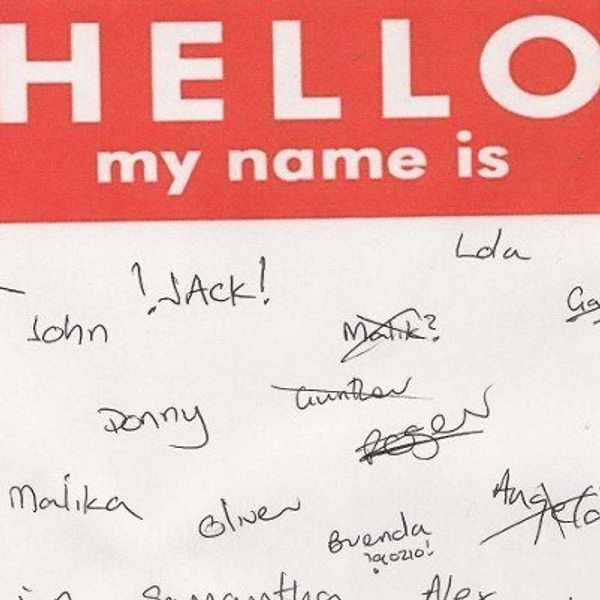
My name is part of my identity. I’ve been Olivia Avery for the last 18 years of my life, even though I’ve never particularly loved my surname. I use my middle name when I can because I don’t like the recurring ‘vee’s and “ee”s, and I don't think it rolls off the tongue well. Regardless, I don’t want to change it. The back of my sweatshirts say “Avery”, I’ve signed all of my letters and documents with that name, and it's what's written on my diploma. I don’t think that I (or anybody else) should feel compelled to become a new person after marriage.
I think we as a society give names too much power in determining family. I don’t like the argument that one needs to change their name in order to be a fully integrated member of the new family they’re creating. Getting married doesn’t void the family you’ve been a part of for x amount of years, nor should changing your name (or not) change the way you feel for the person you’re marrying. There are millions of families whose names aren’t all the same- foster children who’ve not yet been adopted, families with step-parents and half-siblings, etc. who are all completely valid as families. A name doesn’t have to define you. I recognize that the two last points I’ve made are somewhat contradicting, but multiple truths can exist simultaneously. It’s a fine line between appreciating your name as being part of your identity and not relying on it to represent you.
It's also antiquated in the way that it assumes the marriage involves a man and a woman which isn’t always true (shoutout to marriage equality!). Its very existence enforces stereotypes in the LGBTQ+ community: either you go along with it and the person whose name didn't change takes on the more masculine role and becomes "the man in the relationship", or you don't and the marriage is "untraditional". Not to mention the fact that it’s also a hassle to have all of your legal documents and identification changed, and it’s even harder for people in certain professions (e.g. doctors, artists, academics, etc.)
Some people feel that it's important for them and their spouse to have the same last name which is valid. It's so ingrained in society that while the number is decreasing, roughly 80% of women still take their partner's name. Of the ten college-age women I spoke to, only two said that they absolutely wouldn't change their names- one because she likes the way hers sounds, the other because she doesn't want her surname to "die out" after she and her sister marry. The other eight said that they either definitely would, or that they'd pick the one that sounds the nicest.
I want to reiterate that I don't think that's bad. Those who choose to change their names have every right to do so, whatever the reason is. I don't want to for the reasons I've explained, but whatever decision one makes is perfectly valid.
















