


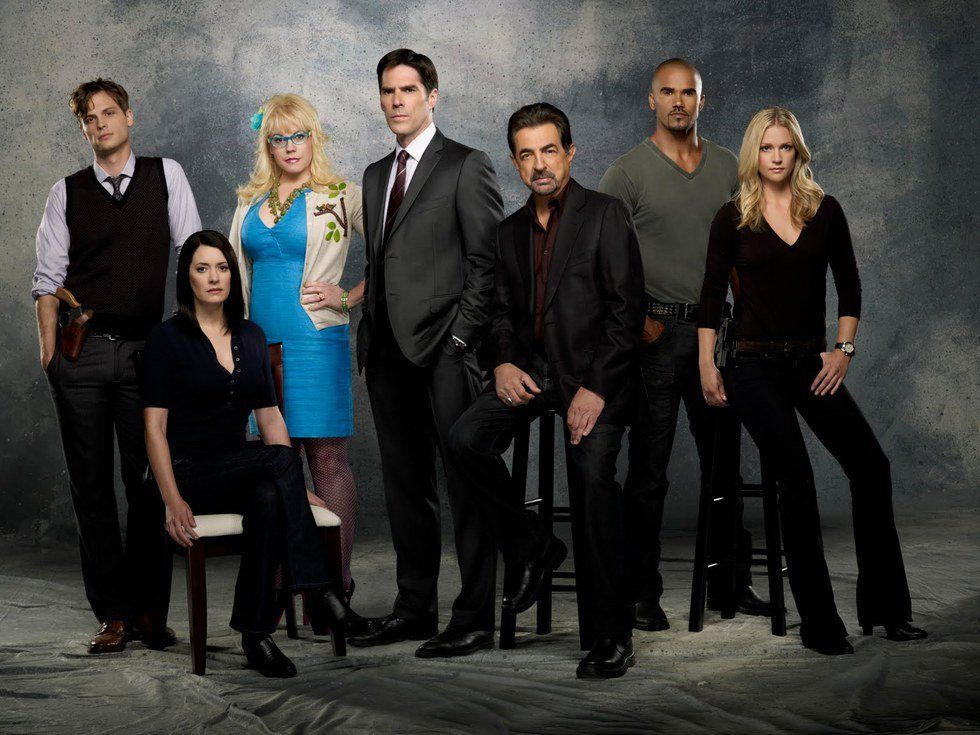
It only took two seasons for Mandy Patinkin, an early fan favorite, to leave “Criminal Minds,” calling it the “biggest public mistake he ever made.” “Criminal Minds,” CBS’s long running drama series follows a team of the FBI’s Behavioral Analysis Unit as they track down the worst of the worst in serial criminals. Following in the footsteps of shows like “Law and Order: SVU,” “Criminal Minds” has given Americans a view into the minds of these criminals for eleven seasons. But what is it about this show that makes audiences tick?
Patinkin doesn’t seem to understand, saying he’ll never understand people’s curiosity at watching violence on television. And to be fair, he has a point. As an avid lover of “Criminal Minds,” sometimes the brutality and heartbreaking plot lines can take their toll. There’s a mental health question within this - does a show that breaks down the minds of serial killers take a toll on your own mental health? And how do they portray the inner workings of such sick, and seemingly evil, people?
In the Season Four finale the team travels to Canada to track a killer who targets prostitutes, junkies and homeless people in the same Detroit area. As it turns out the killer was as much of a victim as his actual victims were. He was an autistic man suffering verbal abuse from his brother to the point where he didn’t even understand that what he was doing was wrong. And this is shown, in the final moments of his life, when his victim calls him a freak and all of a sudden he breaks down. He’s cowering in the corner in tears and the victim actually comes over to try and comfort him.
It’s these dynamics that make the show interesting to me. Sure, Patinkin has a point that the violence is a lot to handle at times. But he also seems to contradict himself, stating also, "I'll do a shoot-'em up movie. I like James Bond and thrillers. But it's the level and degree and the gratuitousness of certain kinds of violent, titillating push-that-envelope-further-and-furtherness that we've come to that concerns me.”
I would argue this point. I think the fact that “Criminal Minds” pushes the envelope into the mind of the killer is what makes its fans keep returning for more. Sure, the Bond movies will forever remain classics. But we never get a look into the criminals reasons. They are exactly what Patinkin says, shoot-‘em up movies. It’s constant violence without reason. At least in “Criminal Minds” the viewers can understand the series of tragedies that brought the criminal where they are. There are clear distinctions made - psychopathy is explained and early childhood abuse doesn’t go without mention. There are reasons these people are killers, and while they’re not always happy, it goes a long way to try and understand both sides of a story.
By understanding the psyches of these characters we’re offered another look into lives different than our own. We see the members of the team struggle with their own mental health repercussions in an honest way that isn’t often shown on television.
Watching the team fight against these evils time and time again, while draining, also leaves the audience with hope. Hope that killers will be stopped, crimes will be punished, minds will be understood, and hearts will heal.
In the tradition of “Criminal Minds,” I’ll end this article with a quote. “Experience is a brutal teacher, but you learn. My God, do you learn.” - C.S. Lewis.

















