
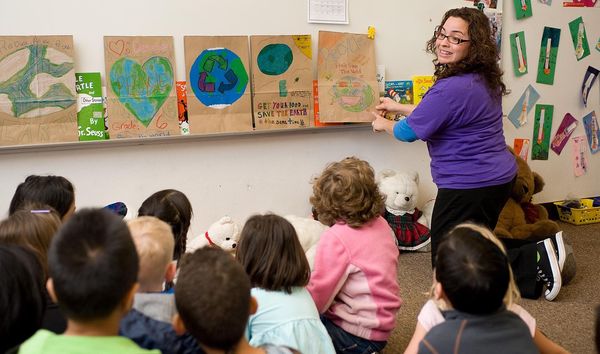

If you’re going to be a teacher, I’m sure you’ve heard the saying, “Those who can -- do, those who can’t -- teach.” Not one interaction about my choice of occupation passes without a comment about how much money I’m not going to make or how “those kids” will only wear me down.
When I attended the University of Northern Iowa vs. Iowa State University football game earlier in the year, I was sitting in front of some people who were participating in the good-spirited rivalry. They proceeded to jeer at the football team, as most fans do. It wasn’t until one comment which sparked my attention that I decided they had carried on too far. They were yelling at the referee for a call he had made, and they jeered, “Might as well go to UNI to get a degree to teach, since you can’t do your job!”
Now, I’m your average sports fan. I taunt and jeer at the opposing team and their fans, all in good spirits.
I wonder if those particular students ever reflect upon their current situation. I’m curious. We pay roughly $18,000 to go to a public university in the state of Iowa (give or take a few thousand, depending on which school you attend and if you live in the dorms or not). We pay for a higher education, there are dollar signs tied directly to the amount of credits a class is worth, and yet… We joke and poke and prod people who desire to become teachers… for what?
Teachers do so many things for us: they teach us to read, write, and interact. They socialize and educate us. They push us and they vouch for us. Some of the people who have had the biggest, longest lasting impact on my life to date are teachers I have had in the past. My life would be incredibly different if I had not had them educate me.
I want to teach. I want to watch the light turn on in someone’s head when they finally understand what they’re supposed to be learning. You don’t want to be an English major? That’s okay!!! But learning the basic grammatical skills will lead you to write letters to people in your future, help you write essays, scholarships and applications, emails to your employers, and many other things.
You don’t want to go into engineering or anything math related? That’s OK too!! The skills you take from your math classes can also be applied to everyday tasks in life. You use reasoning, analytical thinking and processes, and you evaluate.
Just because we aren’t going into a certain career doesn’t mean we don’t need to learn the tasks and concepts taught to us via different education courses. History, math, english, reading, and science all teach skills that will be applied daily throughout our lives.
Are we going to need to know how to calculate standard deviation or how to stress syllables in a poem? Chances are we won’t need to use any of that. Unless it’s for our specific career. But we all have different skill sets and different abilities derived from the courses we take throughout our school years which refine our abilities used in our everyday lives.
Being a teacher is a choice, not a last reserve occupation. I'm not teaching because I can't do, I'm teaching so other people can. I'm giving myself to others so they can grow and develop into leaders, learners, thinkers, and innovators. If we didn't teach or we didn't have teachers, how would our world continue to survive? It's strange the things we take for granted when we have easy access to them. Many people don't even have the opportunity to have an education - and a lot of times it's because they don't have anywhere to become educated or anyone to educate them.
As long as I am willing and able, I want to build other people up so they realize how important they are and how much value they hold. Our potentials are so expansive

















