
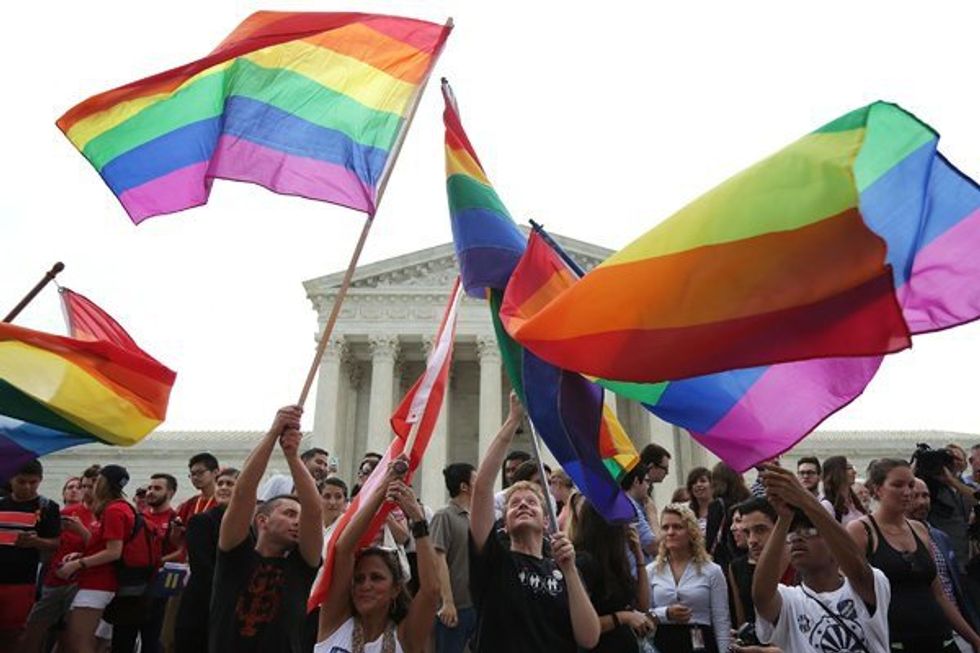
On Friday morning, I logged onto Twitter and was met with a rainbow.
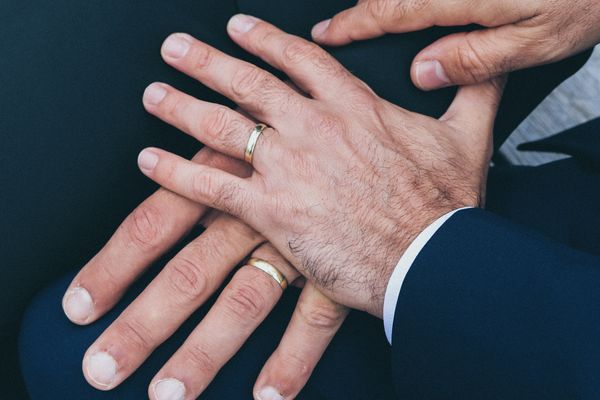
Not an actual rainbow, of course, but with the information that the Supreme Court had ruled, by a 5-to-4 vote, that the Constitution guarantees a right to same-sex marriage. Our society has changed. This is huge. Tremendous. Absolutely earth-shattering.
But of course, this is just one milestone on a long journey for gay rights. Although their marriages are now under the protection of the law wherever they go, they are still under attack. Just as the Civil Rights Act of 1964 didn’t immediately fix all discrimination against all blacks (and still hasn’t, unfortunately), marriage equality will not fix all discrimination against those who are gay. There are still going to be many parts of the country that will not see two men or two women married as right.
Some even take it to the extreme. On Twitter, host of Focal Point radio program Bryan Fischer compared the ruling to 9/11, saying, “June 26, 2015: the day the Twin Towers of truth and righteousness were blown up by moral jihadists.” Going so far as bringing a tragic nationwide event (where THOUSANDS OF PEOPLE LOST THEIR LIVES) into the argument is a very extreme side of the issue, but it goes to show that there are people who still heavily discriminate against those who are queer, whether it be because of religion, upbringing or just plain-old prejudice. Even the decision itself was determined by a very slim margin — only 5-to-4.
It’s no wonder that many people who identify as homosexual are still too afraid to come out. On that day, YouTube released a video showing the numerous ways in which people have publicly admitted that they are gay or lesbian, including YouTube personalities Ingrid Nilsen (missglamorazzi), Connor Franta and Joey Graceffa. Although their high-profile public disclosure shows that progress has been made, the fact that they had to hide it all is a problem.
Consider that these are people who have been active on YouTube for years and who also have millions of followers. For them to have taken that long to feel comfortable enough with themselves and other people to admit who they truly are is actually astounding. Now imagine how hard it would be for those who don’t have that type of following to support them. Or anyone for that matter.
Going even beyond that, there are those who don’t identify themselves as strictly straight, gay or lesbian. How do they factor into the equation? Those who don’t fit into these few categories face even worse discrimination. And because these groups are so much smaller, it is harder for their issues to be addressed or even heard at all. The stigma against all types of queer people exists deeply, and it will take much more than a law change for it to disappear.
It's difficult to imagine how people can seem so prejudiced and judgmental. But if you grow up a certain way and hear the same things your entire life (“Marriage is a union between man and woman,” “Being gay is a sin against God,” “You choose to be gay.”) you believe in them. I should know — I was the same way. If it wasn’t for the fact that I became friends with those who were queer and experienced secondhand the struggles that they faced, I would probably still have the same beliefs. And these are beliefs that have been held for hundreds of years. Change is different, and change is frightening. It's easy to see why so many people are much more willing to follow what they consider tradition.
So the problem starts not with a law or a license, but with people. People influencing people. People hating people. Yes, marriage equality is a leap in the right direction, but there are still several miles to go. And it all starts with us — with us accepting others for who they are; with us accepting others' beliefs although they may not match our own; with us accepting that being different isn’t bad, it’s just different; and with us accepting that rights like marriage, equality and liberty are not political or religious — they are universal. No one should be denied them.















