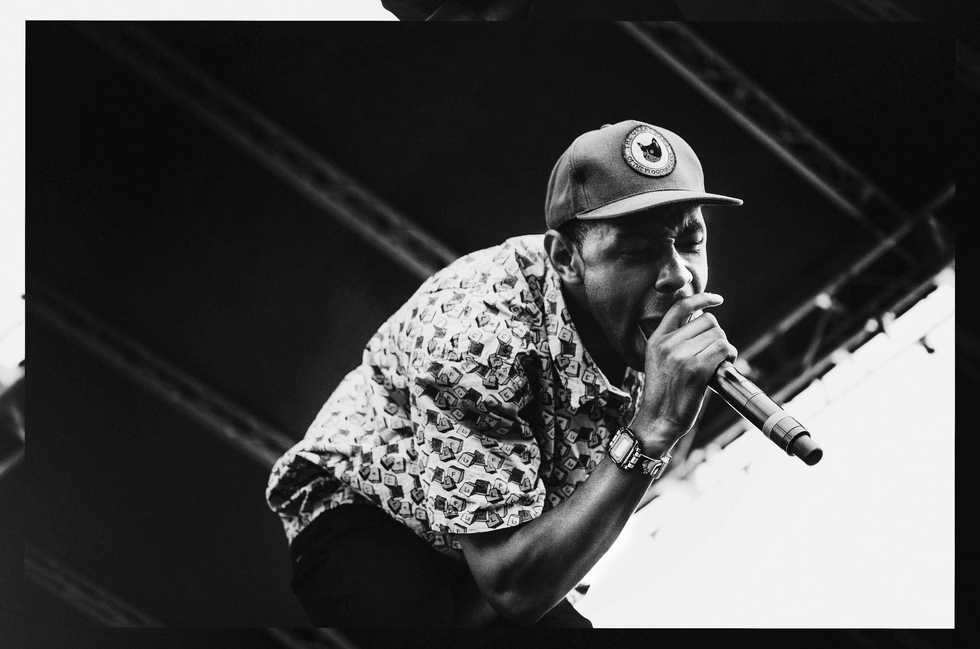
It’s been a huge week for popular hip-hop artist Tyler, the Creator. After having stayed relatively quiet with only releasing two feature verses (as he himself mentions in his new song "November") and one single last year, the California-born rapper returned to the spotlight on July 28th with his new album "Flower Boy." Not only has the album been received with critical success across the board, it has also debuted at No. 1 on the Billboard Top R&B/Hip-Hop Albums Chart and at No. 2 on the Billboard 200, reminding the hip-hop community once more how influential of an artist Tyler continues to be.
"Flower Boy" is arguably Tyler’s most important album to date, as he sensitively addresses his loneliness, continuous success, and, most importantly, his sexuality. Ever since his first mixtape "Bastard" dropped in 2009 Tyler has been dropping hints about his alleged homosexuality in his songs and through social media. From tweeting pictures of his drawing of a rainbow-colored person coming out of a closet with a text bubble asking "Is it safe?" to claiming he is not gay but also "in love with ‘96 Leonardo DiCaprio" in an interview with Larry King, Tyler has kept his fans guessing whether or not he was serious about being gay.
But now "Flower Boy" seems to break the silence for good, as Tyler raps about his coming out and the topic of sexuality in nine out of the album’s fourteen tracks. Tyler teases his listeners about it almost immediately with the lyrics "Sea I was never into the beaches and all the sands. See, I was in the woods with flowers, rainbows and posies falling outta my pocket, but y’all want to know if I swam to cool down" on "Foreword," the first song on the album. These lyrics signify with clever wordplay on "beaches" and a direct metaphor between women and the ocean how he was always into men but was constantly asked by his friends if he ever slept with the women he was talking to. Further into the album, however, Tyler directly talks about being gay, as he says in his song "I Ain’t Got Time!" how he has been "kissing white boys since 2004." Meanwhile, the song "Garden Shed" seems to be entirely dedicated to the topic of his sexuality, as he talks about how he used to believe his sexuality to be a "phase," but that there now is "no reason to pretend" he is someone else.
But while Tyler has already established himself as a talented and respected artist, the content of an album like "Flower Boy "together with the amount of commercial success it is going through cannot be taken for granted. While "Flower Boy" is doing extremely well both critically and commercially, hip-hop has always been a mostly exclusive genre when it comes to gender and sexuality. The vast majority of the successful artists in hip-hop continue to be straight males who almost never talk as introspectively about their sexuality as Tyler has done on "Flower Boy." Additionally, there are altogether only about a handful of relevant LGBTQ+ rappers at a time, which currently includes Frank Ocean, Azealia Banks, and now Tyler as well.
The success of "Flower Boy" henceforthsignifies something way beyond Tyler’s return to the limelight; it depicts the growing acceptance of different sexual orientations within the hip-hop community. "Flower Boy "is a strong reminder that discrimination against LGBTQ+ people in rap, for instance, has decreased significantly within the last twenty years. Whereas rappers used to throw around gay slurs in their songs like it wasn’t a big deal, nowadays they would be heavily criticized for such language in their music by their fans. Furthermore, some of the most famous hip-hop artists are openly supportive of the LGBTQ+ community, with support from allies like Kanye West dating all the way back to 2005. Some artists like Macklemore have even made entire songs about their support for the community, and LGBT-artist Frank Ocean came out on his album "Channel Orange" five years ago last month.
And now, five years after "Channel Orange," comes "Flower Boy," a strong indicator of hip-hop’s increasingly progressive nature, even though it might not always be so prevalent, as the unstoppable rise of mumble rap and trap music still brings with it more straight male artists rapping about safe topics like sex, .45’s, and Hennessey. Thus with a large number of tracks in which Tyler reflects on unorthodox topics like his insecurities and his coming out as a rapper, "Flower Boy" is not only an amazing personal creative achievement for Tyler, but the album also definitively proves with its success that rap is no longer the exclusive art form it used to be.