
In the days since the heartbreaking image of Aylan Kurdi, a Syrian toddler whose lifeless body was found face-down in the sand on a Turkish beach, went viral, the largest refugee crisis in the 21st century has gained the world's attention. Hundreds of thousands of people, mainly Syrians, have begun fleeing the Middle East in search of starting over in Europe. Many families, such as Aylan's, have risked the perilous journey with their children because they believe it is their best option to escape.

During the last year, more than 2,500 people have drowned trying to cross the Mediterranean on overloaded dinghies and other makeshift rafts. Thousands of migrants have left Turkey on these vessels to reach the shores of Greece, and from there seek entrance to Europe. The distance between Turkey's Bodrum Peninsula and the Greek island of Kos is only 2.5 miles, an ideal distance for those seeking an escape. The crossings usually happen at night, because these are considered "illegal border crossings" by Turkish officials.

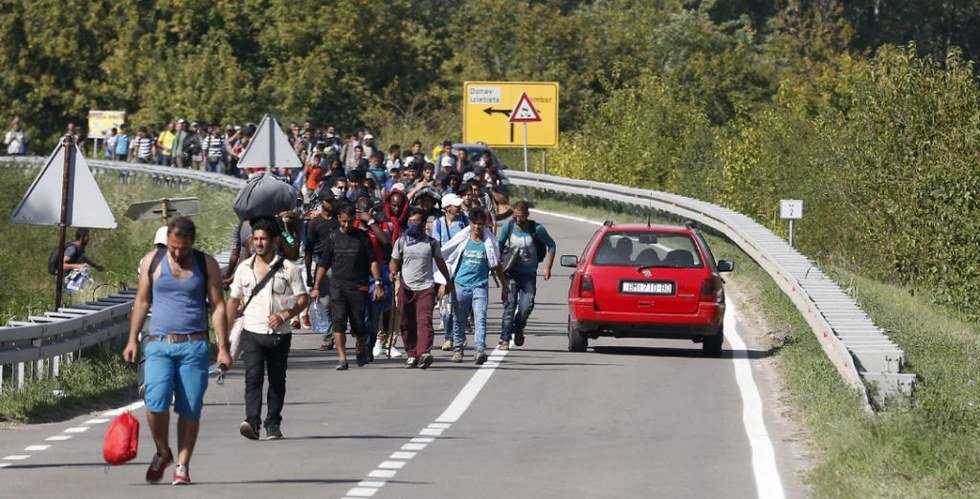
But, in recent weeks, the journey has become more difficult for the refugees as the European countries struggle with the massive influx of immigrants into their countries. Greece, the main landing site of the refugees, already has a dire economic situation and cannot afford to help. Many of the migrants plan to get to Germany, which has been the most liberally accepting country in all of Europe. The typical journey for the refugees is on foot from Greece, through Macedonia and Serbia, then Hungary and Austria before finally reaching Germany.

In the past week, Hungary announced they could not handle the amount of refugees pouring into the country and shut their borders, erecting barbed-wire fences to keep immigrants out. Croatia had announced that migrants were encouraged to come through their country, but have since announced that they are overwhelmed by the 15,000 people that have reached the border into Croatia and may possibly close their borders as well. In addition a truck was found abandoned in Austria last month with the decomposing bodies of 71 migrants locked inside.

The border closings mark just another chapter in a saga that continues as Europe has yet to reach a solution to the greatest humanitarian crisis since World War II, according to the New York Times. While the refugee crisis puts a strain on the economy of the European Union, it also escalates the tension between the formerly Communist countries in the east and the Western nations of Europe. Leaders of the European Union are scheduled to meet next week in Brussels to address the migrant "emergency" and come up with a solution. The most widely touted idea has been to spread the refugees out among the nations of Europe.

For those who have left the Middle East, only time will tell what happens for them. But until then, many still hope the borders will be reopened and they will be able to start their new lives somewhere in Europe.