
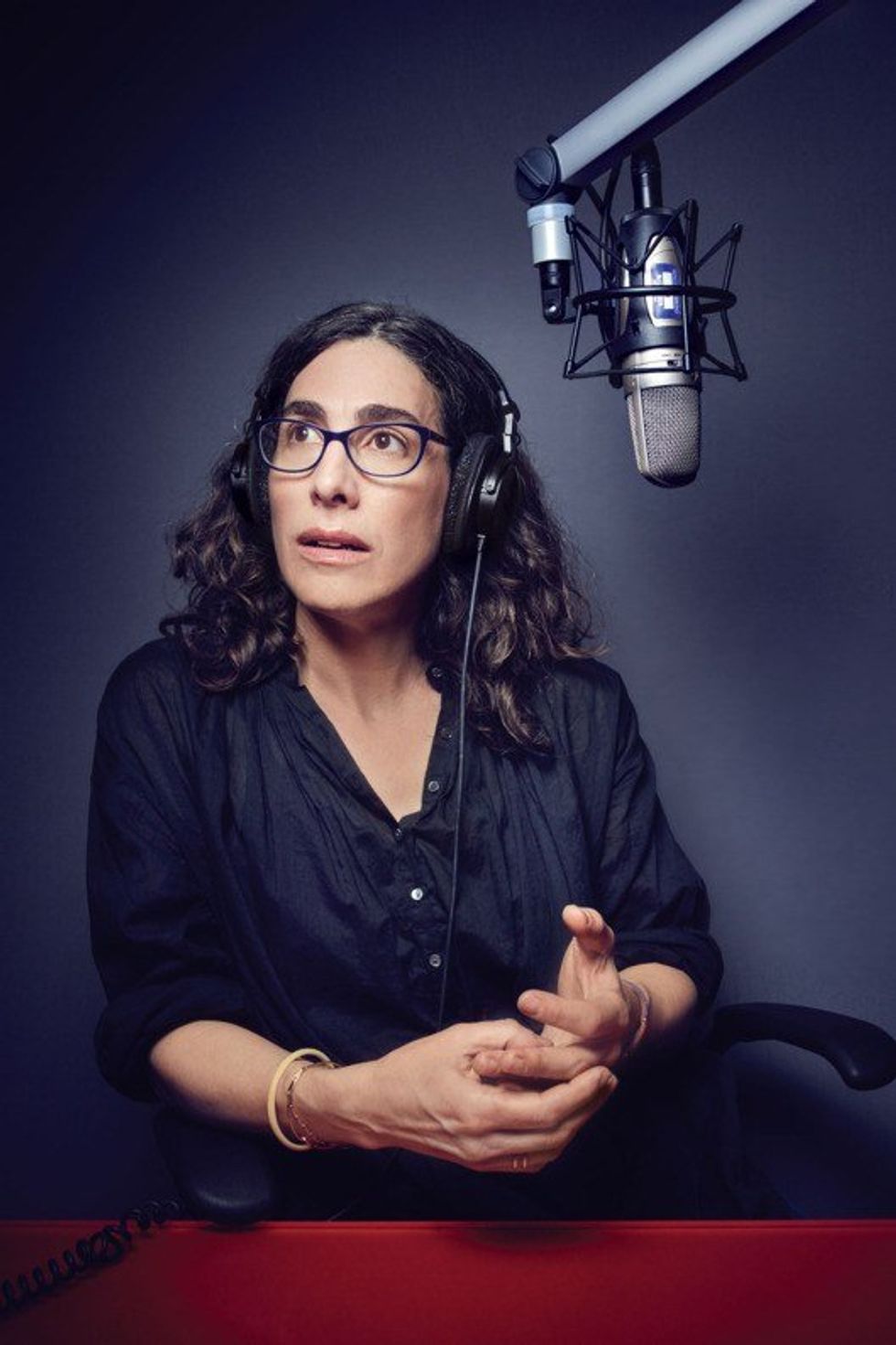
There isn’t much information on Sarah Koenig on the Internet, which makes sense. She only came into the public eye—or ear—a few years ago with the creation of the podcast "Serial." Before she set out to create "Serial," she was a part of "This American Life" at NPR. She previously worked as a reporter for a number of news sources, including "ABC News," the "New York Times," the "Concord Monitor," and the "Baltimore Sun."
So, how did Koenig go from a reporter and producer for years, almost always behind the scenes, to being named one of the 100 Most Influential People by "TIME Magazine?"
"Serial," a podcast she created, produced, and reported for, was an instant hit. It shot to #1 on iTunes before the first episode was even released, and stayed there for three months, nearly the entire first season. While investigative reporting or serial-style stories are nothing new, the way Koenig presented the story felt both familiar and innovative. It was about “the basics: love and death and justice and truth. All these big, big things.” Season 1 delved into the story of the 1999 murder of Hae Min Lee in Baltimore, the conviction of her schoolmate and ex-boyfriend Adnan Masud Syed, the outliers in the evidence, and the extenuating circumstances surrounding the murder and arrest. Season 2 (still ongoing) focuses on the story of Sergeant Bowe Bergdahl and his desertion from his company and subsequent capture by the Taliban for five years.
The role of Koenig and "Serial" is to ask why and how to every part of these stories–something at the core of being a dissident. And not just the easy questions, like why would Adnan want to kill Hae, or why Bowe deserted his post and his company in the middle of the Afghani desert (OK, maybe not easy per se). She goes deeper, though, and looks at a system built against minorities, corruption within the police and military, and a culture that accuses men without all the facts.
And, so what? Well, "Serial" has sparked a bit of a cultural phenomenon, to say the least. Dozens of cases have been reopened to reanalyze the evidence and the guilt or innocence of the convicted. An important example of this is Stephen Avery, the subject of "Making a Murderer." Koenig’s work has also drawn attention to programs like the Innocence Project, which helps people who have been wrongfully convicted. And for Adnan, who has been sentenced to life in prison for the murder of Hae, and who was out of options–well, his case was taken on by the Innocence Project and he is currently on the path to another appeal, with DNA helping back up his innocence in a new way.
Arguably, that could be the biggest and most important 'so what.' If Adnan really is innocent, and Koenig’s reporting was the first stepping stone to helping free him, then that’s a significant accomplishment.
Dissenting doesn’t have to be changing an entire country or culture; sometimes changing just one human’s life is more than enough.