
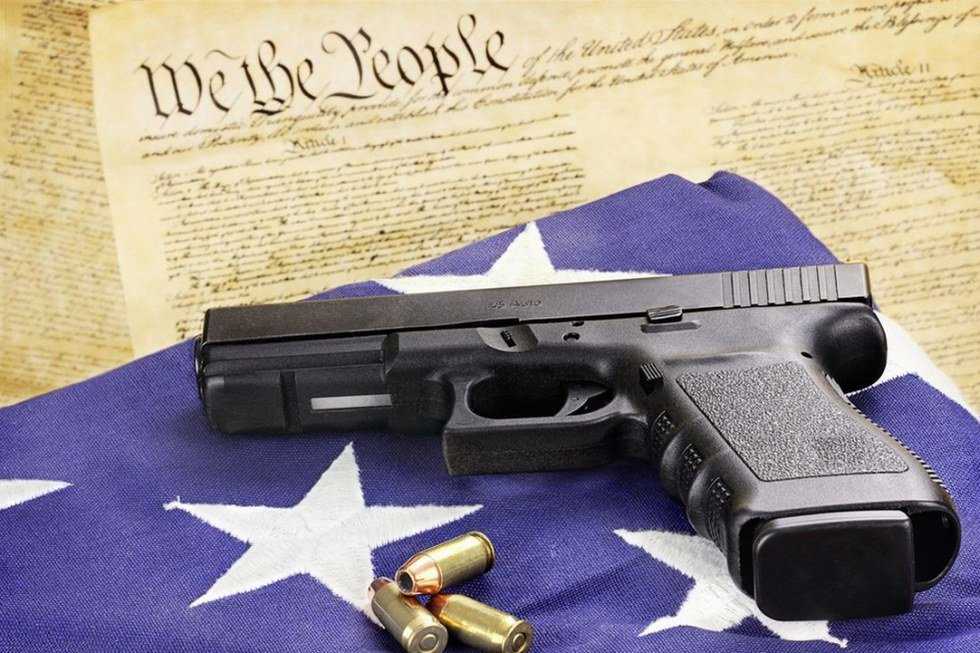
A quick disclaimer: I do not think all gun owners are bad. I have shot a gun in a controlled environment before, and I recognize the necessity for guns in self-defense in many places. I also recognize that there are responsible gun owners all over the country, and those gun owners greatly outnumber the ones that are irresponsible/malicious.
But we need sensible gun control measures to prevent the mass scale of gun violence from occurring.
I am going to address the common claims made against gun control, and why they are faulty.
1. Gun control is ineffective. If criminals wanted guns, they will simply go to the Black market to get them.
I understand the appeal of this argument, but it has been empirically disproven. Because we have never passed gun control legislation on such a wide scale in the United States, I will have to point to another industrialized country — Australia. After the worst massacre in Australia's history, the conservative-dominated government imposed stricter regulation on guns — they held a buy-back for guns, instituted a mandatory 28-day waiting period for guns, and created a national registry of guns so that guns would have to be registered after being bought. Since the gun legislation passed in 1996, there have been zero massacres in Australia and deaths by gun violence have dropped dramatically. Compare this to the 11 massacres (a gunman who kills more than 5 people) that occurred the decade before the legislation passed.
The United States, you may argue, is different.
2. People who commit suicide by gun are going to do so anyway. There is no reason to restrict guns for this reason.
Unfortunately, this is not the case. Most victims of gun violence are those who die by their own hand, not at the hand of another. The nature of suicide is impulsivity — in other words, the time between deciding to end your own life and between actually attempting to do so is very short. There are certainly some factors that predict a person's likelihood to attempt suicide, but fantasizing about it and going through with it are two different things.
For every step we add in preventing access to a loaded gun, the greater the dent we put in suicides as a whole. As Dr. Liza Gold describes:
First of all, research demonstrates that for every step you put between somebody and a firearm, you also decrease suicide and injury and homicide rates. For example, the suicide rate decreases about 10 percent if you keep a gun in your house unloaded. And then it decreases another 10 percent if you keep it locked and unloaded, and then another 10 percent if you keep it locked, unloaded, and keep the ammunition locked somewhere else. If you prolong the time that it takes someone to kill themselves, there’s more time for them to change their minds.
This is the unfortunate reality: guns are effective at ending lives. If someone did attempt to take their own life through other means (a claim not supported by research), then they are more likely to fail or have someone intervene in time.
3. The Second Amendment protects me from having my guns taken away from the government, so imposing gun control is unconstitutional.
You are half right. The government is not allowed to take away your guns, and Obama is not going to do so. You are within your right to own a gun.
That being said, there is no reason why gun control is unconstitutional. Just like every right guaranteed to us (or at least affirmed) by the Bill of Rights, there are limits. For example, while we have the right to protected free speech, we do not have the right to yell "Fire!" in a crowded movie theater.
Your rights end where another person's begins.
The Supreme Court, for example, has ruled in United States V. Miller that the U.S. possesses the right to regulate the ownership of any gun that will not aid in the maintenance of a well-regulated militia. This did not limit an individual's right to own a gun, but rather called into question which guns fit that Constitutional amendment. Even recent Supreme Court decisions on gun control, such as District of Columbia v. Heller, which explicated the rights of individuals, have not argued against the idea that there is a limit to the right.
Unfortunately, one of the biggest lobbying groups in the United States is the National Rifle Association, or the NRA. Because of their huge lobbying power, any bipartisan effort to impose stronger gun regulation will immediately result in political deaths for many politicians.
But these are the facts.