


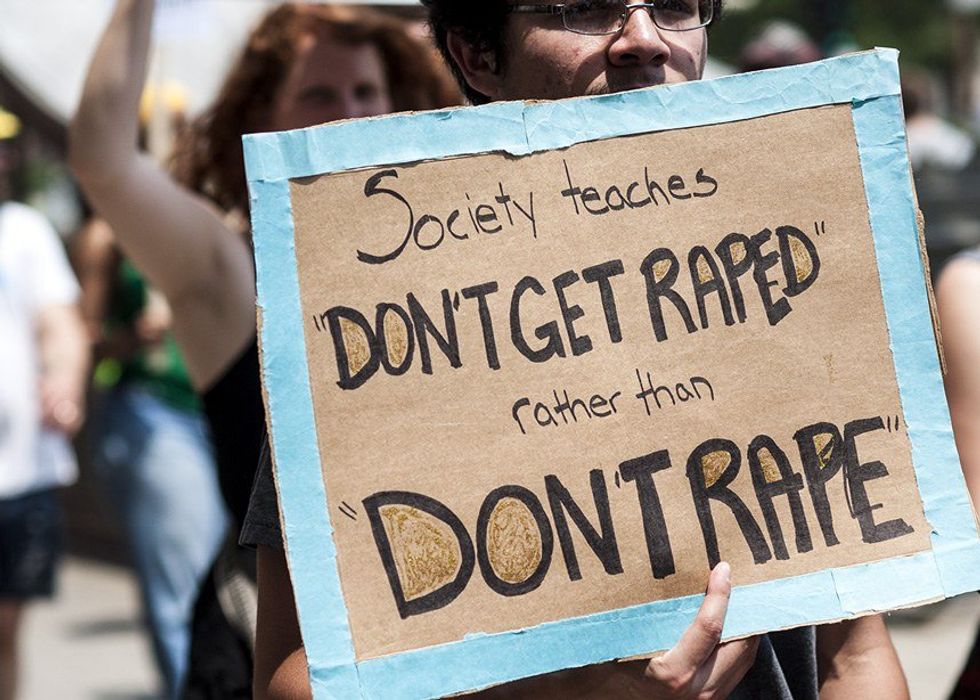
Having a conversation about gender roles can be difficult. Put men and women in the same room and have a conversation about gender and things get heated. Issues women face include a wage gap, job and educational discrimination and societal inferiority through sexualization. One of those hard topics is rape. And we’re living in a world surrounded by rape culture.
What is rape culture? It’s the way that we collectively think about rape. More often than not, it’s situations in which sexual assault, rape and general violence are ignored, trivialized, normalized or made into jokes. Rape culture is when sexual violence is the norm and victims are blamed for their own assaults. To put it more simply, people aren’t taught not to rape, but are taught not to be raped.
We have this idea that women who dress provocatively are the same as homeowners who don’t lock their doors at night. This goes along the lines of “she was asking for it.” By definition, rape cannot be asked for. When people get robbed we don’t say that they deserve it for not locking their doors. When we do this we’re only blaming the victim. Because of this, we tell women what not to do, what not to wear and when not to go out. “‘Consensual’ sex is just sex. To say that implies that there is such a thing as ‘non consensual sex,' which there isn’t. that’s called rape.”
When women are assaulted and choose to report it they’re only met with questions. Questions like, “What were you wearing?” and, “Were you drinking?” Questioning women about their choices the night of their assault, as opposed to the choices made by the rapist is outlandish. Nobody asks what the rapist was wearing. And why does alcohol excuse his actions but condemn hers? “If you don’t want to be raped you shouldn’t walk alone at night.” Well if you don’t want to get robbed you probably shouldn’t own anything.
One out of five American women has been the victim of attempted rape or rape. In the military, one in three women are assaulted by their fellow service members. On college campuses, one in five women are assaulted, but only one in eight report it. Campus rape rates haven’t changed in the last 20 years. Even for victims that decide to report their assault to the police, there’s no guarantee their attackers will be convicted. Rape kits are backlogged by the thousands across the United States. Only about three percent of rapists are ever sentenced to prison. In the military, only two percent are convicted.
In 31 states, if a woman has a child as a result of rape, her rapist can sue for custody and visitation rights. 32,000 women get pregnant from rape in the United States each year.
Rape needs to stop. Rape culture needs to stop. I don’t know when “no” stopped meaning “no.” Or when “stop” quit meaning “stop.” Did you know it’s more effective to yell fire than it is to yell rape?

















