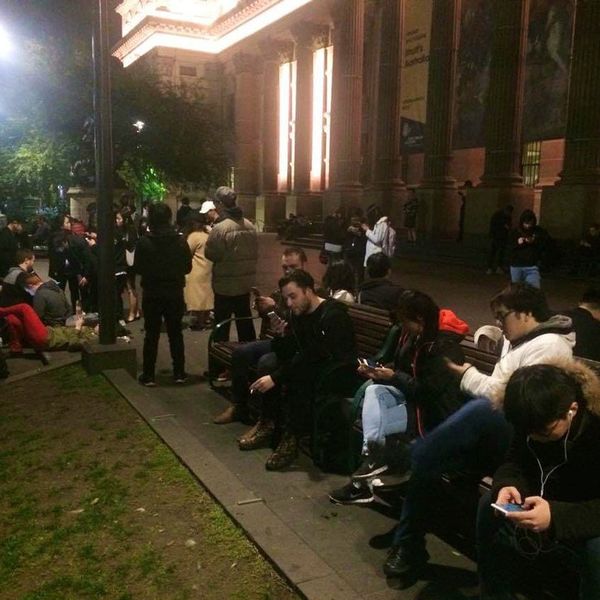
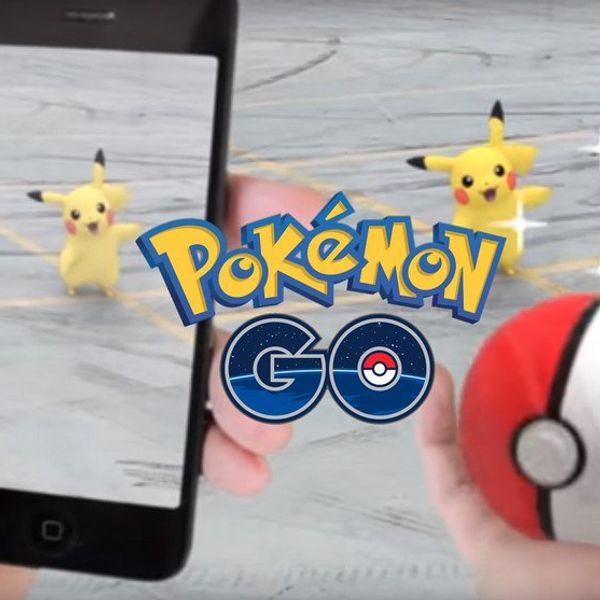
"Pokemon Go," which released on July 6, 2016, is one of the fast-grossing free smartphone games on the market right now. As of July 12, the app had 21 million downloads / active users just in the United States, and is about to pass Twitter as having the most active daily users (Twitter has 175 million downloads since its release).

For those of you who are still in the dark a bit on what "Pokemon Go" is, it is a "free-to-play, location-based, augmented reality game" that allows users to create their own avatar. You walk around and "wild Pokemon" appear randomly, and you can catch them by pointing your phone at them and capturing them. Seems boring from that standpoint, right? Well, besides just throwing pokeball's at these random Pokemon, you can also level up and evolve your Pokemon if you've caught multiple of the same kind. You can battle other trainers once you hit a certain level, and you also get great exercise! Even though that may not be everyone's favorite thing to do, and instead of walking miles and miles on end, people may just try to drive, once you go over a certain speed, your game stops counting kilometers that you've gone while at that speed, so it basically forces you to be healthy, unless you want to drive down the streets at 15 mph and be yelled at by passing cars. (Also, you'd be on your phone while driving, and texting and driving is already bad enough.)
But let's get back to the topic at hand and find out why this game is so popular with the older millennials. The Atlantic describes millennials as those born between 1983 and 2004. The younger generation may seem very amused and into this game, but I don't feel like the have the same connection as some adults do to the game. Younger kids didn't really have the same experiences as those born in the the last 10 years of the 1990s or before, when we had basic game systems and had to wait for these amazing games to release a new version so we wouldn't have to delete our previous saved game. So let's break it down a bit by years, and explain each game system a bit better.
The Game Boy

The original Pokemon game system, for "first generation" games that were released between 1996 and 1999. The games that were released during this time are still the utmost favorite among fans. The first colors that were released internationally from Japan were "Red" and "Blue," followed a year later with a remastered version "Yellow." The Game Boy was slightly updated within the year to a Game Boy Light, which was just a smaller version of the original.
Game Boy Color

Following the small upgrade to the Game Boy came the Game Boy Color, which was released in 1998. This amazed me, because even though I had only been playing the originals for a short time since I was 4, I didn't really understand much about the game, other than that it was fun, but when the color came out, it was amazing to see all the little details in the picture. Even for back then, the technology was still crazy. This release was also followed by the second-generation Pokemon "Gold," "Silver," and "Crystal" in 1999-2000, and "Ruby" and "Sapphire" in 2002.
The last Pokemon game I had bought was "Emerald" in 2004, along with my Gameboy Advance. As the years went on, more and more things were happening in my life, and the time to play every new game just wasn't there (nor was the money to keep up with the new games and new systems). Since the release of "Ruby" and "Sapphire," 16 more Pokemon games have been released for the Game Boys, as well as newer systems, included the Nintendo DS and 3DS -- but my interest, like most people's, I would think -- was with the original games, before all the crazy new Pokemon started coming out just trying to push the series so it kept up with the TV series (which is the third longest-running TV series to date).
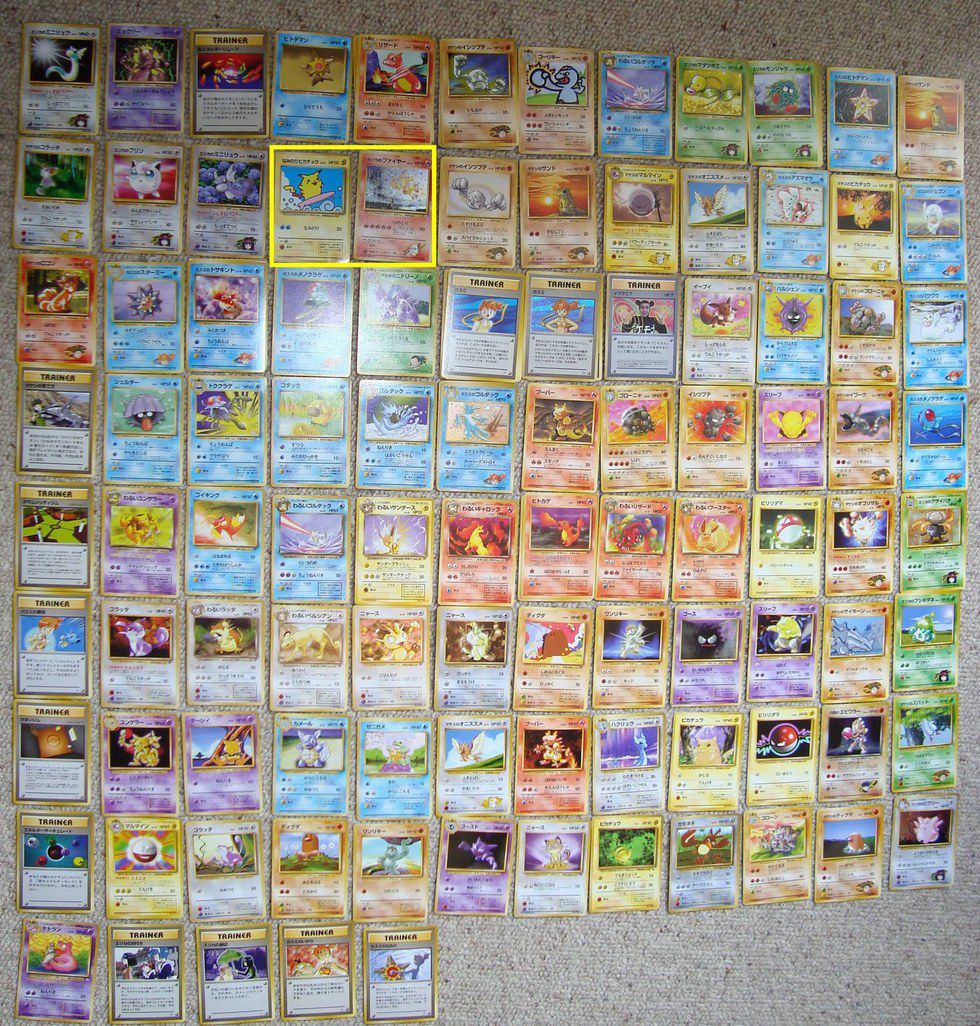
Now that you've had a little background insight, the main reason that I believe the slightly older set of millennials feels more attached the this game -- and why you see so many of us outside walking around in groups of friends playing this game -- is because it brings us back to our childhood, when we were playing on our Game Boys at friends' houses, or trading Pokemon cards (wasn't that a blast). All in all, I know the younger generation enjoys playing the game -- and they should, it's a blast to play it -- but they probably aren't getting the same flashback feeling as some of us others, and that's what makes the difference.