
I’m a female. It’s on my birth certificate. It’s how I identify myself. It’s who I am. It’s not a reason to be sorry.
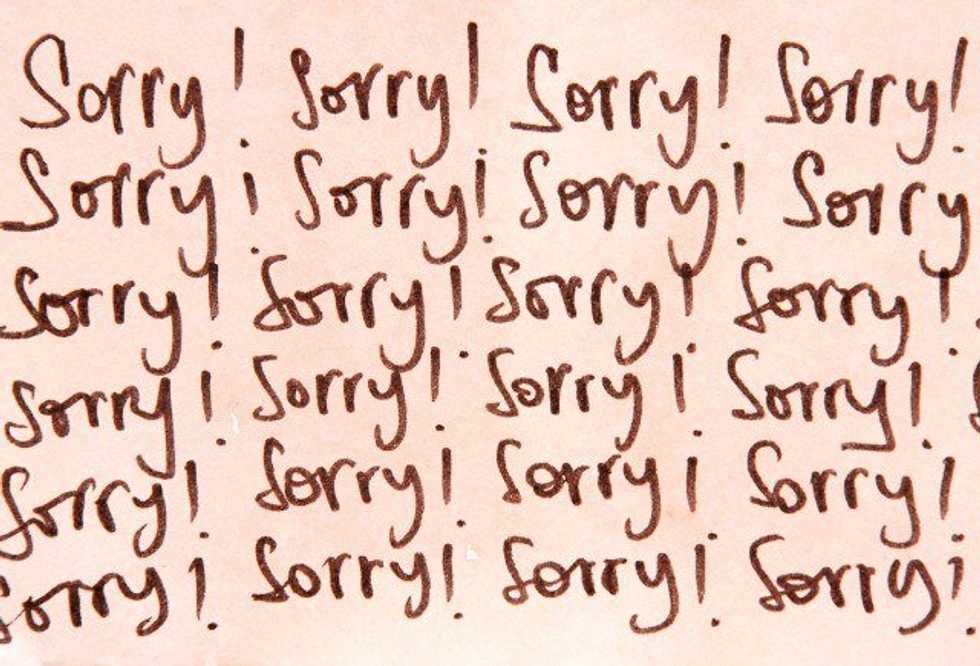
Growing up I played soccer — from kindergarten all the way up until my senior year of high school. It was around 8th grade when everyone seemed to notice my little problem I had acquired. I had developed the habit of saying “Sorry” at the most inappropriate times. I’d kick the ball a little too far and say “Sorry.” The coach would be telling me something I could do better and I would say “Sorry.” I’d run into someone in the middle of a game and stop and say “Sorry.” Why did I feel the need to apologize during a competitive sport where it’s expected of you to mess up, get yelled at and run into people?
Many would answer the above question, including myself, with the most obvious answer: I am so freaking weird. However, just the fact that I feel that is a sufficient answer for why I feel the need to constantly apologize for things that don’t warrant an apology is a problem within itself. It seems that I am not alone with this predicament and that the female population as a whole struggles with this problem. Women and the word “sorry” have become synonymous without us ever seeming to realize it. I don’t know what is to blame for this; maybe our culture portrays us as objects to be had, maybe we have a lack of confidence in ourselves when we are in competition against a male or maybe society has taught us to be sorry for being female because we aren’t enough and that we need a man. But one thing is abundantly clear and that is that we have to stop saying sorry and, instead, say what we actually mean.
Ladies, we are not a burden to the world when we talk about something exciting that is going on in our lives. It’s not bad or wrong that we occasionally have breakdowns that involve lots of ugly crying; it just means we are human. When we have questions or need help with something, we shouldn’t feel guilty or embarrassed because of it. People are sometimes incredibly annoying, and it is our civic duty to ask these people to stop acting in this way so that we may contribute to a greater good. This does not require us to feel remorseful for doing so. Life requires us to make choices, and we develop beliefs and acquire morals. These are things we should hold dear, and we should never feel that we are doing a disservice to others because of them. We as women have found ourselves apologizing for these situations, and we must undo this conditioning that has trained us to do so.
We should not completely disregard the word; that’s not what I’m saying. If I spill my coffee all over you I should probably say “Sorry.” However, I am saying that instead of that word, maybe we should assert what we really mean and not throw a “sorry” into the sentence just because. We do not need to take away from what we have to say with this unnecessary interjection.
In the words of the actress Amy Poehler, “It takes years as a woman to unlearn what you have been taught to be sorry for.” I challenge all of us to begin that journey now and to be conscious of what we are saying and what we truly mean.